Best Time to Visit Fukuoka 2026: The Ultimate Guide

Is Fukuoka Worth Visiting? If you’re wondering which city in Kyushu deserves a spot on your Japan itinerary, the answer is simple: Fukuoka.
As a travel expert, I (Cathead!) recommend Fukuoka without hesitation. 😺
What makes Fukuoka special isn’t just convenience (you can get from the airport to downtown in about 10 minutes), but its perfect balance of urban energy and relaxed pace. It’s not overwhelming like Tokyo, yet it has everything — amazing food, shopping, waterfront views, and easy access to nature.
During the day, you can stroll through Ohori Park, in the evening grab ramen at traditional yatai street stalls, and on weekends hop on a ferry to Nokonoshima Island Park for seasonal flower fields.
Spring for cherry blossoms , summer for beaches , fall for foliage , and winter for hot springs and illuminations — Fukuoka is truly a year-round destination.
When is the Best Time to Visit Fukuoka? From cherry blossoms in the spring to winter illuminations, here is your complete guide to Fukuoka’s weather, seasonal highlights, and what to pack.
Table of Contents
🌷 Spring in Fukuoka (March – May)

The Vibe: Mild, blooming, and arguably the most beautiful time to visit.
Fukuoka Weather in Spring
Spring in Fukuoka is mild, comfortable, and one of the most pleasant times of the year.
- March: ~50°F (10°C)
- April: ~59°F (15°C)
- May: ~66°F (19°C)
March can still feel slightly chilly, but by April and May, the weather becomes warm and enjoyable. Sunny days are common, evenings are cool, and rainfall is relatively low, perfect for walking and flower viewing.
Fukuoka Best Places to Visit in Spring
🌸 Maizuru Park (Fukuoka Castle Ruins) & Ohori Park
Originally built in the early 17th century by feudal lord Kuroda Nagamasa, Maizuru Park was once the site of one of the largest castles in Kyushu. Today, the stone walls remain alongside rows of cherry blossom trees.
In spring, sakura reflections along the moat create postcard-like scenery. Next door, Ohori Park — once part of the castle’s outer moat — has been transformed into a peaceful urban oasis with walking paths, cafés, and a museum. It’s perfect for picnics by day and relaxed evening strolls.
🏝️ Nokonoshima Island Park
Historically an important island in Hakata Bay, Nokonoshima is now famous for its seasonal flower fields. In spring, rapeseed flowers and cherry blossoms bloom one after another, creating layers of color with panoramic views of Fukuoka City and the bay.
It’s only a 10-minute ferry ride from Meinohama Port. Inside the park, you’ll find nostalgic wooden houses, small animal areas, and hands-on experiences. Grab a seasonal flower-themed soft-serve ice cream while overlooking the ocean.
🏛️ Dazaifu Tenmangu Shrine
Founded in 919 AD, this shrine enshrines Sugawara no Michizane, the god of learning, and is one of Japan’s most important Tenmangu shrines.
Dazaifu was once the political center of Kyushu, and the shrine remains a strong symbol of history and culture. Plum blossoms bloom from February to March, followed by cherry blossoms in March–April, creating an elegant and peaceful atmosphere.
After visiting, you can explore the Kyushu National Museum, the charming approach street, and try freshly made umegae mochi — perfect for culture lovers and students seeking good luck.
What to Wear & Pack (Spring)
The key to Japan in the spring is layering.
March/Early April: A light coat or denim jacket over a sweater.
Late April/May: Light knitwear or long-sleeve shirts. A windbreaker is great for ferry rides to the islands.
Shoes: You will be walking a lot. Bring comfortable sneakers (walking 20,000 steps a day is common in Fukuoka!).
🪇 Summer in Fukuoka (June – August)
The Vibe: High energy, coastal escapes, and legendary festivals.
Fukuoka Weather in Summer
Summer in Fukuoka is hot and humid.
- June: ~75°F (24°C)
- July: ~81°F (27°C)
- August: ~82°F (28°C)
June is the rainy season, while July–August bring strong sunshine and higher temperatures. Sudden afternoon showers are common.
🐱Cathead’s Survival Tip: The humidity in Japan can make 90°F feel like 100°F. Stay hydrated and duck into the city’s excellent underground malls (Tenjin Chikagai) to cool off!
Fukuoka Best Places to Visit in Summer
🎏 Hakata Gion Yamakasa Festival
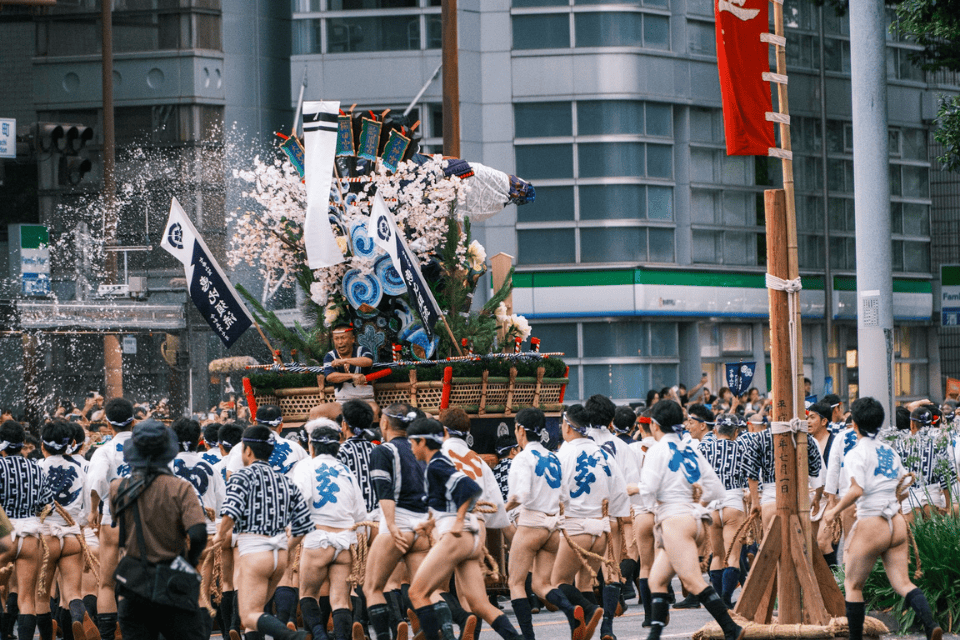
One of Fukuoka’s most important festivals, with over 770 years of history, dating back to the Kamakura period. It originated as a ritual to ward off epidemics.
Held annually from July 1–15, the highlight event “Oiyama” features teams of men racing through the city carrying massive floats weighing over one ton. The energy is intense, powerful, and unforgettable.
🏖️ Momochi Seaside Park & Fukuoka Tower
Located along Hakata Bay, this area combines a man-made beach, shopping complexes, and city skyline views.
Fukuoka Tower, built in 1989 to celebrate the city’s 100th anniversary, stands at 234 meters and is the tallest seaside tower in Japan. Its 360° observation deck offers stunning views, especially at night.
🌊 Itoshima & Sakurai Futamigaura (Meoto Iwa)
Located west of Fukuoka City, the Itoshima Peninsula is known for its coastal beauty.
Two massive rocks (Meoto Iwa, also known as the “married rocks”) are joined by a sacred rope and symbolize harmony and relationships, framed by a pristine white Torii gate in the ocean. It is one of the most Instagrammed sunset spots in Japan.
At sunset, the silhouette of the torii against the orange sky creates a peaceful and romantic atmosphere. The surrounding cafés and boardwalks make it perfect for a slow coastal afternoon.
What to Wear (Summer)
Clothing: Lightweight, breathable, linen or quick-dry clothing.
Gear: A sturdy UV-protection umbrella (works for both sun and sudden rain) and high-quality polarized sunglasses.
🍁 Autumn in Fukuoka (September – November)
The Vibe: Crisp air, brilliant maple leaves, and Foodie Heaven.
Fukuoka Weather in Autumn
Fall is the most comfortable season in Fukuoka.
- September: ~77°F (25°C)
- October: ~68°F (20°C)
- November: ~57°F (14°C)
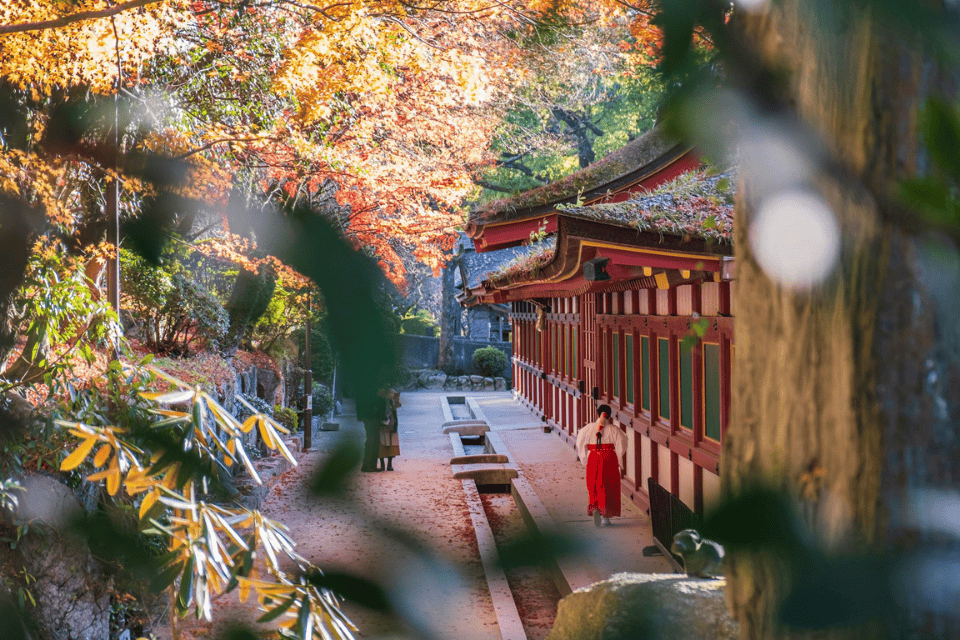
Fall is widely considered the best time to visit Fukuoka. September is still warm, but temperatures gradually cool. The humidity drops, the skies turn a deep blue, and the “Autumn Colors” (Koyo) begin to pop.
Best Things to Do in Fukuoka (Autumn)
🐚 Hakozaki Shrine Hojoya Festival
One of Fukuoka’s oldest festivals, dating back over 1,000 years to the Heian period. It celebrates life and prays for peace and good harvest.
Around 500 food stalls line the shrine approach, creating a lively and nostalgic atmosphere.
🏮 Hakata Tomyo Watching
Originally derived from a traditional lantern ritual for household safety, this event has evolved into an artistic light festival.
Held in mid-October around the Hakata district (including Kushida Shrine, Jotenji Temple, Reisen Park, and the Hakata River), over 40,000 lanterns illuminate the streets, forming patterns and characters reflected on stone paths and water.
Temples extend their opening hours, and the area transforms into a walkable light art district. Arriving before sunset and watching the lights come alive is highly recommended.
🍺 Fukuoka Oktoberfest
Inspired by Germany’s Oktoberfest, this event has been held annually at Reisen Park since 2010. Expect live music, German beer, sausages, and a lively festive atmosphere.
🍁 Raizan Sennyoji Temple & Kamado Shrine
Raizan Sennyoji, founded in the Nara period, features a 400-year-old maple tree that turns brilliant red in November.
Kamado Shrine, known among anime fans and associated with good relationships, offers a beautiful blend of autumn foliage and traditional wooden architecture.
What to Wear (Fall)
September: Still feels like summer; stick to T-shirts but carry a light layer.
October/November: Transition to Light Academia style—sweaters, light trench coats, or denim jackets. You’ll want a medium-weight jacket for evening walks by the river.
☃️ Winter in Fukuoka (December – February)

The Vibe: Cozy, romantic, and the best time for foodies to indulge in hot hot-pot dishes like Motsunabe.
Fukuoka Weather in Winter
Winter in Fukuoka is chilly but relatively mild compared to the heavy snow of Tokyo or Hokkaido. It’s a “dry cold,” though you might see a few light flurries in January.
- December: ~48°F (9°C)
- January: ~43°F (6°C)
- February: ~46°F (8°C)
Best Things to Do in Fukuoka (Winter)
🎄 Fukuoka Christmas Markets (Hakata & Tenjin)
Fukuoka hosts some of the best European-style Christmas markets in Japan.
From early November through Christmas Day, the squares outside JR Hakata Station and Tenjin City Hall transform into glowing villages. Large Christmas trees, European-style wooden stalls, mulled wine, and festive lights create a magical winter atmosphere.
💡 Winter Illuminations at Canal City Hakata
A large shopping complex known for its canal running through the buildings. In winter,
Canal City puts on a massive winter light show.
The Aqua Panorama—a synchronized fountain show with 3D projection mapping and music. It’s a great free activity that’s perfect for a romantic date night or family outing.
♨️ Futsukaichi Onsen (Hot Springs)
This is the oldest hot spring town in Kyushu, dating back over 1,300 years. Known for its smooth, skin-friendly waters, it’s perfect for warming up in winter. Just 30 minutes from Hakata by train.
What to Wear (Winter)
The Layers: A medium-to-heavy coat is essential. Japan’s indoors (trains/malls) are heavily heated, so wear layers you can easily strip off.
Accessories: A scarf and gloves are a must for evening walks to the Yatai (food stalls).
📌 Which month is best to visit Fukuoka?
🥇 Best Overall: October & November (Autumn, perfect weather, stunning colors)
🌸 Most Photogenic: April (Cherry blossom peak).
🎄 Most Magical: December (Christmas markets and illuminations).
💰 Best for Budget Travelers: January, February, & June. These are the off-peak months where you can find the best deals on luxury hotels.
📌 Peak Tourist Seasons in Fukuoka
Expect higher hotel rates and larger crowds during these windows:
Cherry blossom season (Sakura season) : Late March – Early April.
Golden Week: Early May (Japan’s biggest national holiday week).
Summer vacation: July–August
Major festivals : Hakata Dontaku, Yamakasa
💰 Cheapest Time to Visit Fukuoka, Japan
Want to save money? Here are the best windows:
Late January to February (after Lunar New Year)
Mid-May to late June (rainy season ☔)
Early September to mid-October
Early November (before peak foliage)
👉Flights and hotels are generally more affordable during these periods.
🔎 How many days in Fukuoka is enough?
If you’re wondering how long to stay in Fukuoka, here’s the honest answer:
👉2–3 Days: Ideal for a first-time visit and great for most travelers. You can see the city highlights, eat your way through the Yatai stalls, and take one half-day trip to Dazaifu.
👉4–5 Days: Recommended if you want to explore the “Hidden Kyushu”—think coastal drives in Itoshima, the hot springs of Yufuin, or the volcanic landscapes of Mount Aso.
🚗 Is it recommended to drive in Fukuoka?
If you are staying strictly within the city limits, public transport is king. The subway and buses are world-class, punctual, and easy to navigate.
But if you plan to explore beyond — like Dazaifu, Itoshima, Yufuin, or even Mount Aso — renting a car is a game changer.
✔ More flexibility
✔ Saves time
✔ Access to hidden spots
✔ Easier with luggage
🚗 Fukuoka Car Rental tips
Based on my experience navigating Kyushu’s roads, here is how to pick the right ride:
Vehicle Size: Compact cars are the easiest for navigating narrow city streets and tight parking garages.
Groups of 5+: Go for an SUV or a small MPV (Minivan). While a “Standard” car says it fits 5, it will be very cramped with luggage.
The Luggage Test: Japanese cars often have smaller trunks than US models. If you have three large suitcases, a “Compact” car likely won’t fit them. Check the trunk dimensions before you finalize.
English GPS: Confirm your rental has an English-language GPS. Most modern fleets also support Apple CarPlay/Android Auto, which is even better for using Google Maps.
Winter Prep: If you’re heading into the mountains (like Mt. Aso or Kurokawa Onsen) in Jan/Feb, confirm your car has snow tires (studless tires) or AWD.
🚗 Best Car Rental Companies in Fukuoka
I recommend sticking with the major brands for the best English support, better service and newer fleets:
- Toyota Rent a Car (My personal favorite for reliability.)
- Times Rent a Car (Great for value and easy online booking).
- ORIX Rent a Car (Wide variety of vehicle types).
- Nippon Rent-A-Car (Excellent service at Fukuoka Airport).
Final Thoughts
So, when is the best time for you to visit Fukuoka ?
➡️ Fall (Sep–Nov) is the most balanced
➡️ Spring (Apr–May) is the most beautiful
➡️ Winter (Dec) is the most magical
➡️ Jan–Feb & June are the best for budget travelers
Ready to start your Kyushu adventure? Slow down, follow the seasons, and let Fukuoka surprise you.
*All information provided above is for reference only. For full details, please refer to the official websites of the respective hotels and organizations.
🌍 Plan Your Japan Trip:
👉 Where to Stay in Fukuoka (2026): Best Areas & Hotels in Hakata and Tenjin
👉 Best Fukuoka Hotel Near Hakata Station? Hotel Forza Chikushi-Guchi I Review
👉 Where to Stay in Fukuoka: Hotel Oriental Express Fukuoka Nakasu Kawabata Review
👉 Uminonakamichi Seaside Park in Fukuoka: Complete Day Trip Guide for 2026
👉 Best Places to Eat in Fukuoka (2026): Top Hakata & Tenjin Restaurants
👉 Yanagawa Ryokan Review: Staying at Hakuryuso (Fukuoka, Japan)
👉 Best Time to Visit Kumamoto, Japan: Monthly Weather, Seasons & Travel Tips
👉 When Is the Best Time to Visit Tokyo? Weather, Crowds & Festivals by Month
👉 Best Time to Visit Hokkaido, Japan: Weather, Seasons & Travel Tips
✈️ Airport Lounge Reviews:
👉 Fukuoka Airport Lounge Review: Is Lounge Fukuoka Worth It?
👉 Plaza Premium Lounge Nagoya (NGO): Full Review, Food & Access Guide
👉 New Chitose Airport Royal Lounge Review: Food, Free Beer & Runway Views

Hi, I’m Cat Head! Having lived in the US, Canada, and Hong Kong, I bring a unique global perspective to the world of travel. I’m a Japan travel specialist dedicated to finding the best travel deals and crafting seamless DIY itineraries.
Whether you’re looking for luxury hotel reviews on a budget or travel hacks, I share my first-hand experiences and travel tips to make your next trip unforgettable.