Uminonakamichi Seaside Park in Fukuoka: Complete Day Trip Guide for 2026
If your Fukuoka itinerary only includes Hakata, Tenjin, and Dazaifu, you are missing out on some of the region’s best hidden gems! This time, Cathead wants to introduce one of her favorite destinations for a relaxing Fukuoka day trip: Uminonakamichi Seaside Park.
So, what is Uminonakamichi Seaside Park?
This massive, government-managed national park is a paradise for travelers. Whether you want to admire seasonal flower fields, go cycling, get up close with cute animals, or enjoy family-friendly playgrounds, this park has it all.
Located in the Higashi Ward of Fukuoka City, Uminonakamichi Seaside Park sits on a breathtaking 6-kilometer-long sandbar nestled between Hakata Bay and the Genkai Sea.
Right next door, you’ll also find Marine World Uminonakamichi, one of the most famous aquariums in Kyushu.
I recently took a winter road trip to Uminonakamichi Seaside Park, and my biggest takeaway is just how massive this place truly is. Trying to explore the entire park solely on foot is incredibly time-consuming and exhausting.
If you want a relaxing day enjoying the flowers, visiting the Animal Forest, and heading over to the aquarium afterward, renting a bike is a game-changer. It will make your entire Fukuoka day trip much smoother and more enjoyable!
Table of Contents
1. My Uminonakamichi 1-Day Itinerary 😺
For my winter visit, I arrived around noon on a weekday. I parked at the West Parking Lot and walked about 5 minutes to the park entrance (West Gate). Just a short walk inside, you’ll find the West Cycling Center.
Starting at the West Gate area is highly recommended if you love flowers.
The West Parking Lot is close to both the West Gate and the West Cycling Center. This area gives you quick access to attractions including Animal Forest, the Large Open Field, Flower Clock, Flower Hill, Rose Garden, and the Flower Museum.
Ticket Prices & Budget Tips
To save money, I booked a combo ticket online ahead of time, which includes admission to both Uminonakamichi Seaside Park and Marine World Uminonakamichi (Aquarium). It’s slightly cheaper than buying them separately.
Uminonakamichi Seaside Park Admission: 450 yen for adults (ages 15+); free for junior high school students and younger.
Note: If you purchase tickets at the park gate, they only accept cash.
1.1 Seasonal Flower Fields: What’s in Bloom Even in Winter? 🌼
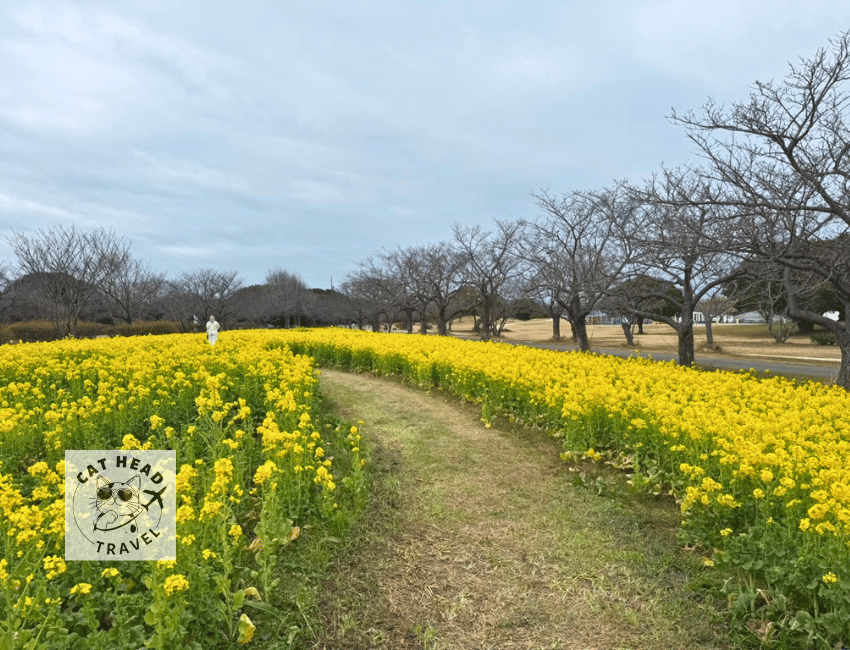
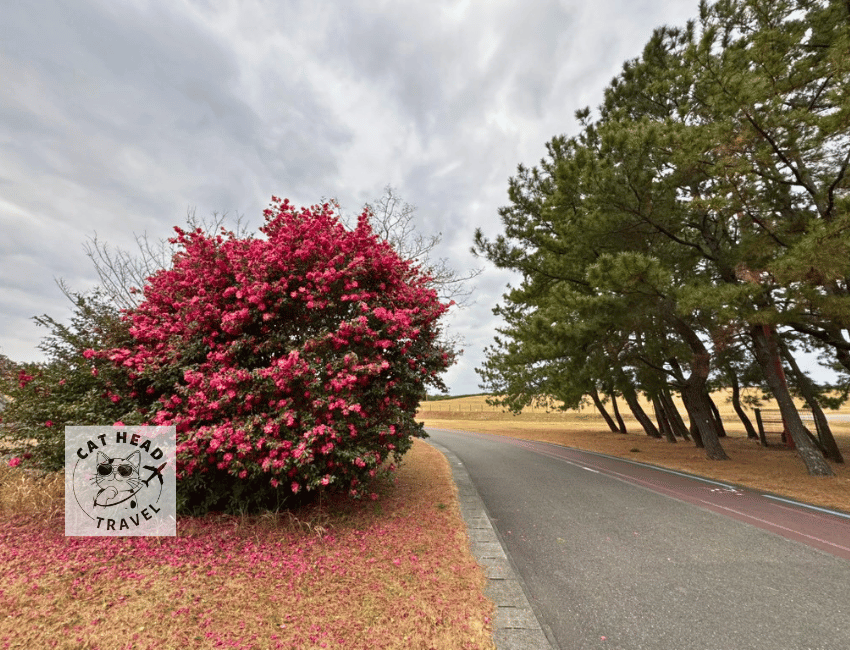
Many travelers think Uminonakamichi is only worth visiting in spring for baby blue eyes, in autumn for cosmos, or in summer for kochia. But actually, winter has its own charm too.
During my winter stroll, I saw beautiful cold-weather blooms like canola flowers (rapeseed), Sasanqua camellias, and traditional camellias.
While it’s not the massive, dramatic full-bloom flower carpet you see in spring, cycling and walking under the crisp winter sun felt incredibly relaxing and peaceful.
1.2 Animal Forest: A Must-Visit for Families 🐐
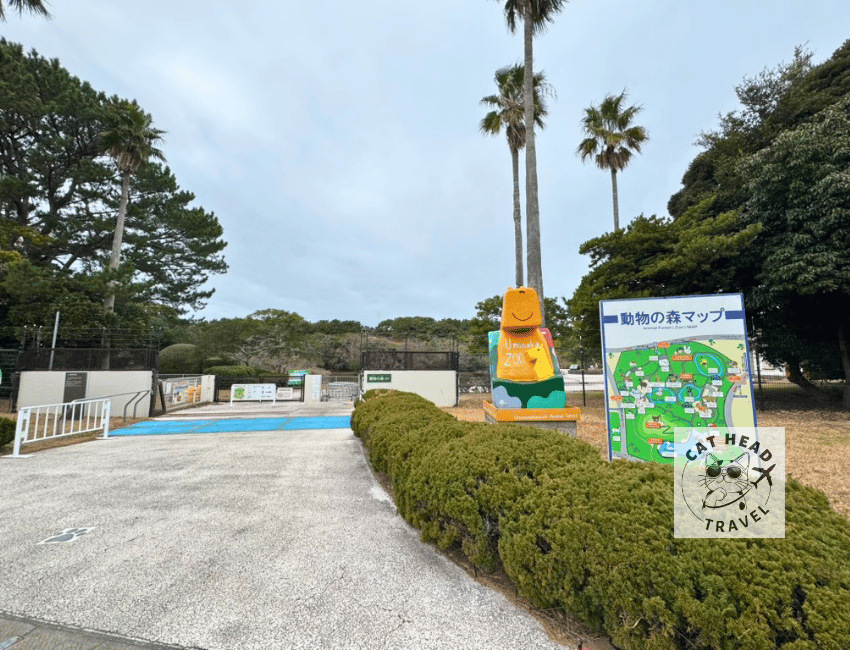
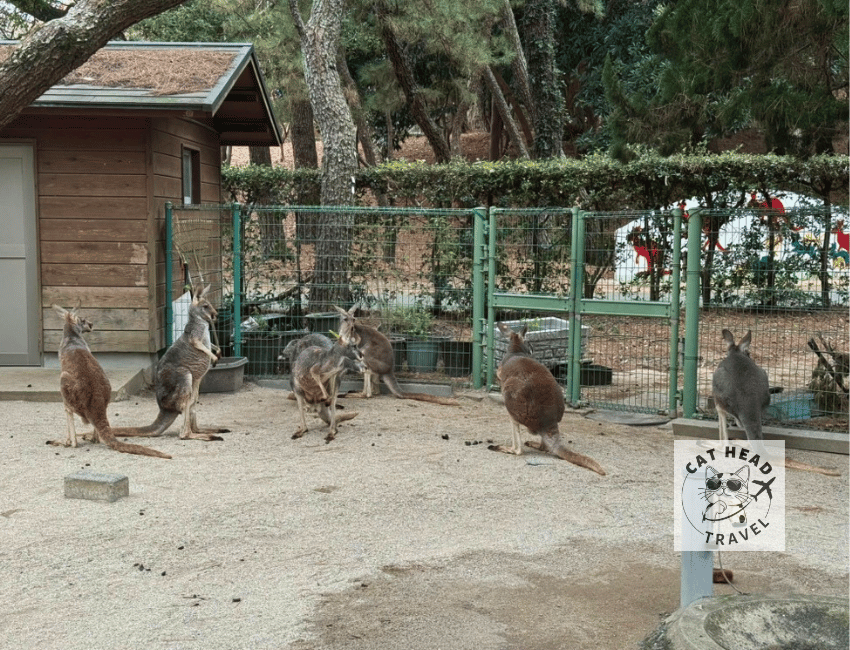
Next up was the Animal Forest inside Uminonakamichi Seaside Park. This is a gentle, open-concept petting zoo that is perfect for families traveling with kids. Designed around the theme of “a natural zoo where you can interact with animals,” it is home to about 500 animals across 50 different species, including kangaroos, capybaras, squirrel monkeys, and flamingos. The closest entrance and parking lot are the West Gate and West Parking Lot.
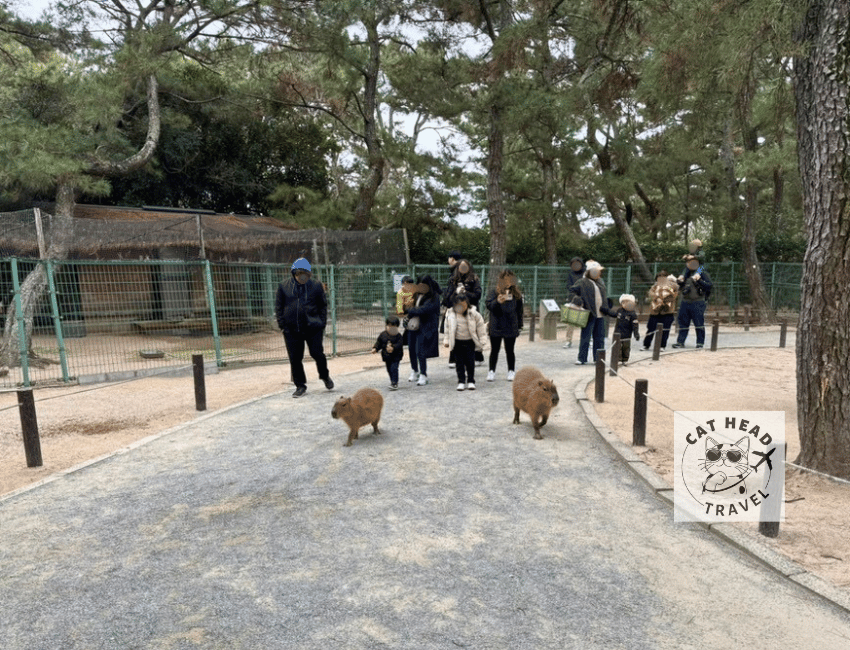
The capybaras here are completely unafraid of humans and wander around freely.
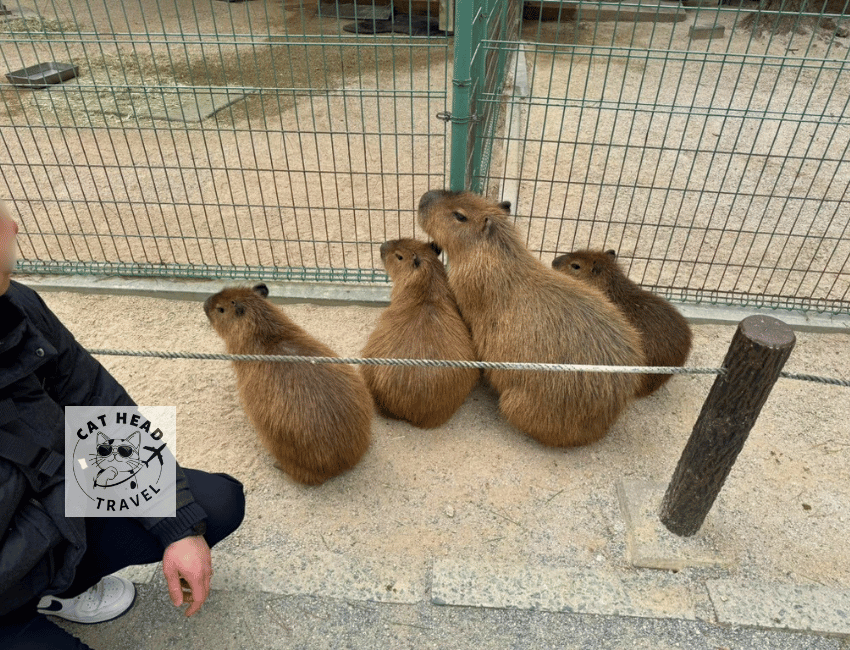
Their goofy, blank stares are unbelievably cute—you won’t be able to stop taking photos!
I spent about 45 minutes here, and it’s a fantastic spot for both children and animal-loving adults. You can get incredibly close to parrots, goats, sheep, and alpacas.
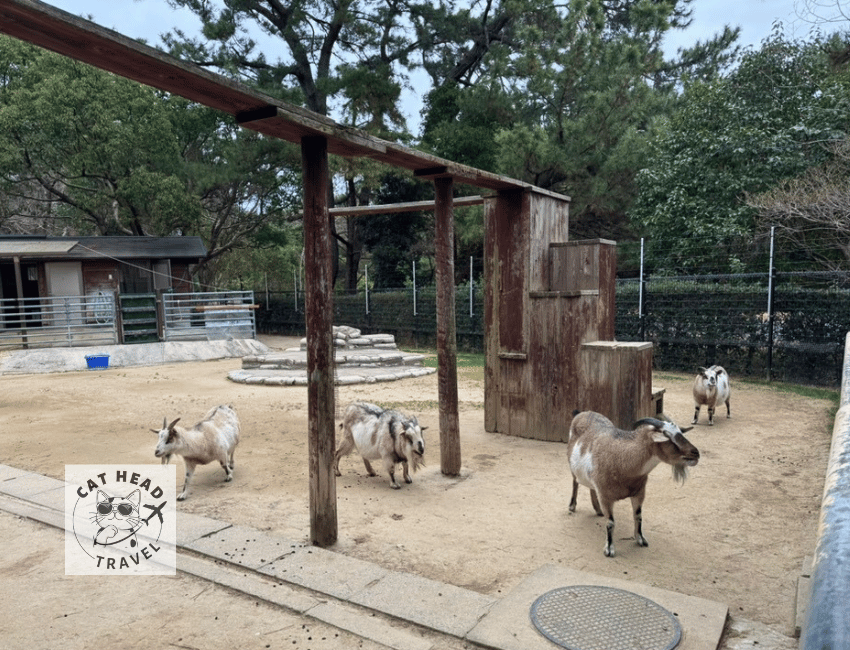
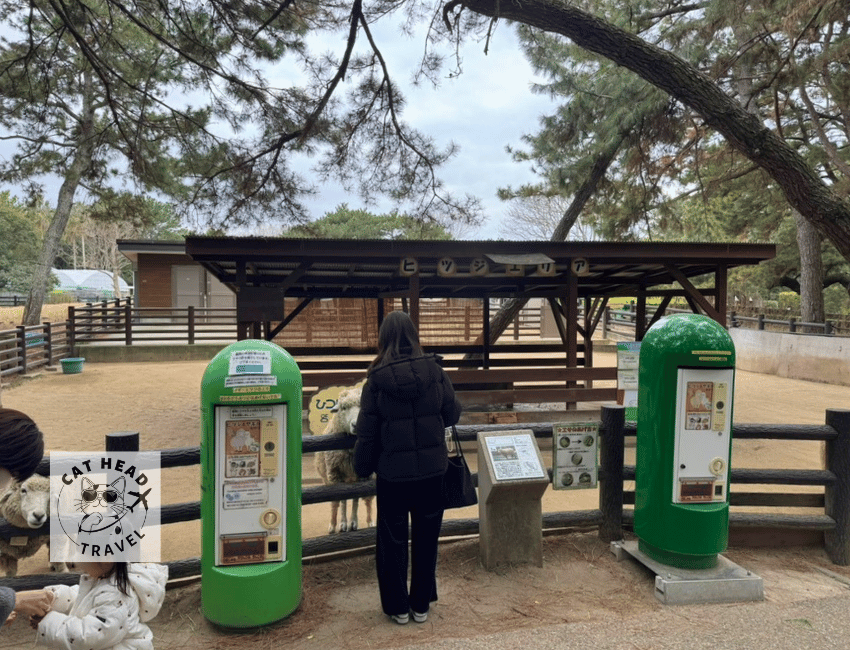
Near the goat and sheep enclosures, there are capsule vending machines where you can buy animal feed for 100 yen per pack. Keep in mind that the daily feed amount is limited, so they might sell out early.
The goats were very enthusiastic. The moment they noticed someone walking toward the capsule vending machine, they rushed over excitedly.
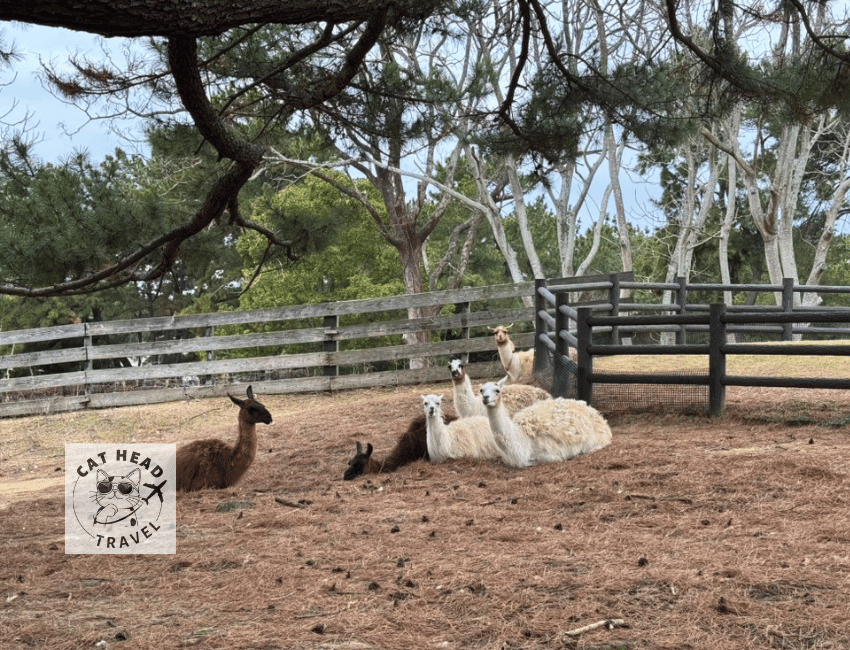
Meanwhile, the alpacas usually stand quietly on the little hills, calmly judging the humans.
🐱 Cathead’s Pro Tip:
If you are traveling with kids, do not rush through the Animal Forest. Even though the area looks small, kids will want to stop for a long time to feed the goats and watch the capybaras. Budget at least 45 minutes to an hour here for the best experience.
1.3 Marine World Uminonakamichi 🐬
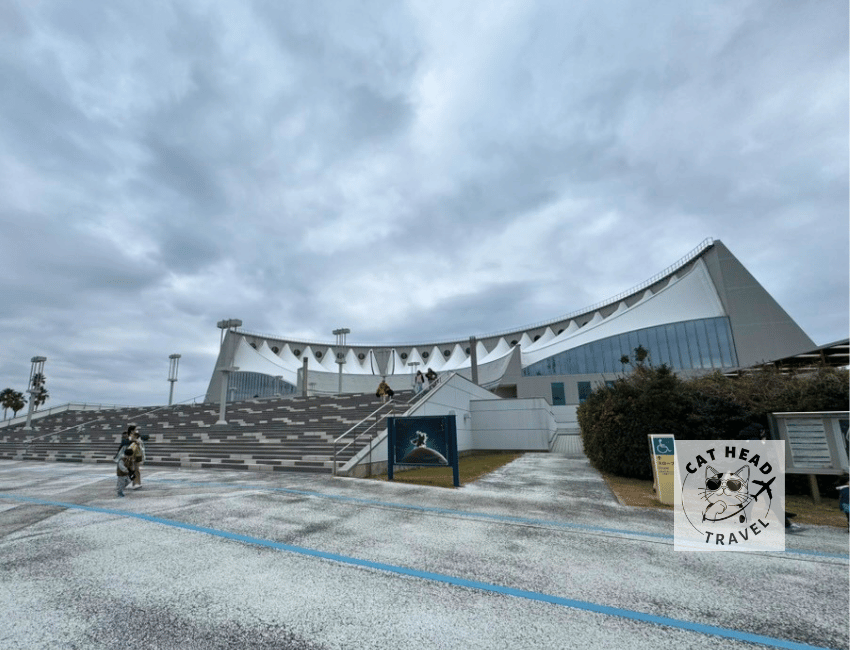
The final stop of the day trip was Marine World Uminonakamichi, the aquarium next to the park.
While it sits right next to the park, it requires a separate admission fee. It is located closer to Uminonakamichi Station and it has a parking lot nearby. If the aquarium is the main highlight of your day, you can actually move your car to the aquarium’s parking lot.
Marine World Ticket Prices: 2,500 yen for adults; 1,200 yen for elementary and junior high school students.
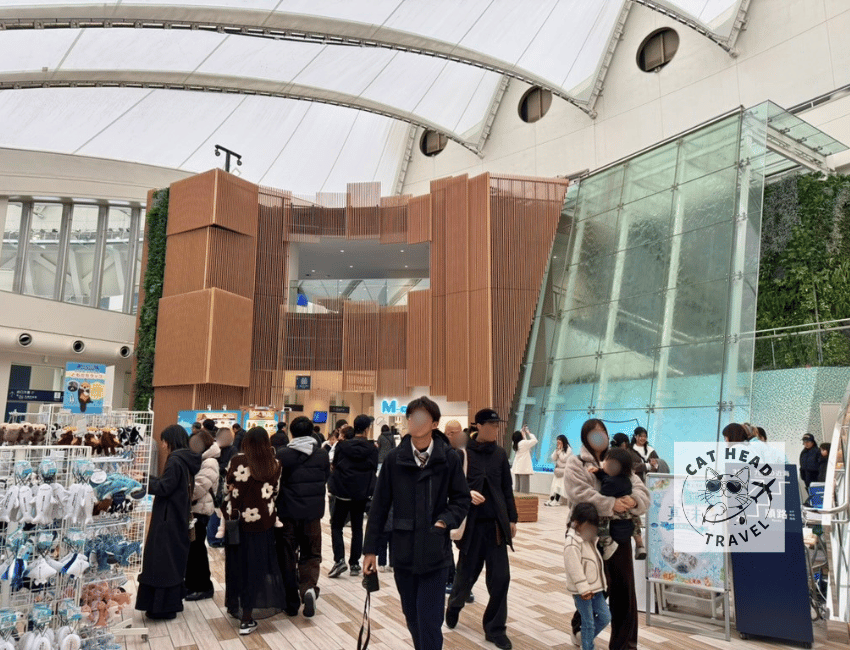
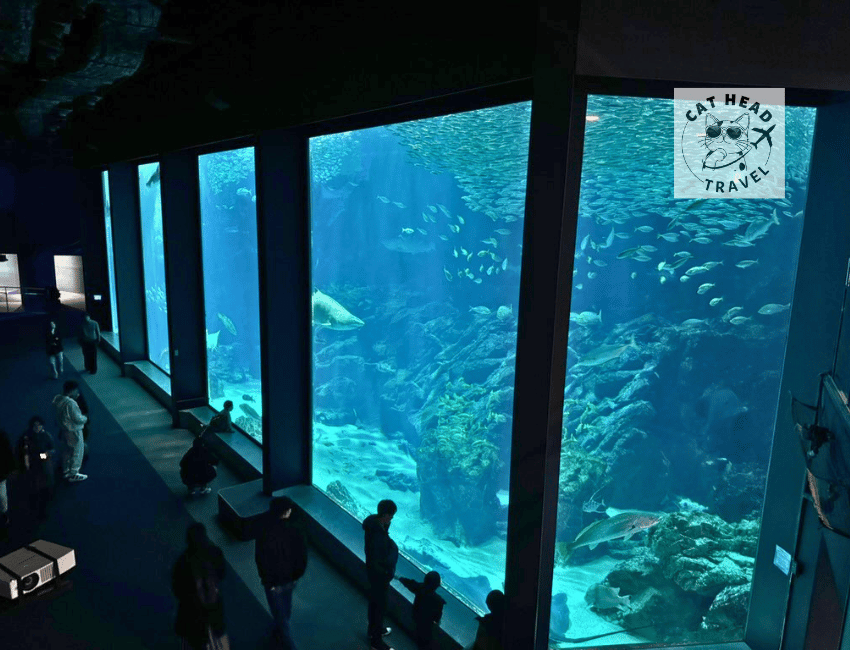
I spent about 1.5 hours here, but I highly recommend budgeting a full 2 hours. The aquarium is much busier and livelier than the park. Beyond just looking at fish, they offer incredible dolphin and sea lion shows, penguin walks, marine animal exhibits, souvenir shops, and casual food options.
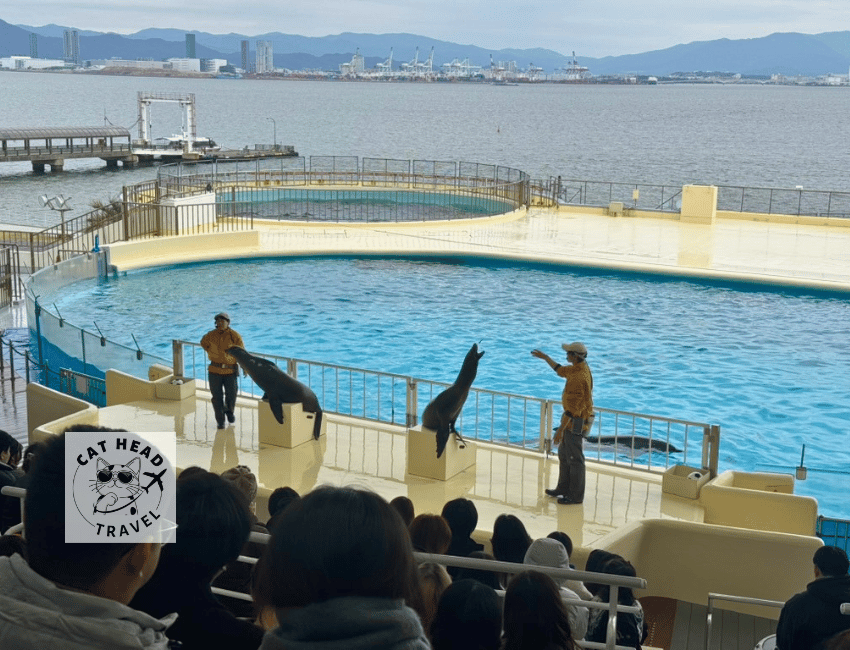
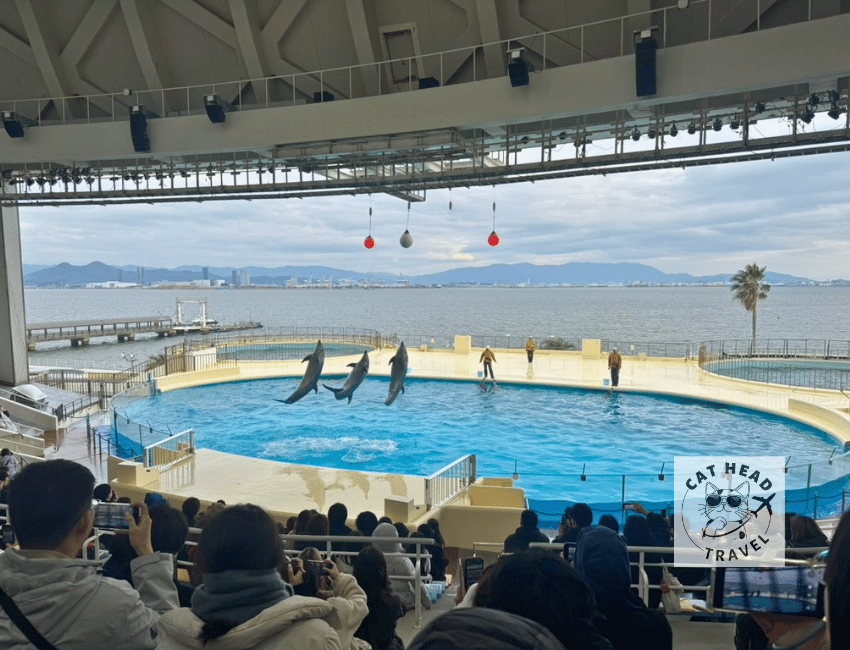
I also watched the dolphin and sea lion show. The aquarium usually hosts 3 shows per day, each lasting about 30 minutes. The dolphins and sea lions are incredibly smart and adorable—this is a must-see!
🐱Cathead’s Pro Tip:
If you don’t want to get soaked, avoid sitting in the front rows, especially if you have a camera, phone, or young kids!
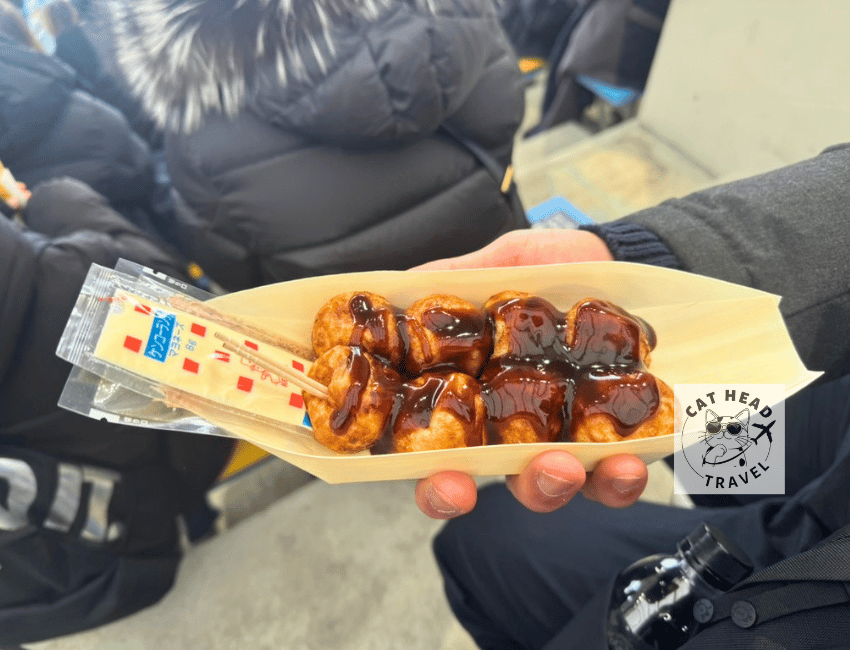
There is a snack stall near the show seating area. I grabbed some hot takoyaki (octopus balls) and enjoyed the show while resting my feet. The atmosphere was incredibly fun and laid-back.
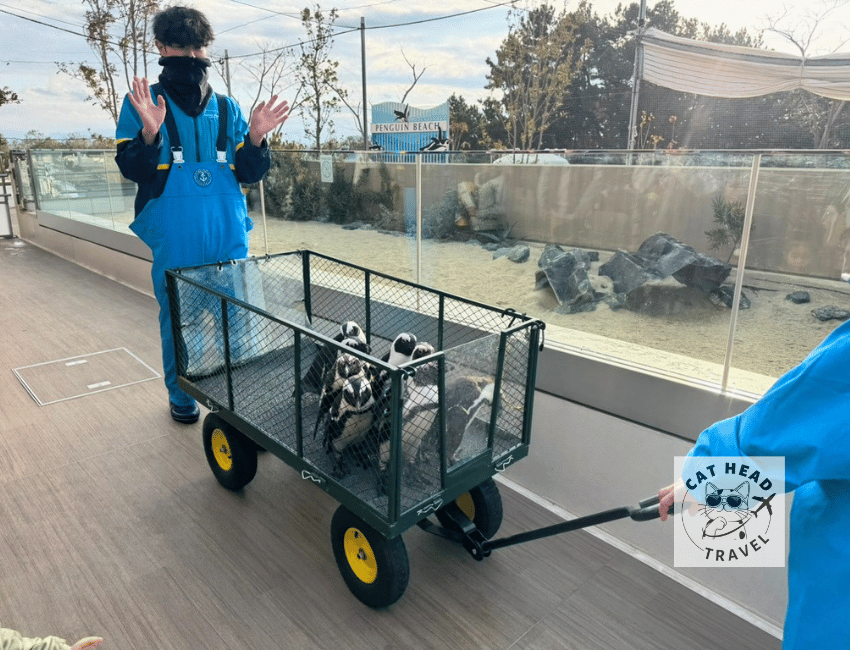
Another fun event is the “Goodnight Penguins”, usually held around 4:10 PM, where you can get a close-up view of the penguins waddling back to their night quarters.
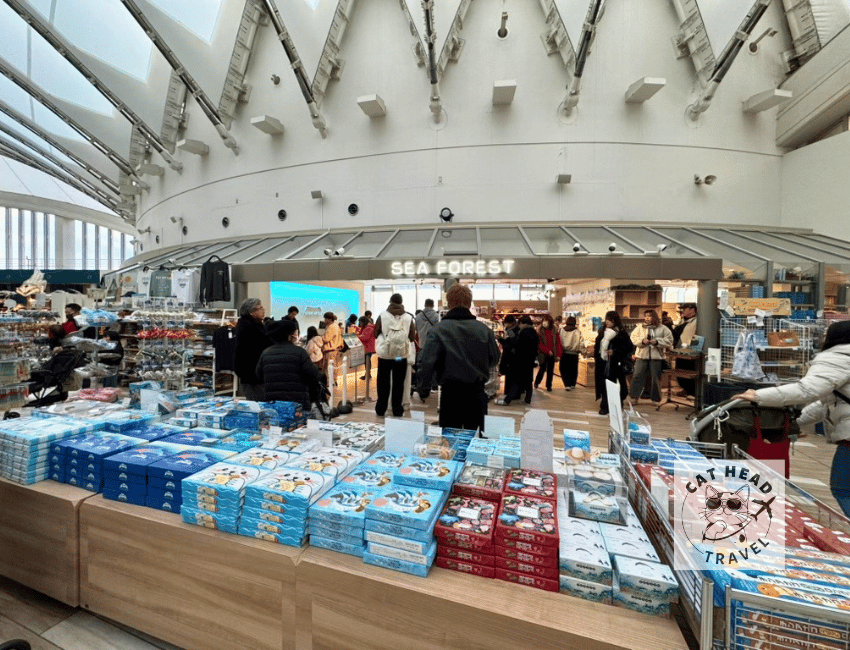
Finally, the aquarium gift shop is much bigger than expected. It’s packed with unique, cute marine life souvenirs, making it the perfect final stop to pick up gifts before heading back to central Fukuoka.
2. How to Get to Uminonakamichi Without a Car 🚅
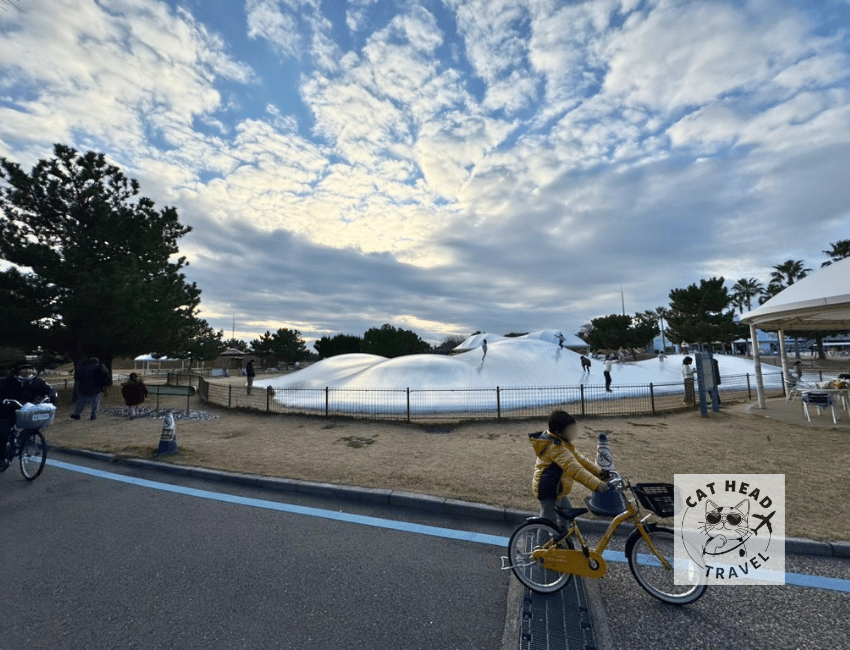
Although Uminonakamichi is still within the Fukuoka City, it is located outside the city center, so it is worth planning your route in advance.
If you are heading to visit Wonder World, the Sunshine Pool (the waterpark), or Marine World Uminonakamichi, you can take the JR train to JR Uminonakamichi Station. This drops you off right at the Uminonakamichi Gate.
If your main goals are the Large Open Field, Flower Hill, or Animal Forest, take the train to JR Saitozaki Station. From there, it’s about a 10-minute walk to the West Gate.
🐱 Cathead’s Tip:
If this is your first visit and your main focus is flowers and Animal Forest, taking JR to Saitozaki Station is the smoothest route.
If you are traveling with children and focus on the aquarium and amusement facilities, take the JR train to Uminonakamichi Station for direct access.
Exploring Further: If you plan to extend your day trip to Shikanoshima Island for a seaside lunch and coastal sightseeing, renting a car and driving offers much more flexibility.
3. Driving & Parking Tips: Which Parking Lot Is Your Best Bet? 🚗
Driving to Uminonakamichi Seaside Park is easy and convenient. A road trip from central Fukuoka (Hakata or Tenjin) takes only about 40 minutes.
Since the park is absolutely massive and has several parking lots, picking the wrong one means you’ll be walking miles before you even get to the good stuff. To save your feet and your time, you need a game plan. Here’s the lowdown on the three main parking lots and how to choose the right one for your trip:
The Quick Breakdown:
The West Parking Lot – Best for Flower Lovers & Cyclists
This is where I parked, and it was a total lifesaver for my winter itinerary. It drops you near the bicycle rentals, Flower Hill, the Rose Garden, and the Animal Forest. With over 1,700 spots, it’s the biggest lot on-site, making it your safest bet to find a space during peak travel seasons.
The Wonder World Parking Lot – Best for Families with Kids
If you’ve got kids in tow, park here. It sits right next to the Wonder World and massive playgrounds, and the Sunshine Pool if you’re visiting during the summer.
The Uminonakamichi Station Exit Parking Lot– Best for Aquarium Goers
Are you hitting up Marine World Uminonakamichi first, or just visiting Sunshine Pool? This lot is your best shortcut. It’s also right by the JR Uminonakamichi Station if you’re meeting up with friends.
💡 Quick Parking Pro-Tips:
The Flat Rate: Parking will run you a flat 600 yen per day for regular-sized cars (1,600 yen for large vehicles).
The Parking Perk: If you pull into a lot and realize you’re in the wrong place, don’t panic—parking is free if you leave within 30 minutes. Even better? Your parking pass is good for the whole day across all park lots.
Don’t Cut It Close: The gates lock for entry 1 hour before the park closes, so make sure you get there with time to spare.
4. Bike Rentals: The Best Way to Explore the Park 🚲
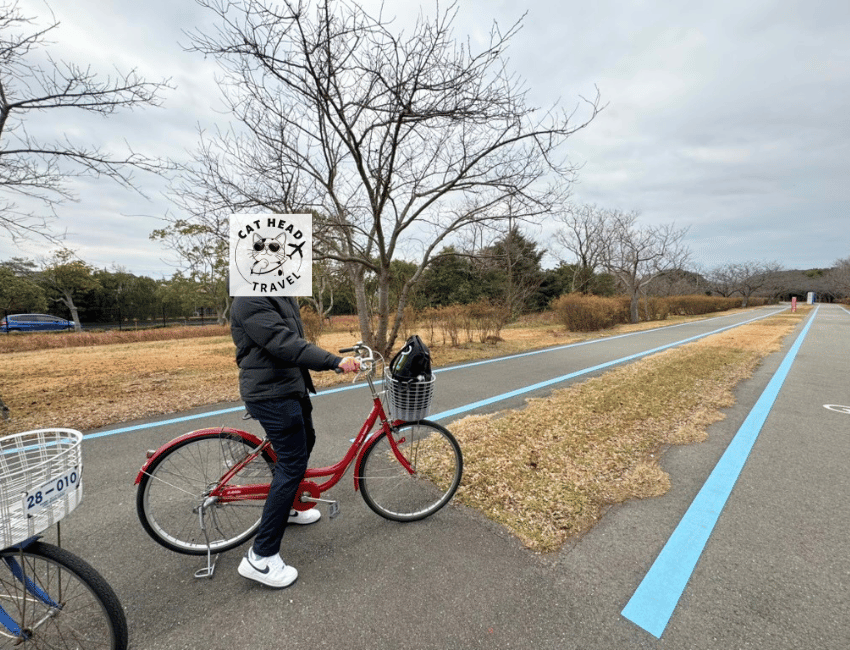
Uminonakamichi Seaside Park is huge, so I truly think renting a bike will save your day and make your visit much more enjoyable.
The park features a fantastic 7.5-mile (12 km) cycling trail system with dedicated bike parking at every major spot. You can get around via regular rental bikes, electric scooters, or the park’s shuttle bus.
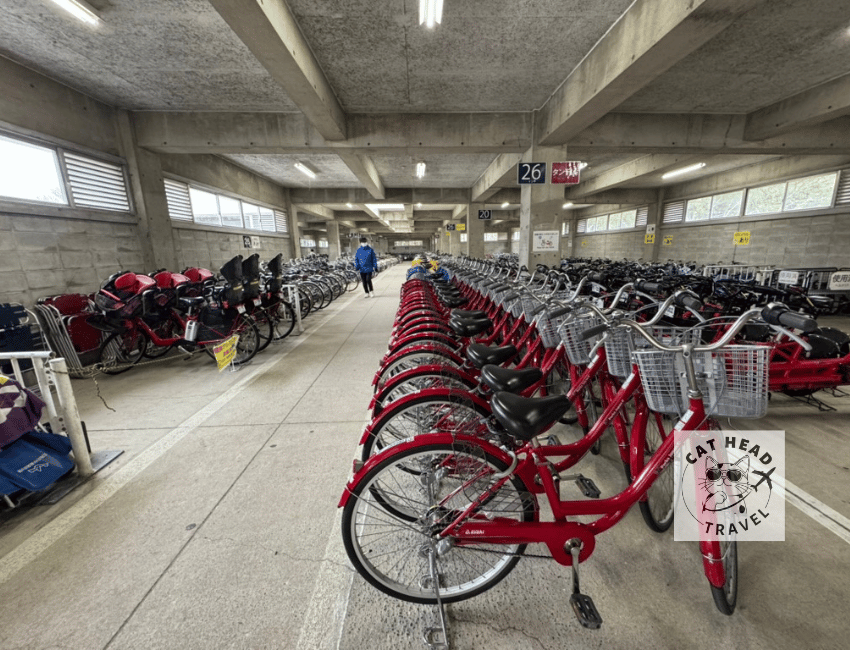
There are four cycling centers scattered across the park, but the West Cycling Center has the biggest fleet.
Rental Rates & Seasons:
Peak Season (March–May, Sept–Nov): A regular adult bike costs 600 yen for 3 hours, with a 100 yen charge for every extra 30 minutes.
Off-Peak Season (June–Aug, Dec–Feb): You can score a Full-Day Pass for just 500 yen for adults (300 yen for kids).
Electric Bikes (E-Bikes): These cost 1,000 yen plus a 1,000 yen refundable deposit. Note: You can only rent and return e-bikes at the West Cycling Center.
Kids’ bikes and child-seat attachments are also available.
I originally wanted to grab an e-bike, but they were completely out of stock by the time I arrived, so I rented a regular bike instead.
🐱Cathead’s Pro-tip:
If you enter through the West Gate and want to hit the flower fields and the Animal Forest, a bike is non-negotiable. However, if your only goal for the day is Marine World Uminonakamichi, you don’t need a bike.
Watch the Clock: Bike returns are usually due 30 minutes before the park closes. Give yourself a head start so you aren’t sprinting back at the last second. Aside from e-bikes, you can return standard rental bikes to any cycling center in the park!
5. 2026 Uminonakamichi Seaside Park Flower Blooming Calendar 🌸
| Month | What’s Blooming? | The Vibe & My Take |
| January | Camellias & early canola flowers | Honestly, the views aren’t super dramatic right now, but you get the place to yourself. It’s perfect for a quiet, crisp winter stroll. |
| February | Camellias, daffodils, canola flowers, and plum blossoms | Late winter starts dropping those early spring hints. This is the sweet spot for a “Flowers + Animal Forest + Aquarium” day trip. |
| March | Canola flowers, daffodils, cherry blossoms (sakura), tulips, and Iceland poppies | Spring flower season officially kicks off! This is easily one of the most stunning months of the year to visit. |
| April | Nemophila (Baby Blue Eyes), late cherry blossoms, tulips, and poppies | The absolute peak spring season. If you want to see that iconic, postcard-perfect sea of blue on Flower Hill, you need to book your trip for early to late April. |
| May | Spring roses, giant alliums, and late nemophila | You can still catch the gorgeous spring roses by mid-May, but the blue fields will definitely be fading out by then. |
| June | Hydrangeas, water lilies, and late spring roses | Not exactly a peak ‘sea of flowers’ month, but the hydrangeas look incredibly dreamy and moody during Japan’s rainy season. |
| July | Late hydrangeas, water lilies, and summer greenery | Heads up: summer gets pretty brutal. Pro-tip: rent a bike to check out the flowers early in the morning, then escape into the air-conditioned aquarium or grab lunch by noon. |
| August | Water lilies, Green Kochia (Summer Cypress), and pampas grass | The park turns into a lush, vibrant green wonderland. Those fluffy Kochia bushes look like bright green little pom-poms all month long. |
| September | Red spider lilies, gradient Kochia, and pampas grass | The ultimate summer-to-autumn transition. The Kochia bushes start shifting from green to fiery red—hit the park mid-to-late Sep to see the cool gradient effect. |
| October | Crimson Kochia, cosmos, red buckwheat, pink muhly grass, and autumn roses | Hands-down one of my favorite months. The bright red Kochia and massive fields of pink and white autumn cosmos are absolutely breathtaking. |
| November | Fall foliage, autumn roses, gingko trees, and late cosmos | Perfect for those cozy autumn walks. The fall roses peak from late October through late November, and the colors are stunning. |
| December | Early camellias & winter blooms | Definitely not a peak bloom month, but the winter camellias start opening up. It’s a great option if you want a chilly, crowd-free half-day trip. |
🐱 Cathead’s Pro Tip:
If you want that bucket-list, viral-worthy view, April’s Nemophila (Baby Blue Eyes) is the clear winner.
But if you’re planning a trip for the second half of the year, aim for October or November. The weather is way more comfortable than the summer heat, you get a ton of variety (hello, Kochia and Cosmos!), and it is the absolute best time to cruise around the park on a bike.
Final Thoughts
So, is Uminonakamichi Seaside Park worth visiting?
Absolutely. If you want to slow things down and take a breather during your Fukuoka vacation, Uminonakamichi Seaside Park is the perfect escape.
Unlike fast-paced city spots, this park isn’t just a quick photo-op. You can easily tailor it to your travel style: spring blooms, cozy winter bike rides, family time at the Animal Forest, or a world-class date day at Marine World Uminonakamichi.
My winter weekday trip was relaxing and fun. By avoiding the peak-season crowds, parking at the West Gate, renting a bike, and pairing the park with the aquarium, the route felt completely seamless. It’s an absolute dream if you are renting a car, but even if you’re taking the train, the two nearby JR stations make it incredibly accessible.
Should you add it to your first-ever Fukuoka itinerary? If your trip is 4 days or longer, it’s a resounding yes. It proves that Fukuoka is so much more than just shopping malls, tonkotsu ramen, and Dazaifu Shrine—it’s also home to refreshing ocean breezes, endless flower fields, scenic bike paths, and amazing marine life.
*All information provided above is for reference only. For full details, please refer to the official websites of the organizations.
🌍 Plan Your Kyushu Trip:
👉 Where to Stay in Fukuoka (2026): Best Areas & Hotels in Hakata and Tenjin
👉 Where to Stay in Fukuoka: Hotel Oriental Express Fukuoka Nakasu Kawabata Review
👉 Best Fukuoka Hotel Near Hakata Station? Hotel Forza Chikushi-Guchi I Review
👉 Best Places to Eat in Fukuoka (2026): Top Hakata & Tenjin Restaurants
👉 Best Time to Visit Fukuoka 2026: The Ultimate Guide
👉 Best Time to Visit Kyushu: A Seasonal Guide for First-Timers

Hi, I’m Cat Head! Having lived in the US, Canada, and Hong Kong, I bring a unique global perspective to the world of travel. I’m a Japan travel specialist dedicated to finding the best travel deals and crafting seamless DIY itineraries.
Whether you’re looking for luxury hotel reviews on a budget or travel hacks, I share my first-hand experiences and travel tips to make your next trip unforgettable.