- 2026-09-07 Published
- 2026-09-15 Updated
- Japan,
- By Cat Head
Best Time to Visit Hokkaido, Japan: Weather, Seasons & Travel Tips
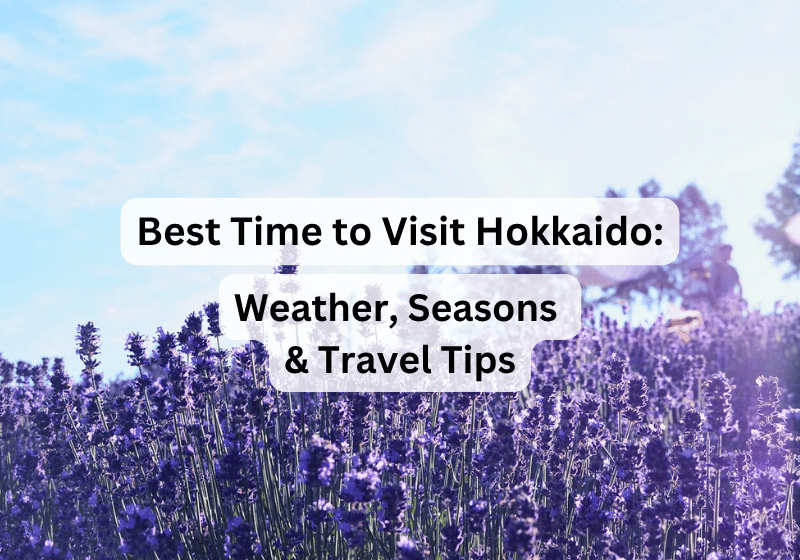
From Hokkaido’s powder snow in winter to its endless flower fields in summer—and from Sapporo’s city lights to the frozen seascapes of Shiretoko—Japan’s northernmost island has a different personality in every season.
That is what makes Hokkaido so special: there is no single month when everyone should visit. The best time to visit Hokkaido depends on whether you want lavender fields, fall foliage, winter festivals, skiing, seafood, or a quieter trip with lower prices.
In this guide, I’ll walk you through Hokkaido’s weather, what to wear, seasonal attractions, festivals, peak travel periods, and the cheapest months to visit. By the end, you should have a much clearer idea of when to plan your own Hokkaido adventure. 😸
Table of Contents
🗾 Hokkaido Travel Tips for First-Time Visitors
Planning your first trip to Hokkaido? Don’t worry—Cathead has put together a few practical tips to help you get started.
✈️ Hokkaido Airport Guide: New Chitose, Asahikawa, or Hakodate?
Most international visitors arrive through New Chitose Airport (CTS), Hokkaido’s largest airport and the main gateway to Sapporo.
JR Rapid Airport trains link the terminal directly with Sapporo Station in approximately 33 to 43 minutes. The airport itself is also worth exploring, with an on-site onsen (hot spring), extensive shopping, restaurants, and plenty of Hokkaido snacks to grab before your flight.
Depending on your route, booking an open-jaw (multi-city) flight into one of Hokkaido’s regional airports can save you hours of backtracking:
🛬 Asahikawa Airport (AKJ): A convenient option for Furano, Biei, and Asahiyama Zoo. It is particularly useful for a summer flower-field itinerary. Some travelers fly into Asahikawa and leave through New Chitose Airport, avoiding the need to backtrack.
🛬 Hakodate Airport (HKD): Best for travelers focusing on southern Hokkaido. It provides easy access to Hakodate’s morning market, historic Motomachi district, night view, and nearby hot springs. You can also continue north toward Lake Toya and Noboribetsu.
🗺️ Classic Hokkaido Itinerary for First-Time Visitors
A popular starter route for first-timers is:
Sapporo → Otaru → Hakodate
Sapporo: Hokkaido’s largest city, known for food, shopping, nightlife, and the Sapporo Snow Festival.
Otaru: A charming port town with a historic canal, converted stone warehouses,glassmaking artisan shops, and excellent desserts.
Hakodate: Famous for fresh seafood, historic Western-style architecture, and its panoramic night view.
💡Seasonal Add-ons: In summer, extend your route to Furano and Biei for sprawling lavender and flower fields. In winter, add an extra night in Noboribetsu or Lake Toya for an authentic onsen (hot spring) resort experience.
📅 How Many Days Should You Spend in Hokkaido?
For a first visit, plan for 5 to 7 days to cover the core highlights without feeling rushed.
A balanced starter breakdown:
Sapporo: 2–3 nights
Base yourself here to explore the city center and take an easy day trip to Jozankei Onsen.
Otaru: Day trip or 1 night
Stroll the scenic canal, explore Sakaimachi Street, and feast on fresh seafood or famous local sweets.
Hakodate: 1–2 nights
Enjoy the famous morning market, walk through historic Motomachi, and ride the ropeway up Mount Hakodate.
If you want to include Furano’s flower fields, hit the ski slopes in Niseko, or explore eastern Hokkaido, expand your itinerary to 8 to 10 days.
💡Hokkaido is roughly the size of South Carolina and accounts for more than 20% of Japan’s total land area. Distances between regions are much greater than most first-time visitors realize—avoid the temptation to cram the entire island into a single week!
🚆 Getting Around Hokkaido
JR trains and highway buses connect Hokkaido’s major cities, though departure frequency drops noticeably in rural areas.
Sapporo to Otaru: ~30–45 minutes via JR Rapid Airport train.
Sapporo to Hakodate: ~3.5 to 4 hours via Limited Express train.
Note on flying: While domestic flights exist between Sapporo and Hakodate, once you factor in airport transfers, security lines, and check-in times, flying rarely saves time compared to the train.
Driving gives you much more flexibility, particularly for summer trips through Furano and Biei. In winter, however, renting a car should only be considered if you are comfortable driving on snow and ice.
😸 Cathead’s Take
The two most common mistakes I see on a first Hokkaido trip are overpacking the itinerary and underpacking clothes.
Temperatures fluctuate significantly between coastal cities, downtown centers, and alpine passes.
Distances are long, and heavy winter snowfall can delay or temporarily suspend train services. Always build buffer time into your daily plans—especially if traveling between December and March.
🚗 Is Hokkaido Good for a Road Trip?
Yes — Hokkaido is one of the best regions in Japan for a road trip.
Because the island is so large, many attractions are spread far apart. For example, driving from Sapporo to Furano takes about two hours in good conditions. Some rural destinations have limited bus or train service, making a car far more convenient.
The biggest advantage is flexibility. In places such as the Furano flower fields and Biei’s Patchwork Road, much of the scenery appears between the major attractions. Having a car allows you to stop at small farms, viewpoints, and roadside cafés whenever something catches your eye.
Essential Tips for U.S. Drivers:
Driving Permit: American drivers must obtain an International Driving Permit (IDP) from AAA prior to departure. Carry both your IDP and standard U.S. driver’s license while driving.
Left-Side Driving: Remember that traffic moves on the left side of the road in Japan.
Traffic Rules: Unlike in the U.S., turning right on red is strictly prohibited in Japan unless a green arrow signal explicitly permits it.
Winter Warning: Winter driving is a high-risk experience due to black ice, heavy snowpack, and poor visibility. If you lack experience driving in winter conditions, rely on trains, buses, or local day tours instead.
🌸 Spring in Hokkaido: March–May
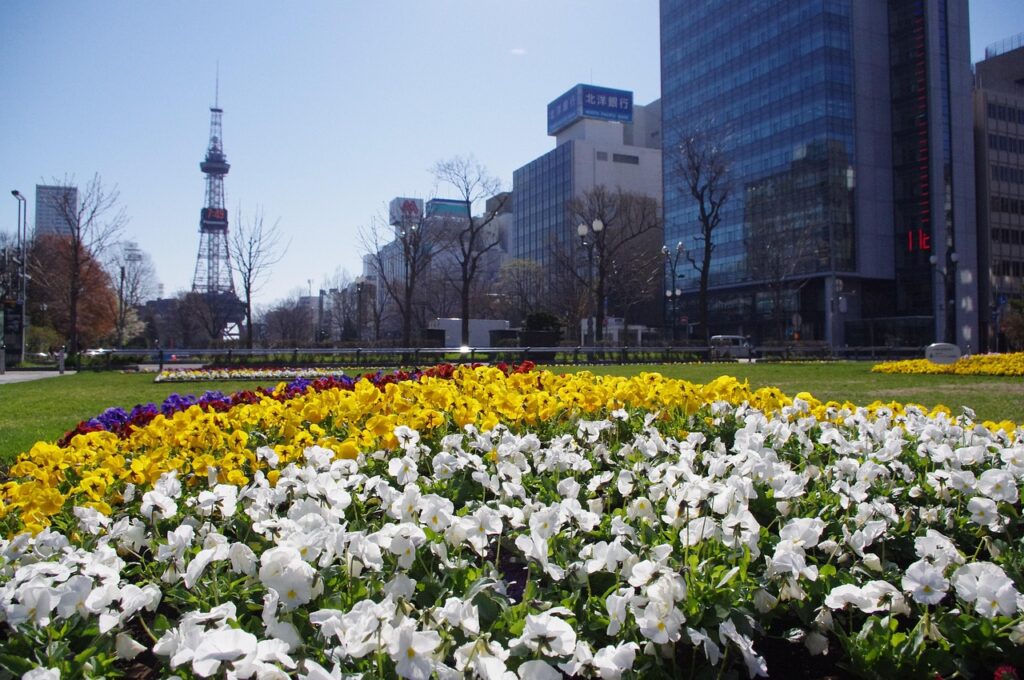
The Vibe: Melting Snow, Cherry Blossoms, and Fresh Greenery
March is still crisp and wintery in Hokkaido. In Sapporo, the monthly average is around 34°F (1°C), while April gradually warms up and May becomes much more comfortable, averaging around 55°F (13°C). Mornings and evenings remain chilly across the island, and slushy sidewalks are common during the early spring thaw.
Best Places to Visit in Hokkaido in Spring
🌸🏞️ Maruyama Park and Hokkaido Shrine | Sapporo
Cherry blossoms in Sapporo generally bloom from late April into early May, several weeks later than in Tokyo or Kyoto.
At Maruyama Park and Hokkaido Shrine, pale pink blossoms, plum flowers, wooden shrine buildings, and fresh spring greenery create one of the city’s most relaxing seasonal walks. After exploring the grounds, take a short stroll to the neighboring Maruyama Zoo.
🛤️🏘️ Otaru Canal and the Former Temiya Railway Line | Otaru
Spring brings clearer skies and a softer atmosphere to Otaru. The canal reflects the town’s brown stone warehouses, while the former Temiya railway tracks offer a quiet walking route through the historic center.
From the canal, continue toward Sakaimachi Street, where you will find glass workshops, music-box stores, cafés, and dessert shops. Return to the canal around sunset, when the lamps give the waterfront the atmosphere of an old movie set.
🦀🦀 King Crab and Horsehair Crab
King crab (Tarabagani): King crab is available in Hokkaido almost year-round, so there is no single definitive season when it is at its best. Its thick legs are packed with firm, meaty flesh, making it one of Hokkaido’s most iconic crab dishes.
Horsehair crab (Kegani): Fishing seasons vary across Hokkaido, so you can enjoy seasonal horsehair crab at different times of the year. In spring, the Sea of Okhotsk is especially famous for ryuhyo-ake kegani (“post-drift-ice crab”). Harvesting begins after the drift ice recedes, and the crab is prized for its sweet, delicate meat and rich kani miso (crab tomalley).
What to Wear in Hokkaido in Spring
Layering is key. Early spring weather can range from sunny to freezing in a single afternoon.
Clothing: Thermal base layers, a fleece or wool sweater, a lightweight down jacket, and a wind-resistant shell.
Footwear: Water-resistant shoes or boots with non-slip rubber soles—essential for navigating slushy, melting snow on city sidewalks in March and April.
☀️ Summer in Hokkaido : June–August
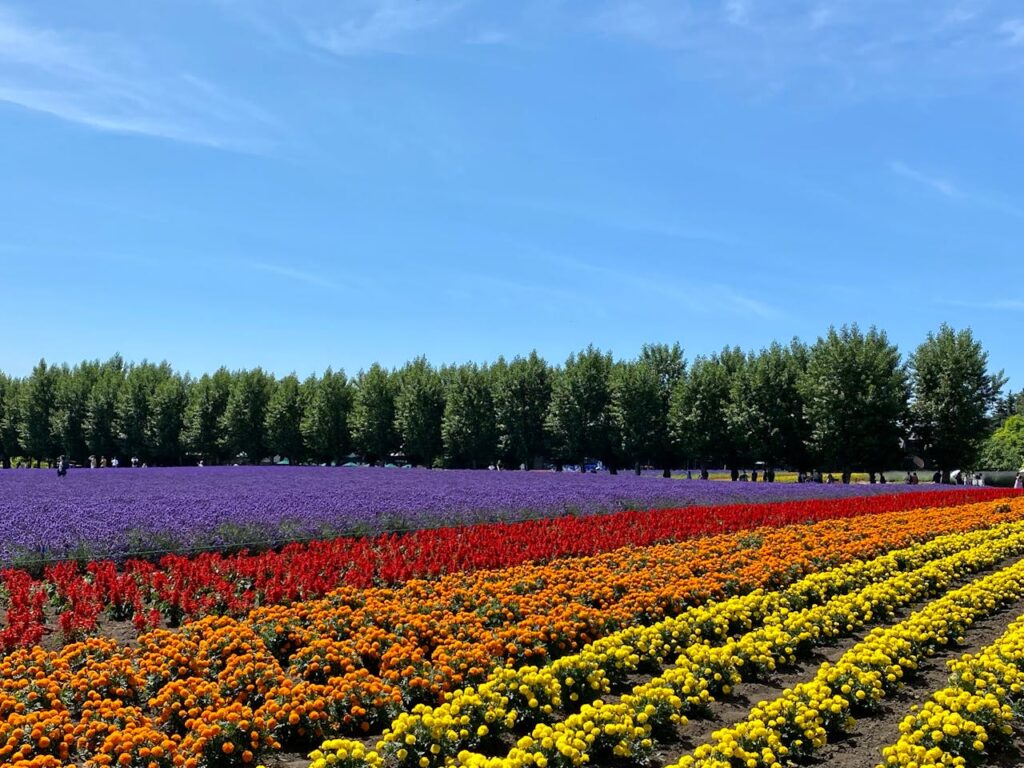
The Vibe: Flower Fields, Scenic Road Trips, and Comfortable Weather
Summer is one of the most popular times to visit Hokkaido.
Sapporo’s average temperature is approximately 70°F (21°C) in July and 72°F (22°C) in August, with average daytime highs of around 78–80°F (25–26°C). Although hot days still occur, Hokkaido is generally less humid than Tokyo, Kyoto, and Osaka.
Best Places to Visit in Hokkaido in Summer
💜🌾 Furano Lavender Fields | Furano
Furano’s lavender fields are among the most recognizable summer landscapes in Japan.
The exact bloom depends on the variety and weather, but lavender generally begins flowering in late June. At Farm Tomita’s Lavender East, the best viewing period is usually from early to mid-July, while other late-blooming fields can remain colorful into late July or early August.
When the purple fields are framed by the distant Tokachi mountain range, the scenery feels unmistakably Hokkaido. If lavender is the main purpose of your trip, I would aim for the middle of July and reserve your hotel and rental car well ahead of time.
🌈🏞️ Shikisai-no-Oka and Shirogane Blue Pond | Biei
At Shikisai-no-Oka, different flowers bloom from spring through fall, with the hills usually at their most colorful between July and September.
The sweeping rows of flowers follow Biei’s rolling landscape, creating a natural composition of bright fields, farmland, and distant mountains.
Nearby, Shirogane Blue Pond is known for its unusual blue water, created by natural minerals and suspended particles. The color changes with the weather, light, wind, and season, so photographs can range from pale turquoise to a deeper blue.
Exploring Biei by rental car offers the most freedom, though guided day tours operate out of Sapporo and Asahikawa.
🎆🔥 Lake Toya Long-Run Fireworks Display | Lake Toya
Running nightly from late April through late October, this 20-minute fireworks show is launched from boats that glide across the water.
You can watch the display directly from the lakeside promenade, an evening sightseeing cruise, or your hotel room balcony. Spending a night at a lakeside ryokan (traditional inn), soaking in an onsen, and watching hanabi (fireworks) over the water is as romantic as a Hokkaido summer gets.
What to Wear in Hokkaido in Summer
Clothing: T-shirts, shorts, light pants or skirts, and a light fleece or windbreaker for cooler mornings, evenings, and high-altitude mountain passes.
Gear: Comfortable walking shoes or trail runners, sunglasses, sunscreen, a hat, and a compact umbrella or rain shell.
🍁 Fall: September–November
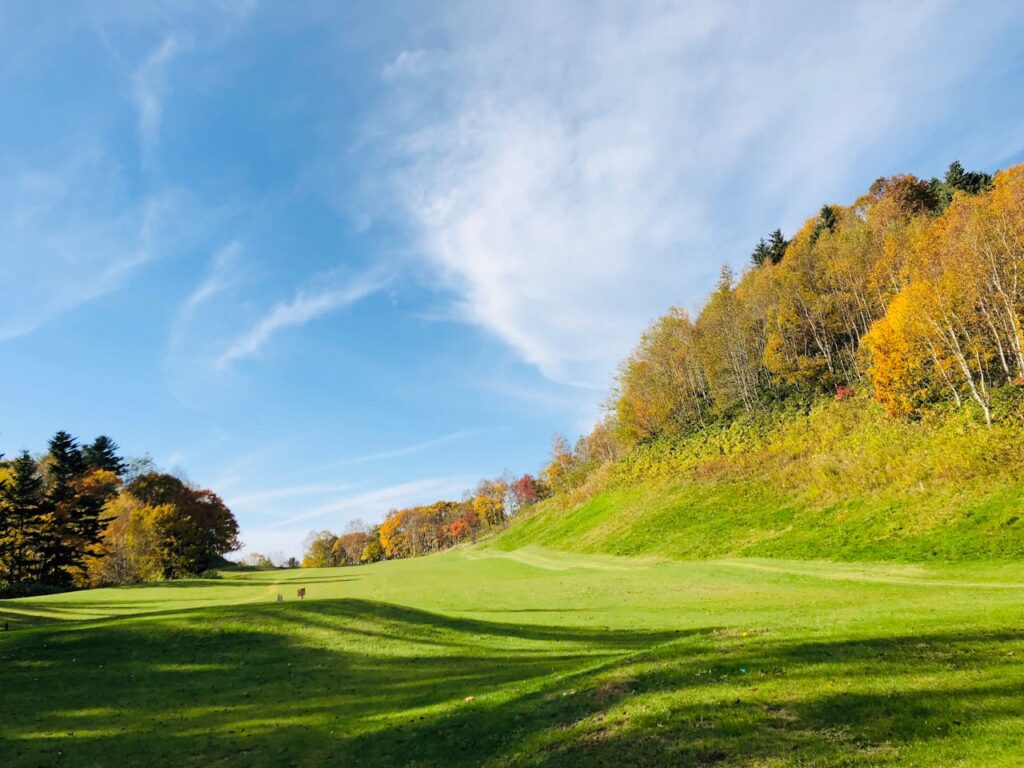
The Vibe: Peak Fall Foliage and Crispy Crisp Air
September is generally mild, with Sapporo averaging around 65°F (19°C). Temperatures fall noticeably in October, and by November, daytime conditions can feel wintry. Snow may begin appearing in Sapporo and other cities during the month.
Best Places to Visit in Hokkaido in Fall
🍁⛩️ Jozankei Onsen and Hoheikyo Dam | Near Sapporo
Located about an hour from central Sapporo, Jozankei is one of Hokkaido’s best-known hot spring towns.
The town sits in a mountain valley along the Toyohira River, combining forest scenery with traditional inns and outdoor hot springs. Autumn is particularly beautiful, with the valley turning shades of red, orange, and gold.
Foliage usually reaches its peak around early to mid-October, although timing varies with elevation and weather. The surrounding mountains and Hoheikyo Dam are reflected in the water, making this one of my favorite fall day trips from Sapporo.
🍎🏙️ Odori Park and Central Sapporo | Sapporo
In fall, Sapporo’s ginkgo and maple trees turn the city center gold, orange, and red. Odori Park is an easy place to enjoy the seasonal color without leaving the city.
Odori Park also hosts the annual Sapporo Autumn Fest (typically running from early September into early October), a massive food festival showcasing regional seafood, ramen, craft beer, local wines, and farm-fresh produce from every corner of Hokkaido.
After indulging at the food stalls, take the ropeway up Mount Moiwa for one of Japan’s top-ranked night views.
What to Wear in Hokkaido in Fall
Layering is essential as conditions shift rapidly between mild afternoons and freezing nights.
September: T-shirts or long-sleeve shirts paired with a light fleece, denim jacket, or sweater for evenings.
October & November: A thermal base layer, thick sweater, windproof shell, or packable down jacket.
Accessories: If traveling in late October or November—especially into mountain passes like Jozankei or Daisetsuzan—pack a warm beanie, scarf, gloves, and water-resistant shoes with good tread.
❄️ Winter: December–February
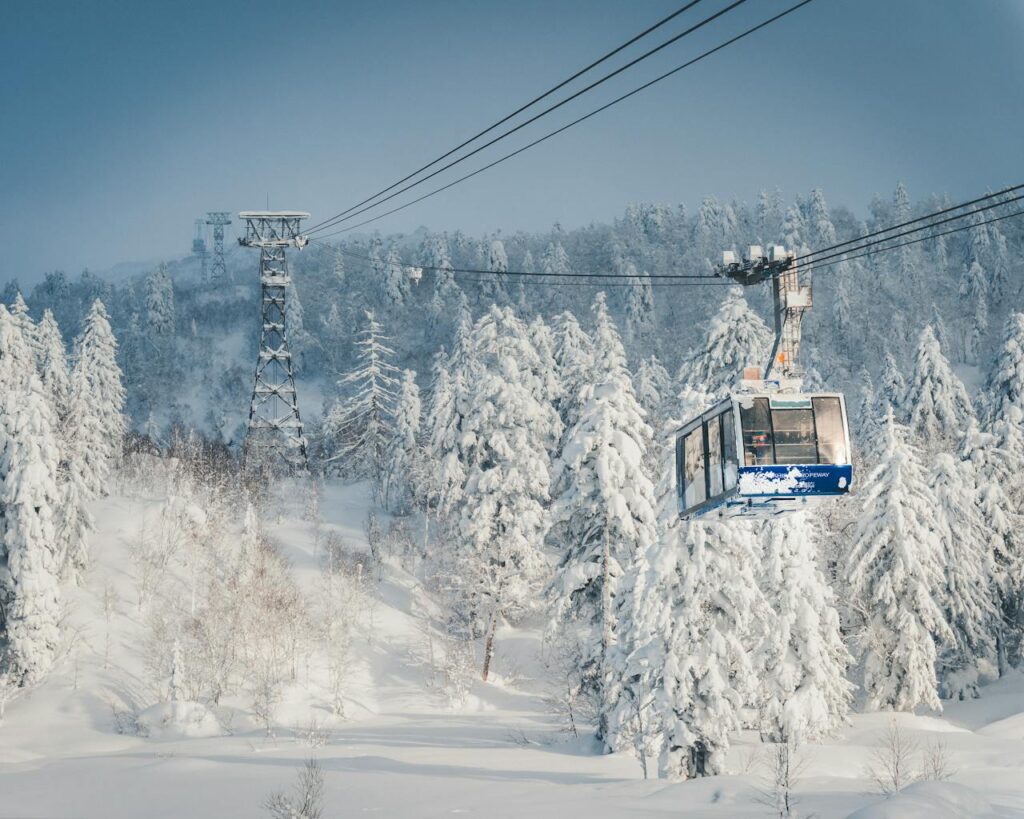
The Vibe: Powder Snow, Winter Festivals, and Sea Drift Ice
Winter is when Hokkaido becomes the snow-covered landscape many travelers imagine.
Sapporo’s average January temperature is approximately 26°F (-3°C), and average daytime highs remain close to freezing. Strong ocean winds and snowfall can make ambient temperatures feel much colder, so proper gear is essential.
Best Places to Visit in Hokkaido in Winter
⛄🏞️ Sapporo Snow Festival | Sapporo
Held in early February, the Sapporo Snow Festival is Hokkaido’s signature winter event.
It spans three main sites: Odori Park (featuring massive, story-tall snow sculptures), Susukino (displaying intricate ice sculptures alongside vibrant nightlife), and Tsudome (offering snow slides and family-friendly snow rafting).
Pro Tip: Visit Odori Park during the afternoon to admire the detail, then return after dark when dynamic projection-mapping lights up the snow.
🕯️🏙️ Otaru Snow Light Path | Otaru
The Otaru Snow Light Path is one of Hokkaido’s most atmospheric winter festivals.
Every February, candles and handmade snow lanterns illuminate the canal area and historic streets. Their warm light reflects across the snow, water, and old stone warehouses, giving the town a gentler and more romantic atmosphere than the large-scale Sapporo Snow Festival.
🧊🚢 Abashiri Icebreaker Cruise and Shiretoko Drift Ice | Eastern Hokkaido
Each winter, drift ice formed near the mouth of Russia’s Amur River moves south across the Sea of Okhotsk and eventually reaches northeastern Hokkaido.
The fragmented white ice covers the sea like a moving puzzle, constantly shifting with currents, wind, and tides. It is one of Hokkaido’s most dramatic natural phenomena.
From Abashiri, you can board the Aurora icebreaker ship and watch the ship push through the floating ice. The operating season generally runs from late January through March, while the probability of seeing drift ice has traditionally been highest from mid-February to early March. Conditions vary every year, and a cruise cannot guarantee that ice will be visible.
For adventurous travelers, guided drift-ice walks in Utoro (Shiretoko Peninsula) allow you to suit up in waterproof drysuits and walk directly on the ice floes with local guides.
🌃🌄 Mount Hakodate Night View | Hakodate
Mount Hakodate offers one of Japan’s most famous city views.
From the summit, Hakodate’s narrow urban area appears between Hakodate Bay and the Tsugaru Strait, creating its distinctive hourglass shape. In winter, cold, dry air can make the city lights look especially clear and bright.
The ropeway is the easiest way to reach the summit, with the ride taking about three minutes. Hours vary by season, and the ropeway may temporarily close for maintenance, so check the official schedule before visiting.
🎿 World-Class Skiing & Powder Snow | Niseko & Rusutsu)
If you ski or snowboard, Hokkaido’s light, dry “Japow” is legendary. Niseko, Rusutsu, and Kiroro sit within 2-3 hours of Sapporo and offer westernized resort amenities, English-speaking instruction, and deep tree runs.
What to Wear in Hokkaido in Winter
Staying warm requires windproof layers and serious traction:
Clothing: A heavy, water-resistant down parka, thermal base layers, fleece or wool mid-layers, and insulated windproof pants.
Footwear: Waterproof snow boots with thick rubber treads are mandatory.
Accessories: Insulated gloves, a fleece-lined beanie, a neck warmer or scarf, and disposable hand/foot warmers, which can be purchased at any local convenience store.
📝 What Months Are Peak Travel Seasons in Hokkaido?
📌 Summer Peak Season: July–August
July and August are popular for Furano’s lavender fields, outdoor activities, summer festivals, and Japan’s school vacation period.
Hotel prices and rental-car rates rise, particularly around Furano, Biei, and major national holidays. Popular flower fields can also become extremely crowded during the middle of the day.
📌 Winter Peak Season: January–February
January and February attract skiers, snowboarders, and travelers visiting the Sapporo Snow Festival, Otaru Snow Light Path, Asahikawa Winter Festival, and Hokkaido’s drift ice region.
Ski resorts such as Niseko and Furano can be expensive during this period. Hotels, restaurants, transportation, and ski lessons should be reserved early.
📌 Golden Week and New Year
Japan’s Golden Week holidays, usually from late April into early May, are another busy period.
The New Year holiday is also extremely popular for domestic travel. Trains and hotels may sell out, while some restaurants and smaller businesses close or operate on reduced hours.
📝 What Is the Cheapest Time to Visit Hokkaido?
The cheapest time to visit Hokkaido is generally during its seasonal transition periods, particularly late November and mid-March through early April. Prices still depend on weekends, holidays, flight routes, and local events.
💡 Late November
By late November, the main fall foliage season has ended, but deep winter snow has not always arrived.
Flights and city hotels may be cheaper, and popular attractions feel quieter. The tradeoff is that the landscape can look muted, while the weather is cold, damp, and unpredictable.
💡 Mid-March to Early April
Winter events are over, lower-elevation snow is beginning to melt, and the spring flower season has not yet started.
Hotels in cities such as Sapporo may offer better rates during this period. However, melting snow can create wet sidewalks, slush, and patches of ice. Drivers should be especially cautious.
💡 Lake Toya Outside the Main Fireworks Season
Lake Toya’s main long-running fireworks season normally runs from late April through October.
From November through April, the onsen district generally receives fewer visitors, apart from holiday periods and special winter events. Ryokan availability may improve, making this a good time for a quiet hot-spring trip.
📝 Which Month Is Best for Hokkaido?
If I had to choose just one month for a first-time visitor, July is my top recommendation.
The weather is comfortable, daylight hours are long, and Furano and Biei are filled with lavender and summer flowers. It is the easiest season for road trips, hiking, cycling, picnics, and exploring rural areas.
However, July is also one of the busiest and most expensive months. If you prefer snow, February is the better choice. For foliage, food, and fewer crowds, consider late September or early October.
✨ Best for Outdoor Activities: July–August
Average daytime highs in Sapporo are around 78–80°F (25–26°C), making summer ideal for hiking, cycling, flower fields, lake activities, and scenic drives.
Rain showers are still possible, especially later in summer, so carry a lightweight rain jacket.
✨ Best for Photography and Festivals: February or July
February offers snow sculptures, candlelit winter streets, ski scenery, and drift ice.
July brings purple lavender fields, colorful hills, and Hokkaido’s most recognizable rural landscapes.
✨ Best for Hot Springs and Seasonal Food: October–March
Cool weather makes an outdoor onsen particularly appealing from fall through early spring.
This period is also excellent for oysters, scallops, salmon, salmon roe, and several regional seafood specialties, although the exact season differs by species and fishing area. If fresh uni is your priority, summer is usually the better choice.
📝 What Is the Most Beautiful Part of Hokkaido?
There is no single answer because Hokkaido changes so dramatically with the seasons.
For a first summer trip, I think Biei and Furano are the most beautiful parts of Hokkaido. The rolling farmland, flower fields, distant mountains, and open country roads create the classic scenery many travelers associate with the island.
In fall, I would choose Daisetsuzan National Park or Jozankei for mountain foliage.
In winter, Shiretoko and the Sea of Okhotsk offer the most unusual scenery, particularly when drift ice covers the coast.
If you prefer dramatic volcanic landscapes, lakes, and hiking, eastern Hokkaido—including Akan-Mashu National Park—is also worth considering.
😼 Cathead’s Hokkaido Travel Tips
📌 When Does It Snow in Hokkaido?
Sapporo usually records its first snow in November.
Stable snow cover is more likely from December through February. January and February are generally the best months for deep snow in cities, winter festivals, and classic snow-covered photographs.
Always check the weather and transportation status before traveling, since snowfall varies from year to year.
📌 Can You See the Northern Lights in Hokkaido?
In theory, faint auroras can occasionally appear during unusually strong solar activity, but Hokkaido is not a reliable northern-lights destination.
Rare low-latitude auroras were observed during the recent solar maximum, including displays visible from parts of Hokkaido. However, the probability remains extremely low, so you should not plan a trip around seeing them.
If the northern lights are your priority, destinations such as Alaska, northern Canada, Iceland, Norway, Sweden, or Finland are much better choices.
Final Thoughts
When Is the Best Time to Visit Hokkaido?
For flower fields and comfortable weather—mid-July:
Furano’s lavender is in bloom, Biei’s hills are colorful, and the weather is well suited to families and first-time visitors. The downside is higher hotel prices and larger crowds.
For a snow-covered fairytale—February:
Combine the Sapporo Snow Festival, Otaru Snow Light Path, skiing, and eastern Hokkaido’s drift ice in one winter adventure.
For food, hot springs, and better value—late November to early December:
Crowds are usually lighter, onsen stays feel especially inviting, and seasonal seafood is widely available. Just remember that fall foliage may already be over, while the deepest snow has not yet arrived.
Ultimately, the best time to visit Hokkaido depends on the experience you want.
No matter which month you choose, Hokkaido always seems to have another season—and another reason—to bring you back. 😸
*All information provided above is for reference only. For full details, please refer to the official websites of the respective hotels and organizations.
🌍 Plan Your Japan Trip:
👉 Where to Stay in Sapporo: Best Hotels Near Sapporo Station & Susukino
👉 Hoshino Resorts Tomamu The Tower Review: Rooms, Breakfast & Dinner at Buffet Dining hal
👉 When Is the Best Time to Visit Tokyo? Weather, Crowds & Festivals by Month
👉 Best Time to Visit Fukuoka 2026: The Ultimate Guide
👉 Where to Stay in Fukuoka (2026): Best Areas & Hotels in Hakata and Tenjin
👉 Best Fukuoka Hotel Near Hakata Station? Hotel Forza Chikushi-Guchi I Review
👉 Best Time to Visit Nagoya 2026: Weather, What to Wear & Things to Do
👉 Hilton Nagoya Hotel Review: Spacious Rooms, Western Comfort & Breakfast Buffet
✈️ Airport Lounge Reviews:
👉 New Chitose Airport Royal Lounge Review: Food, Free Beer & Runway Views
👉 Plaza Premium Lounge Nagoya (NGO): Full Review, Food & Access Guide
👉 Cathay Pacific The Deck Lounge Review at Hong Kong Airport: Is It Worth It?

Hi, I’m Cat Head! Having lived in the US, Canada, and Hong Kong, I bring a unique global perspective to the world of travel. I’m a Japan travel specialist dedicated to finding the best travel deals and crafting seamless DIY itineraries.
Whether you’re looking for luxury hotel reviews on a budget or travel hacks, I share my first-hand experiences and travel tips to make your next trip unforgettable.