Best Time to Visit Kyushu: A Seasonal Guide for First-Timers
If Japan feels like a poem written across four seasons, then Kyushu is the verse that flows most freely.
From the urban rhythm of Fukuoka in the north to the volcanic coastlines of Kagoshima in the south, every prefecture feels like it has its own personality—some lively, some gentle, some wrapped in rising hot spring steam.
Many travelers planning their first Japan trip think of Tokyo or Osaka. But for me—Cathead—Kyushu is where you truly feel Japan slow down. There are fewer crowds, more human warmth, soothing hot springs, and landscapes that feel both grand and deeply personal.
Table of Contents
🇯🇵 How is Kyushu different from the rest of Japan?
Kyushu is located in southwestern Japan and is one of the country’s four main islands. It consists of seven prefectures:
Fukuoka, Saga, Nagasaki, Kumamoto, Oita, Miyazaki and Kagoshima.
The name “Kyushu” comes from ancient Japan, when the island was divided into nine provinces—hence “Nine Provinces.” Even though only seven prefectures remain today, the historic name lives on.
What makes Kyushu special is how it compresses the essence of Japan into one island:
🍜 Fukuoka → urban food culture (hello Hakata ramen!)
⛪ Nagasaki → international history and European influence
🌋 Kumamoto & Aso → dramatic volcanic landscapes
♨️ Oita (Beppu & Yufuin) → world-class hot springs
🌊 Miyazaki → tropical coastline and ocean views
🔥 Kagoshima → Sakurajima volcano rising from the sea
But Kyushu’s charm isn’t just in its scenery—it’s in its pace.
People smile a little more, life moves a little slower, and food tastes just a little richer.
Kyushu compresses the best of Japan into one accessible island. You can slurp a steaming bowl of Hakata tonkotsu ramen in the morning and be soaking in an oceanfront sand bath by sunset.
🌟 First-Time Travel Tips for Kyushu
🔎 Getting around in Kyushu: Train vs. Bus vs. Car
Navigating Kyushu is easier than you think, but your choice of transport depends on your “travel personality.”
1. The JR Kyushu Rail Pass (Best for City Hopping)
If you prefer the speed of the Shinkansen (bullet train), the JR Kyushu Rail Pass is a must.
Options: Choose from All Kyushu, Northern, or Southern versions (3, 5, or 7-day passes).
Best for: Moving quickly between major hubs like Fukuoka, Kumamoto, and Nagasaki.
2. The SUNQ Pass (The Budget/Local Choice)
If your itinerary heads into the mountains or smaller coastal towns, the bus is king.
Coverage: Includes ~2,400 bus routes and even some ferries (like the Sakurajima ferry).
Best for: Reaching remote onsen towns not served by major train lines.
📌 Should I rent a car in Kyushu?
Absolutely. While you can do Kyushu without a car, renting one gives you total freedom.
Why drive? Public transport to spots like the Aso Volcano, the Nichinan Coast, or the Ibusuki sand baths can be time-consuming.
Public transportation does reach many of these areas, but schedules are often limited and connections can be time-consuming.
A rental car gives you flexibility, easier access to rural viewpoints, and the freedom to travel at your own pace. For couples or families, driving in Kyushu can also be cost-effective compared to purchasing multiple long-distance train tickets.
🚗 Can you do Kyushu without a car?
Yes, but with trade-offs.
If your Kyushu itinerary focuses mainly on cities like Fukuoka, Nagasaki, and Kumamoto, you can rely on trains and local buses. Major spots like Fukuoka, Beppu, and Nagasaki are easy to reach.
But if you want to explore places like: Aso volcano, Nichinan Coast, Ibusuki sand baths etc.
👉 Renting a car gives you far more flexibility
🐱Personally, Cathead almost always drives in Kyushu—it’s just easier, more relaxing, and you don’t have to drag luggage around.
Compared to Tokyo or Osaka, Kyushu is easier and less stressful to drive.
🔎 Kyushu Itinerary: How many days do you need?
5–7 days → North Kyushu (Fukuoka → Beppu → Yufuin)
8–10 days → The Grand Tour of Kyushu (Kumamoto → Aso → Miyazaki → Kagoshima)
🔎 What is the main city in Kyushu?
The main city is Fukuoka—the largest and most important gateway.
✈️Don’t look for “Kyushu Airport”—you want Fukuoka Airport.
It is one of the most convenient airports in the world, located just 5–10 minutes by subway from the heart of the city (Hakata Station).
🍜 Famous for Hakata ramen & yatai street food stalls
Check out my curated list of 👉 Best Places to Eat in Fukuoka (2026): Top Hakata & Tenjin Restaurants
🚄 Major transport hub – a major Shinkansen and rail hub connecting to Nagasaki, Kumamoto, Kagoshima, and beyond
🌸 Spring in Kyushu (March – May)
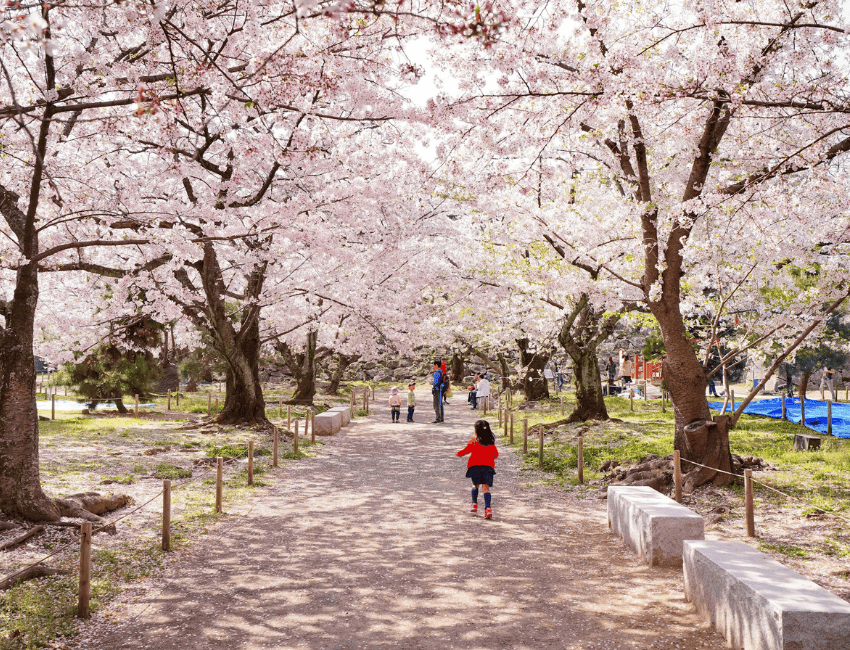
The Vibe: Fresh, floral, and quietly spectacular — Kyushu at its most photogenic.
Kyushu Weather in Spring
Spring in Kyushu is mild, balanced, and widely considered one of the best times of year to visit.
- March: ~50°F (10°C)
- April: ~59°F (15°C)
- May: ~66°F (19°C)
March can still feel cool in the evenings, particularly in mountainous areas like Aso. By April and May, the weather becomes comfortably warm without summer humidity. Sunny days are common, rainfall is moderate, and visibility across volcanic landscapes is excellent.
Compared to Tokyo, Kyushu’s spring tends to feel slightly warmer and less crowded — especially outside peak cherry blossom weekends.
🐱Pro Tip: Because Kyushu is further south, cherry blossoms typically bloom a few days earlier than in Tokyo. If you miss the “peak” in Tokyo, you can often catch the late-blooming varieties in Kyushu’s mountain regions like Aso.
Kyushu Best Places to Visit in Spring
🌸 Maizuru Park (Fukuoka Castle Ruins)
Maizuru Park is Fukuoka’s most iconic cherry blossom destination. The remains of Fukuoka Castle, originally built in the early 1600s, are surrounded by stone walls and moats that frame soft pink sakura clouds each spring.
From late March to early April, the castle grounds transform into a sea of blossoms. During the day, reflections shimmer along the moat; at night, illuminated cherry trees create a romantic atmosphere that feels almost cinematic in the middle of the city.
It’s one of the most recognizable spring scenes in Kyushu.
🏯 Kumamoto Castle & Kato Shrine (Kumamoto)
Kumamoto Castle, one of Japan’s most impressive fortresses, stands especially striking in spring. After major reconstruction efforts, the main keep rises proudly above layers of blooming cherry trees.
For the best view, walk to nearby Kato Shrine. From here, you can frame the castle walls against a canopy of blossoms, creating a layered, dramatic perspective.
Pair your visit with a stroll through the castle town area and try local specialties like Taipien (a light noodle soup), basashi (horse sashimi), and karashi renkon (mustard-filled lotus root) for a complete cultural experience.
🛶 Takachiho Gorge (Miyazaki)
Carved by ancient lava flows, Takachiho Gorge is one of Kyushu’s most magical natural settings. In spring, new foliage adds a soft green layer to the basalt cliffs.
🐱Cathead’s Insider Tip: Rent a rowboat early in the morning to paddle under Manai Falls. The mist from the waterfall is incredibly refreshing in the mild spring sun.
🌷 Huis Ten Bosch (Nagasaki)
This Dutch-inspired theme park becomes a floral wonderland in spring. Tulips, roses, and seasonal flower fields bloom across its European-style canals. The mild climate makes it comfortable to explore from morning to evening. It feels like a trip to the Netherlands without leaving Japan.
What to Wear & Pack (Spring)
Layering is essential for Spring in Kyushu.
- Early March: Light coat or trench over a sweater.
- April: Long sleeves with a light jacket for evenings.
- May: Breathable layers; daytime can feel pleasantly warm.
Comfortable walking shoes are non-negotiable — exploring Kyushu often means long scenic strolls.
☀️ Summer in Kyushu (June – August)
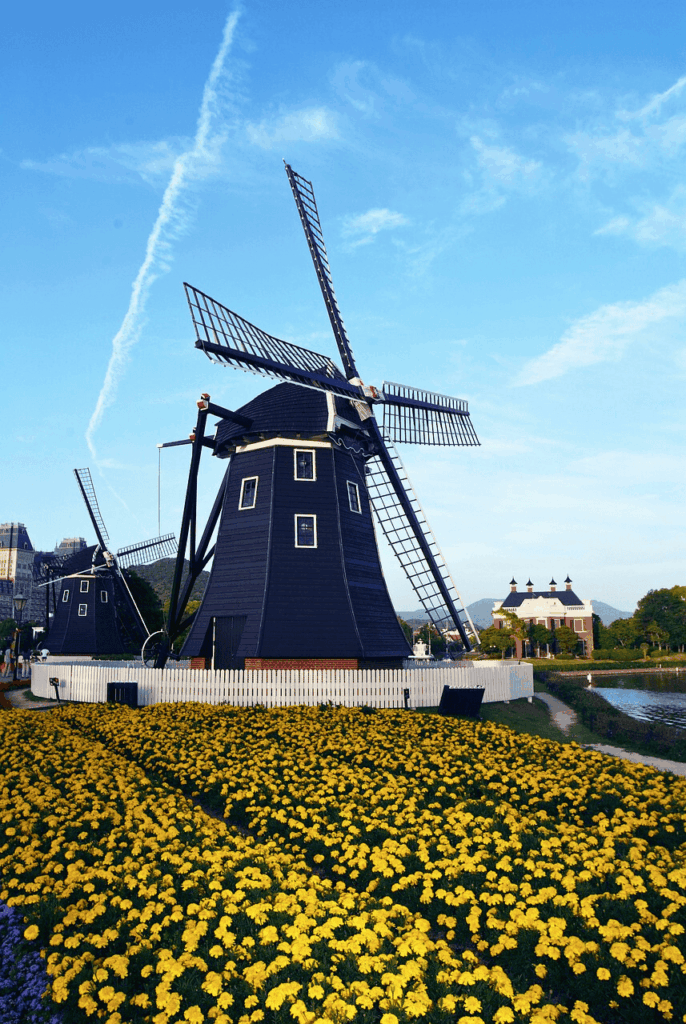
The Vibe: Lively, humid, volcanic, and festival-driven.
Kyushu Weather in Summer
Summer begins with the rainy season and ends in full heat.
- June: ~73°F (23°C)
- July: ~82°F (28°C)
- August: ~88°F (31°C)
From mid-June to mid-July, rainfall increases significantly. Showers are often heavy but intermittent. By late July and August, the heat intensifies, and humidity rises.
Southern Kyushu, particularly Kagoshima and Miyazaki, can feel similar to coastal Georgia or Florida in midsummer.
Typhoons are possible in August and early September, though not constant.
Best Things to Do in Kyushu During Summer
🥁 Hakata Gion Yamakasa (Fukuoka)
Held annually in July, this centuries-old festival sees teams carrying towering floats through the city at dawn. It’s one of Kyushu’s most energetic cultural experiences and a major highlight of summer travel.
🌊 Aoshima & Nichinan Coast Road Trip (Miyazaki)
Summer sunlight makes the Pacific coastline especially vibrant. Aoshima’s “Devil’s Washboard” rock formations and red torii gates stand out dramatically against blue skies. The coastal highway here offers one of the best road-trip experiences in Kyushu.
🌋 Mount Aso (Kumamoto)
In summer, the outer rim of Mount Aso transforms into a vast carpet of bright green grasslands. From the Kusasenri Plateau and observation areas, you can look across one of the world’s largest volcanic calderas — a landscape that feels almost cinematic in scale.
As of summer 2025, access to the Aso crater has reopened (subject to volcanic gas levels and safety conditions). Because Mount Aso is an active volcano, access can change daily. Always check official updates before visiting, especially for crater road access times.
Thanks to its higher elevation, Aso is often a few degrees cooler than coastal cities — making it one of the most refreshing summer escapes in Kyushu.
⛴️ Sakurajima (Kagoshima)
From Kagoshima City, you can reach Sakurajima by ferry in about 15 minutes — departures run frequently and the crossing is smooth and convenient.
Sakurajima is the symbolic landmark of Kagoshima and one of Japan’s most active volcanoes. Gentle plumes of smoke rising from the summit are a common sight, creating a dramatic silhouette against Kinko Bay.
Once on the island, head to Yunohira Observatory, the highest accessible viewpoint. From here, you can admire the two main volcanic peaks — Minamidake and Kitadake — up close. On clear days, the panoramic views are striking; at night, the lights of Kagoshima City shimmer across the bay, creating a surprisingly romantic atmosphere.
What to Wear & Pack (Summer)
Breathable fabrics are essential.
Lightweight shirts, moisture-wicking materials, and comfortable sandals or sneakers work best. Bring sunscreen, a hat, and a compact umbrella for sudden showers.
Hydration matters — summer heat in Kyushu can feel intense.
🍁 Autumn in Kyushu (September – November)
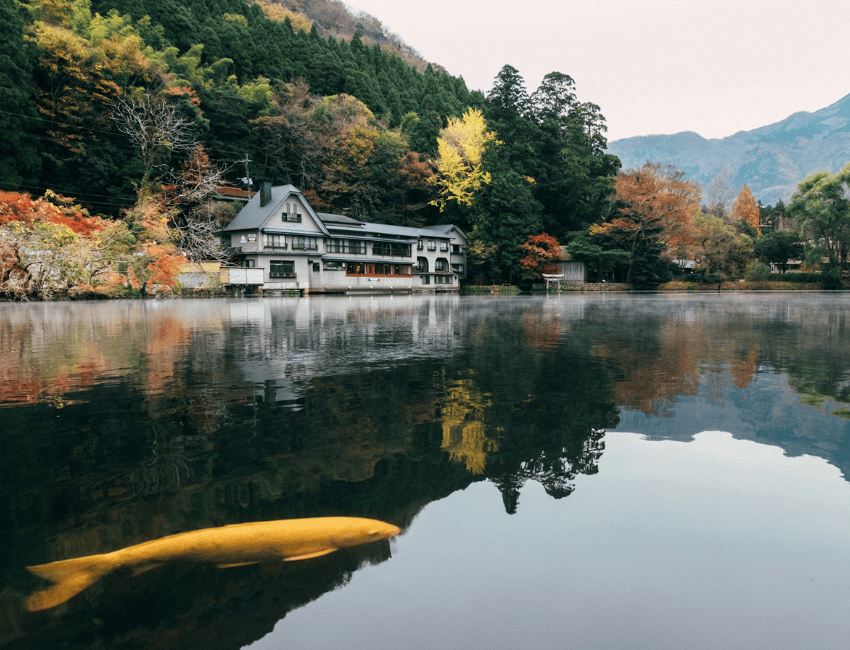
The Vibe: Crisp, colorful, and consistently comfortable.
Kyushu Weather in Autumn
Autumn is widely regarded as the best overall season to visit Kyushu.
- September: ~77°F (25°C)
- October: ~68°F (20°C)
- November: ~59°F (15°C)
Early September still feels warm, but by October humidity drops significantly. Skies become clearer, and mountain visibility improves. November brings cooler air and fall foliage in higher elevations.
Compared to spring, autumn often feels less crowded and more relaxed.
Kyushu Best Places to Visit in Autumn
🍁 Kokonoe Yume Suspension Bridge (Oita)
Japan’s tallest pedestrian suspension bridge stretches across a valley that turns fiery red and orange in late October and November. The scale of the landscape feels cinematic.
🍂Yabakei Gorge (Oita)
This is a hidden gem for photographers. Known for dramatic rock formations and layered forests, Yabakei becomes one of Kyushu’s top foliage destinations. Early November typically marks peak color.
🧖 Yufuin & Kinrin Lake (Oita)
As the air cools, the morning mist begins to rise from Lake Kinrin, creating a fairy-tale atmosphere.
The surrounding hot spring town feels especially atmospheric in autumn light, blending rural calm with artisanal charm.
🐉 Karatsu Kunchi Festival (Saga)
Held in early November, this historic festival features massive decorative floats paraded through the streets. It blends tradition, community, and spectacle in a way that feels deeply rooted in Kyushu culture.
What to Wear & Pack (Autumn)
Long sleeves and a light jacket work well.
October can feel ideal in light knitwear. By November, layering becomes important, especially in mountain regions.
❄️ Winter in Kyushu (December – February)
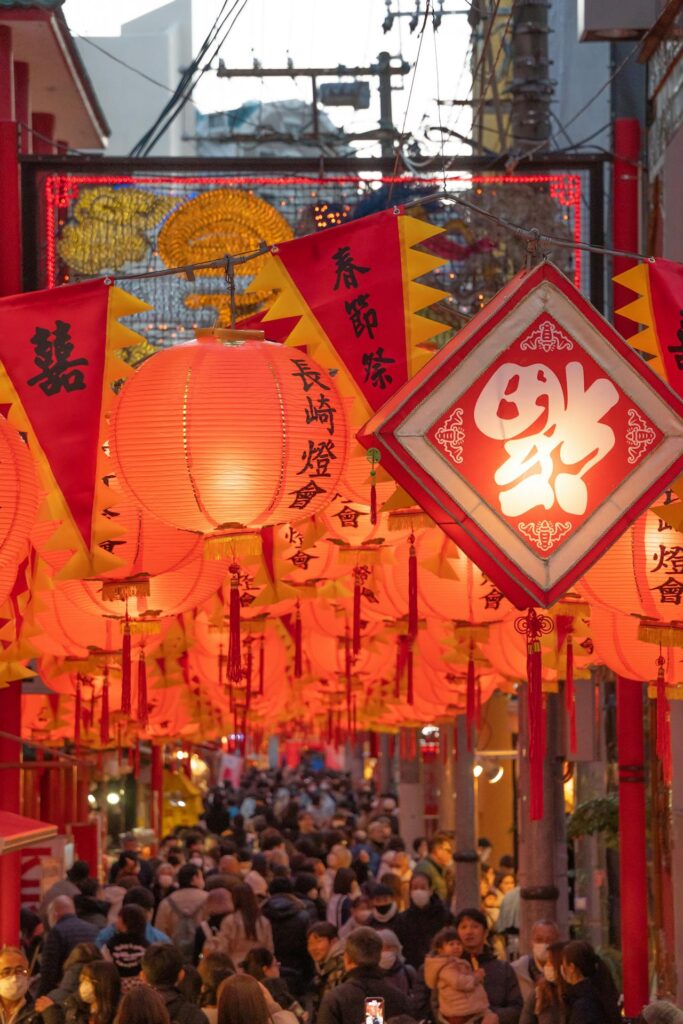
The Vibe: Steamy hot springs, lantern light, and peaceful pacing.
Kyushu Weather in Winter
Winter in Kyushu is milder than much of Japan.
- December: ~52°F (11°C)
- January: ~48°F (9°C)
- February: ~50°F (10°C)
Coastal cities like Fukuoka and Nagasaki rarely see heavy snow. Mountainous areas such as Mount Aso and Kirishima may experience occasional snowfall.
Winter air is often dry and clear, making volcanic silhouettes especially sharp.
Places to Visit in Kyushu During Winter
♨️ Kurokawa Onsen (Kumamoto)
Tucked into the mountains near Aso, Kurokawa is one of Kyushu’s most atmospheric hot spring towns. Steam rising into crisp winter air creates a dreamlike scene.
🩵 The “Hells” of Beppu (Oita)
The Umi Jigoku (Sea Hell) and other geothermal pools in Beppu are most dramatic in winter. The massive clouds of steam hitting the cold air make the bubbling cobalt-blue and blood-red pools look like something from another planet.
🏮 Nagasaki Lantern Festival (Nagasaki)
During Lunar New Year, thousands of lanterns illuminate the city’s Chinatown and surrounding streets. The festival reflects Nagasaki’s unique history of international trade.
✨ Huis Ten Bosch Winter Illuminations
Millions of lights transform the Dutch-style park into a glowing winter landscape — one of Japan’s most largest seasonal light displays.
What to Wear & Pack (Winter)
Warm layers are essential.
A thermal base layer and insulated jacket or a puffer jacket are recommended. Even though winters are mild compared to northern Japan, evenings can dip near 40°F (4–5°C), particularly inland.
📌 Peak Tourist Seasons in Kyushu
💡 If you plan to visit during these windows, book your hotels and JR Rail passes at least 3–4 months in advance.
Late March – Early April: Cherry Blossom (Sakura) Season. The most popular time for international travelers.
Late April – Early May: Golden Week. This is a major Japanese holiday week. Trains and hotels will be packed with locals—expect peak prices and crowds.
July – August: Festival Season and Summer Vacation. High energy in Fukuoka (Yamakasa) but very humid.
Late October – November: Fall Foliage (Koyo). The “insider’s favorite” for stunning colors and perfect hiking.
Late January – February: Lunar New Year. Specifically for the Nagasaki Lantern Festival, which draws massive crowds from across Asia.
📌 What is the best month to visit Kyushu?
The best months overall are:
🥇 October and November
- Comfortable temperatures
- Clear skies
- Stunning fall foliage
- Excellent hiking weather
🥈 April and May
- Cherry blossoms
- Flower festivals
- Mild spring weather
👉If you want the safest weather bet → October is arguably the best month to visit Kyushu.
📌 Best Time to Visit Kyushu in September
September is often overlooked, but it is actually a strategic “Value Pick” for smart travelers.
The Vibe: Early September still feels like summer (great for the Miyazaki coast!), but by the end of the month, the humidity drops significantly.
The Crowd Factor: Once the summer vacation ends in late August, crowds at major sites like Mount Aso and Beppu disappear.
The Typhoon Factor: September is technically typhoon season in southern Japan. While major storms are rare, it’s smart to have travel insurance and a flexible itinerary just in case.
😺Cathead’s Take: If you are flexible and want a quieter, more affordable trip, late September is a brilliant choice. You get the summer greens with the first hints of autumn breeze.
🚗 Driving in Kyushu (Quick Guide)
🔍 Is it difficult to drive in Kyushu?
For most travelers, driving in Kyushu is surprisingly manageable.
Outside major cities like Fukuoka, traffic is light and roads are well maintained. Mountain highways around Mount Aso and Kirishima are clearly marked, and coastal drives in Miyazaki and Kagoshima feel relaxed rather than stressful.
Compared to Tokyo or Osaka, Kyushu feels significantly less intense. Urban congestion is limited, and rural routes are spacious and scenic.
Parking is also relatively easy to find in smaller towns and tourist areas. Many hotels, hot spring (onsen) towns and scenic viewpoints offer designated (and often free) parking lots.
🔍 Is it difficult for Americans to drive in Japan?
For Americans, the main difference is orientation.
Japan drives on the left side of the road, and the steering wheel is on the right side of the vehicle. This takes mental adjustment during the first hour or two, particularly when turning at intersections.
Navigation: Almost all rental cars in 2026 come with English-language GPS. Better yet, most support Apple CarPlay or Android Auto, so you can use Google Maps just like you do at home.
Road Signs: Major directional signs are in both Japanese and English.
Patience: Japanese drivers rarely honk and are very orderly. You’ll find it significantly less aggressive than driving in Los Angeles, New York, or Chicago.
Important Tip: Most US travelers must obtain an International Driving Permit (IDP) before arriving in Japan. Japan does not accept a standard US driver’s license alone.
🔍 Driving in Kyushu Cost
Rental car prices vary depending on season and vehicle type, but here is a realistic range:
| Item | Estimated Daily Cost (USD) | Notes |
| Economy Car | $55 – $80 | Great for couples; excellent gas mileage. |
| Mid-size/SUV | $85 – $125 | Best for families or those with large suitcases. |
| Gasoline | $40 – $60 (per tank) | Prices are higher than the US, but cars are more efficient. |
| Tolls | $15 – $40 (per trip) | Expressways are fast but pricey. Consider a “Kyushu Expressway Pass.” |
Additional costs to consider:
- Insurance coverage upgrades (highly recommended)
- Parking fees in cities
Total Budget: For a 5-day Kyushu road trip, expect to spend roughly USD$450 – $700 total (including rental, gas, and tolls).
Compared to JR train passes for multiple travelers, renting a car can actually be cost-efficient — especially for couples or families.
Final Thoughts
Kyushu isn’t a destination that demands “perfect” timing, but the season you choose will change the “flavor” of your trip:
Spring is gentle, floral, and full of “new beginnings” energy.
Summer is loud, sweaty, and fueled by massive festivals and coastal sun.
Autumn is cinematic, polished, and offers the best hiking weather.
Winter is quiet, steamy, and deeply restorative for the soul.
😺Cathead’s Recommendation: If this is your first visit, aim for October or April. These months offer the clearest skies and most balanced weather.
But the truth is, Kyushu rewards curiosity more than it rewards a calendar.
Whenever you arrive, you’ll find volcanoes, hot springs, coastal air, and a pace that feels just right.
And that’s exactly why Kyushu continues to pull me back.
*All information provided above is for reference only. For full details, please refer to the official websites of the respective hotels and organizations.
🌍 Plan Your Japan Trip:
👉 Where to Stay in Fukuoka (2026): Best Areas & Hotels in Hakata and Tenjin
👉 Best Fukuoka Hotel Near Hakata Station? Hotel Forza Chikushi-Guchi I Review
👉 Where to Stay in Fukuoka: Hotel Oriental Express Fukuoka Nakasu Kawabata Review
👉 Yanagawa Ryokan Review: Staying at Hakuryuso (Fukuoka, Japan)
👉 Best Time to Visit Fukuoka 2026: The Ultimate Guide
👉 Fukuoka Airport Lounge Review: Is Lounge Fukuoka Worth It?
👉 What to Eat in Northern Kyushu (2026): Saga Beef, Yanagawa Eel & Hidden Local Gems
👉 Best Time to Visit Kumamoto, Japan: Monthly Weather, Seasons & Travel Tips
👉 Best Time to Visit Nagoya 2026: Weather, What to Wear & Things to Do
👉 Best Time to Visit Hokkaido, Japan: Weather, Seasons & Travel Tips

Hi, I’m Cat Head! Having lived in the US, Canada, and Hong Kong, I bring a unique global perspective to the world of travel. I’m a Japan travel specialist dedicated to finding the best travel deals and crafting seamless DIY itineraries.
Whether you’re looking for luxury hotel reviews on a budget or travel hacks, I share my first-hand experiences and travel tips to make your next trip unforgettable.