- 2026-04-05 Published
- 2026-04-11 Updated
- The Nordics, Europe,
- By Cat Head
Best Time to Visit Norway 2026: When to Go for Fjords, Northern Lights & Midnight Sun
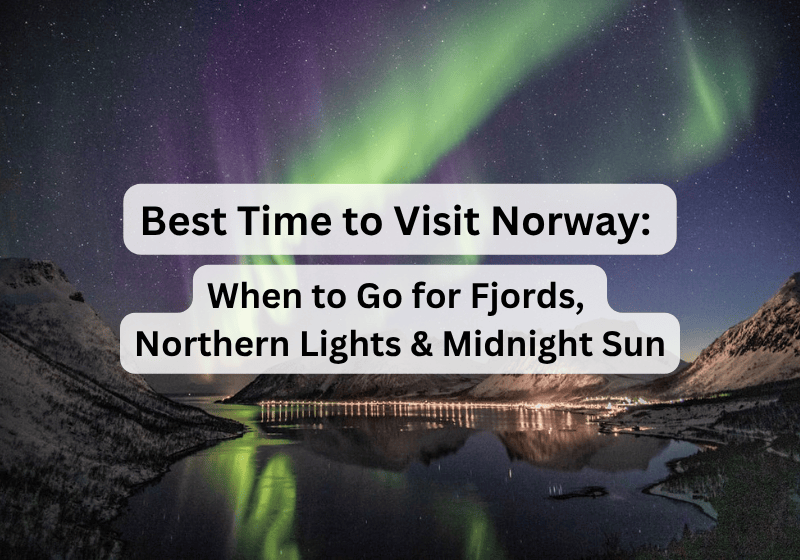
If you’re planning your first trip to Norway, you’re probably dreaming of dramatic fjords, the Northern Lights, or the surreal “daylight at midnight.” But where exactly is Norway, and what kind of trip does it actually offer?
Norway sits on the western edge of the Scandinavian Peninsula in Northern Europe. It borders Sweden to the east, stretches far beyond the Arctic Circle in the north, and faces the North Atlantic along one of the longest and most dramatic coastlines in the world.
From urban pulse in Oslo, to fjord landscapes around Bergen, to Arctic adventures in Tromsø, Norway’s personality shifts with the seasons and latitude.
That’s why there’s no single answer to Best Time to Visit Norway. It depends on what you want to see: glacier-fed waterfalls, the midnight sun, or the Northern Lights dancing across a polar sky.
In this guide, I — Cathead — will walk you through Norway season by season, month by month, so you can decide what works best for your travel style.
Table of Contents
✈️ First Time in Norway: What to Know
🔎 Is 3 days in Norway enough?
The short answer: No.
Norway is a “slow travel” destination. Because of the mountainous terrain, a 100-mile drive can take 4 hours.
3 Days: works only if you stay in one city (like Oslo or Bergen). But if you want fjords, scenic railways, and Arctic experiences, you’ll want more time.
7 Days: The “Golden Triangle”—Oslo, the Bergen Railway and a classic fjord route (a cruise through Sognefjord or Hardangerfjord)
10–12 Days: Adds the Lofoten Islands (the “Alpine peaks in the ocean”) or Tromsø for Arctic adventures.
14+ Days: The full “South to North” road trip — cities, fjords, and Arctic Circle
🚗 Is It Best to Rent a Car in Norway?
If you want to see the “real” Norway, yes.
If your itinerary includes fjords, mountain roads, or remote landscapes, renting a car in Norway is often the best way to experience the country fully.
The most breathtaking scenery of Norway — waterfalls, panoramic viewpoints, valleys, and glacial lakes — often lies between cities. Many of these spots aren’t directly accessible by train or bus, and public transport schedules can be very limited.
If you rely entirely on trains and buses, your trip may feel constrained by timetables — and you’ll likely miss spontaneous roadside moments that make Norway unforgettable.
Rent a car if you:
- Want to explore fjords like Geirangerfjord or Sognefjord
- Plan to visit the Lofoten Islands or other remote regions
- Prefer stopping anytime for photos and scenic breaks
- Have limited travel days and want maximum flexibility
🐱Pro Tip: Most rentals in Norway are electric (EVs). Don’t worry—Norway has the best charging infrastructure in the world.
🌱 Spring in Norway (March – May)
The Vibe: Thundering waterfalls, crisp mountain air, and a rare window where you can see snow and blossoms at the same time—without the summer crowds.
Norway Weather in Spring
Spring in Norway is a transitional season. You may find snow in the mountains in March, but by May, the coastal cities begin to feel bright and lively.
Spring Temperature Ranges (°F)
| Region | March | April | May |
| Eastern (Oslo) | 25° – 40°F | 34° – 50°F | 44° – 61°F |
| Western (Bergen) | 33° – 41°F | 37° – 49°F | 43° – 57°F |
| Central (Trondheim) | 27° – 38°F | 34° – 46°F | 41° – 55°F |
| Arctic (Tromsø) | 24° – 33°F | 30° – 39°F | 35° – 47°F |
🐱Pro Tip: In Western Norway (like Bergen), temperatures are slightly milder but rain is more frequent.
March can still feel wintry, especially in higher elevations. By May, daylight stretches longer, waterfalls roar from melting snow, and the country feels dramatically alive. It’s cooler than summer, but incredibly photogenic — layered landscapes of snowcaps, green valleys, and rushing water.
Norway Best Places to Visit in Spring
🌊 Hardangerfjord (The Orchard Fjord)
Often called the “Orchard Fjord,” Hardangerfjord comes alive in spring. Snowmelt feeds waterfalls that plunge down steep cliffs with powerful force — this is one of the most spectacular times of year to see them at full volume.
In May, fruit trees begin blooming along the fjord’s shores. It is a bucket-list scene of pink and white blossoms against deep blue glacial water.
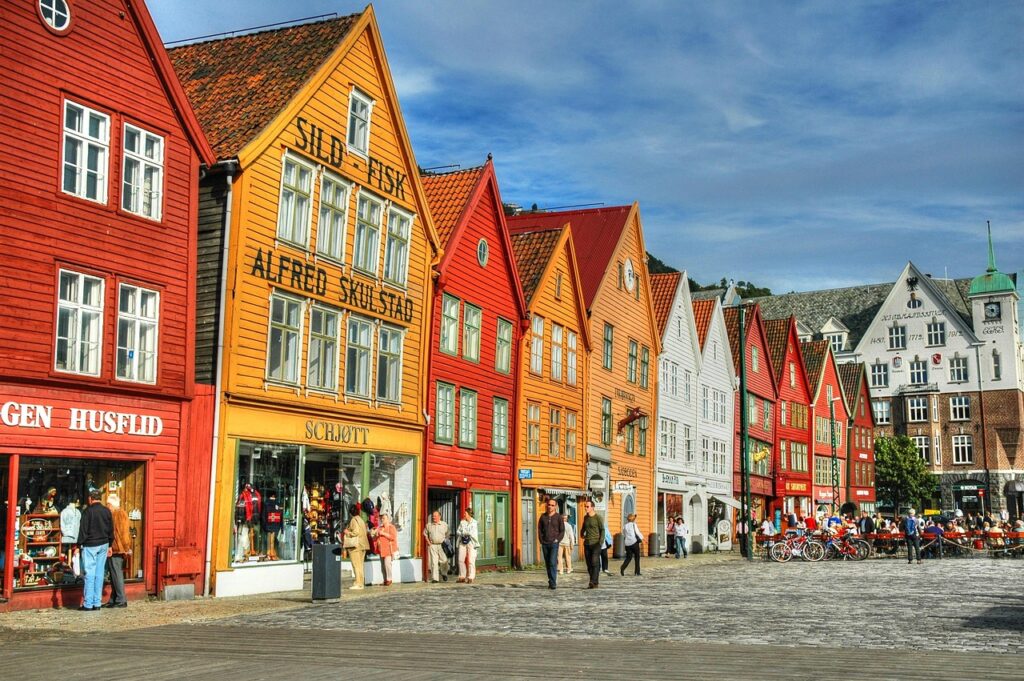
🏡 Bergen & the Historic Bryggen Wharf
The colorful wooden houses of Bryggen are the face of Bergen and a UNESCO World Heritage site. These structures date back to the Hanseatic League era (from the 14th to the mid-16th century), when Bergen served as a massive international trading hub for dried cod and grain.
Spring rain makes the colors of the wharf pop in photos. It’s the perfect time to explore the narrow alleyways and cozy up in a “kaffebar” (coffee shop) without the cruise ship crowds that arrive in June.
🏛️ Oslo Opera House
Built to resemble a floating glacier, the Oslo Opera House is one of the most unique buildings in Scandinavia. Walk the roof! You can stroll from street level straight up to panoramic fjord views.
✨ Tromsø in March (Late Northern Lights Season)
March is often overlooked, but it’s actually a golden crossover period in Tromsø.
You still have long, dark nights for aurora viewing, but temperatures are slightly milder than deep winter. Around the spring equinox, geomagnetic activity can be strong — making this a surprisingly good time to chase the Northern Lights without the harshest Arctic cold.
What to Wear in Spring
Layering is essential — Norway’s spring can shift quickly between sunshine and snow showers.
March – Early April:
A warm waterproof jacket over a sweater or insulated mid-layer. Don’t forget a beanie and gloves if you’re heading north to Tromsø.
Late April – May:
A light down jacket or windproof shell. Temperatures rise during the day but evenings stay cool.
Footwear: Waterproof hiking boots or walking shoes are mandatory. Between melted snow and spring showers, you will encounter wet pavement and muddy trails.
☀️ Summer in Norway (June – August)
The Vibe: Endless daylight, open mountain roads, and the fjords at their absolute peak. This is Norway in full bloom.
Norway Weather in Summer
Summer is the most popular time to visit Norway. The weather is mild, daylight is incredibly long, and almost all scenic routes are open.
Summer Temperature Ranges (°F)
| Region | June | July | August |
| Eastern (Oslo) | 50° – 68°F | 55° – 72°F | 53° – 70°F |
| Western (Bergen) | 48° – 60°F | 53° – 65°F | 53° – 64°F |
| Central (Trondheim) | 46° – 61°F | 52° – 66°F | 51° – 64°F |
| Arctic (Tromsø) | 42° – 54°F | 48° – 60°F | 47° – 58°F |
You won’t experience intense heat like Southern Europe. Instead, expect fresh air, cool evenings, and long golden hours. In the north, the midnight sun lasts from late May through July, meaning the sun never truly sets.
This is widely considered the Best Time to Visit Norway fjords and also the Best time to visit Norway for midnight sun.
Things to do in Norway in Summer
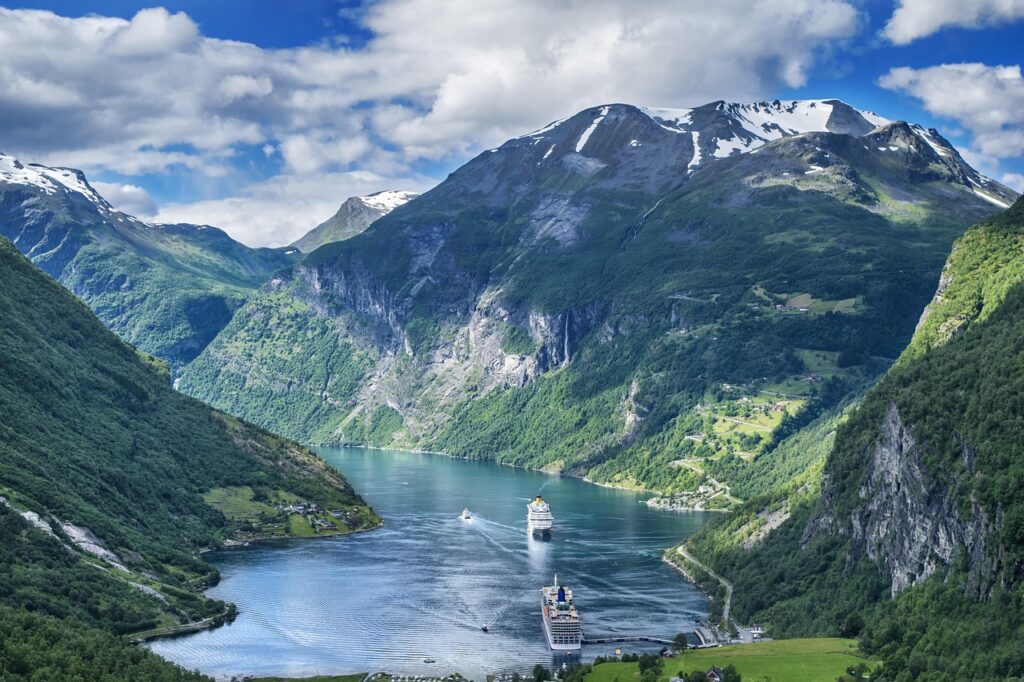
🌊 Geirangerfjord
Often described as the most iconic fjord in Norway, Geirangerfjord is a UNESCO World Heritage Site known for its dramatic cliffs and waterfalls like the Seven Sisters.
In summer, boat cruises operate frequently, hiking trails are accessible, and viewpoints like Ørnesvingen are open. The combination of bright skies and lush green mountains creates postcard-perfect scenery.
🚂 Flåm & the Flåm Railway
Flåm sits at the inner end of Aurlandsfjord and is connected by one of the most scenic train journeys in the world. The Flåm Railway climbs steeply through waterfalls, tunnels, and mountain valleys in a short distance.
Summer brings the clearest views and full access to fjord cruises connecting to Bergen and beyond.
🏝️ Lofoten Islands
Lofoten is an entire coastline in a state of beauty. Jagged mountains rise directly from the sea, fishing villages line narrow roads, and hiking trails overlook turquoise waters.
With nearly 24-hour daylight in peak summer, you can hike at 10 pm and still see the landscape glowing under soft Arctic light.
🛣️ Atlantic Ocean Road / Atlantic Road (Atlanterhavsvegen)
This is one of the world’s most scenic drives. An 8.3-km route with eight bridges connects small islands and skerries along the Atlantic Ocean Road.
On a calm summer day, the water is turquoise and serene. It feels like driving on the edge of the world—highly recommended for those renting a car for a DIY road trip.
What to Wear in Summer
Even in July, Norway’s weather can be unpredictable. Norwegian summer still requires light layering.
June – Early July:
Light sweater or thin jacket for evenings.
Late July – August:
Long-sleeve shirts and a windbreaker are useful for fjord cruises.
Footwear: Bring sturdy walking shoes or lightweight hiking boots. Between cobblestone streets in Bergen and gravel trails in the fjords, your feet will be busy!
🐱Cathead’s Insider Tip: Even if it feels warm on land, the wind chill on a ferry or boat tour is real. Always keep a windproof layer in your daypack!
🍁 Fall in Norway (September – November)
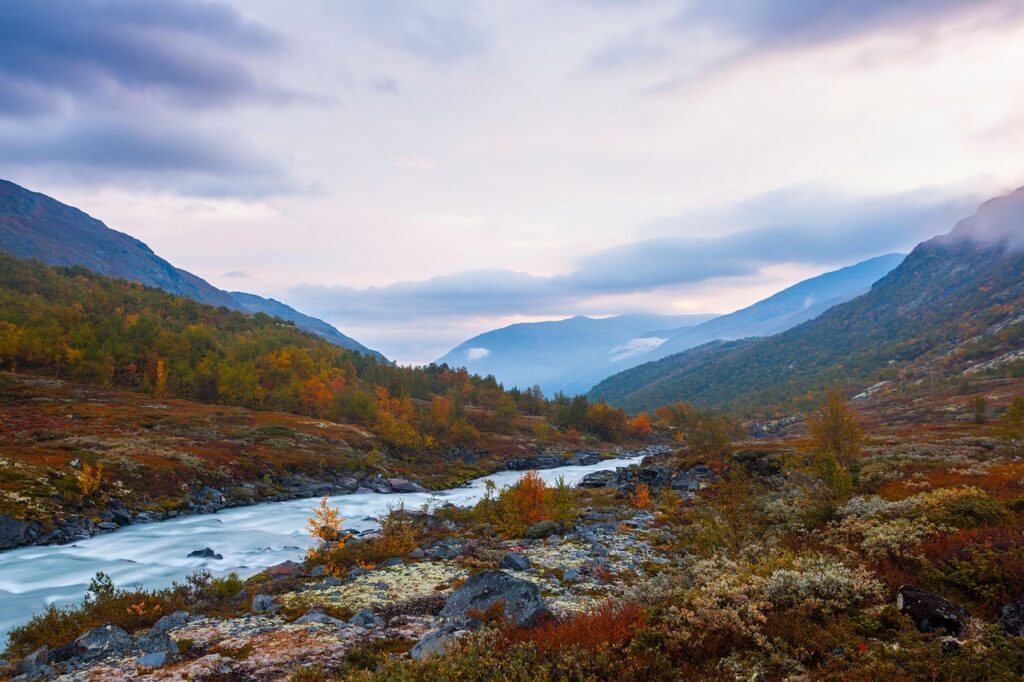
The Vibe: Golden mountains, quieter fjords, and the early return of aurora season.
Norway Weather in Fall
Autumn is a stunning “shoulder season.” While September can feel like a late summer extension in the south, November brings the first true taste of the Arctic winter.
Fall Temperature Ranges (°F)
| Region | September | October | November |
| Eastern (Oslo) | 45° – 59°F | 37° – 48°F | 30° – 39°F |
| Western (Bergen) | 48° – 59°F | 43° – 52°F | 37° – 46°F |
| Central (Trondheim) | 43° – 55°F | 37° – 46°F | 30° – 39°F |
| Arctic (Tromsø) | 39° – 50°F | 34° – 41°F | 28° – 36°F |
Traveler Note: In the Arctic North (Tromsø/Alta), snow typically begins to dust the peaks in October, and by late November brings very short days in the Arctic North, with long twilight and limited daylight.”
If you’re wondering What are the best months to visit Norway for fewer tourists? — September and early October are strong contenders.
Norway Best Places to Visit in Fall
🍂 Jotunheimen National Park
This mountainous region is known for dramatic peaks and alpine lakes. For fans of fall foliage, Jotunheimen is unbeatable. The high-altitude tundra turns a fiery mosaic of red heather and golden birch trees.
Hiking conditions are comfortable in early fall, though daylight hours shorten quickly by late October.
🏘️ Bergen & Fjord Towns
As the massive cruise ships depart, Bergen returns to its roots as a cozy, historic wharf town.
This is the best time for slow travel. Enjoy the moody, painterly atmosphere of the UNESCO-listed Bryggen, or take a serene ferry ride through the Hjørundfjord—a quieter, local favorite that shines in the autumn light.
🌌 Tromsø (Start of Aurora Season)
From mid-September, the Northern Lights season begins again. Nights grow longer, but temperatures are not yet at deep winter levels.
This makes fall a balanced choice for those asking:
When is the best time to visit Norway to see Northern Lights — without extreme cold?
What to Wear in Fall
In Norway, fall is synonymous with “unpredictable.” You need gear that handles both bright sun and sudden North Sea storms.
September:
A light down jacket or insulated layer for evenings.
October – November:
Waterproof shell, and warm mid-layer. Don’t forget a beanie and light gloves if you’re heading north of the Arctic Circle.
Footwear: Water-resistant hiking boots are essential. Autumn trails can be muddy, and city cobblestones get slippery when wet.
🐱Cathead’s Insider Tip: Fall sunsets in Norway are legendary. Because the sun sits lower on the horizon, the “Golden Hour” lasts much longer than in the US, creating a soft, cinematic glow.
❄️ Winter in Norway (December – February)
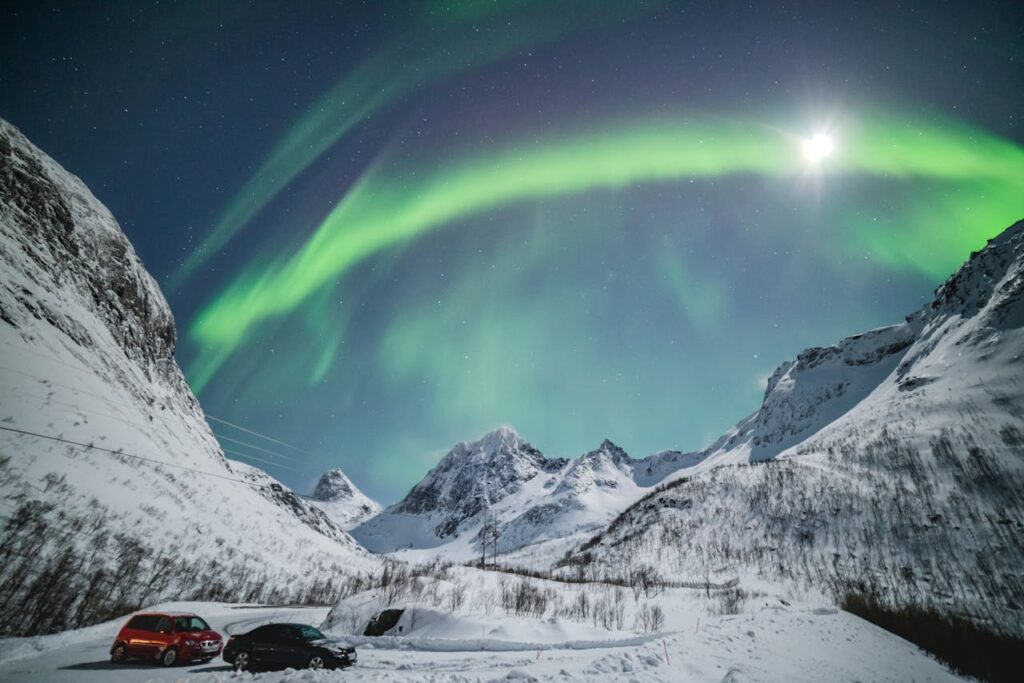
The Vibe: Twinkling Arctic skies,snow-draped towns, and the magic of the Northern Lights.
Norway Weather in Winter
Winter transforms Norway into a true wonderland. While the coast stays relatively temperate due to the Gulf Stream, the inland and Arctic regions offer a deep, crisp freeze perfect for winter sports.
Winter Temperature Ranges (°F)
| Region | December | January | February |
| Eastern (Oslo) | 23° – 32°F | 21° – 30°F | 21° – 32°F |
| Western (Bergen) | 32° – 41°F | 30° – 39°F | 30° – 39°F |
| Central (Trondheim) | 27° – 36°F | 25° – 34°F | 25° – 34°F |
| Arctic (Tromsø) | 23° – 32°F | 21° – 28°F | 21° – 28°F |
Traveler Note: In parts of Arctic Norway, you’ll experience polar night from late November into January, with exact dates depending on location.
While the sun doesn’t rise, the sky glows with a stunning “permanent twilight” of pink, purple, and deep blue—providing the perfect dark canvas for the Aurora Borealis.
If your priority is Northern Lights, December through February is one of the best periods.
Things to do in Norway in Winter
✨ Tromsø (Aurora Capital)
Tromsø is one of the best-known hubs for Northern Lights hunting. Because of its infrastructure, it’s the easiest place for Americans to fly into and immediately start an Arctic adventure.
Top Activities: By day, go whale watching for Orcas and Humpbacks (peak season is Nov–Jan) or visit the iconic Arctic Cathedral. By night, join a “Chasing the Lights” tour that takes you deep into the wilderness for the clearest views.
🚌 Northern Lights Chasing Tours
If you’re visiting Norway with the Northern Lights at the top of your bucket list, you’ll quickly learn that flexibility is the secret to success. Unlike a fixed “basecamp” where you sit and wait, a “chasing” tour is a proactive hunt for clear skies.
What makes a Northern Lights tour special is its mobility. These tours don’t stay fixed at one observation point. Instead, guides constantly monitor cloud cover, wind direction, and real-time weather forecasts, adjusting routes throughout the evening to find clearer skies — sometimes even driving beyond city limits to maximize viewing chances.
In hubs like Tromsø, tours typically depart in the early evening and head toward inland or coastal areas depending on conditions. Guides explain aurora forecasts along the way, turning the experience into a guided pursuit rather than simply standing still and hoping.
For first-time aurora travelers, joining a tour doesn’t just improve your chances of seeing the lights — it also removes the stress of winter driving and weather interpretation.
🎄 Christmas Markets
Oslo and Bergen host cozy holiday markets from early December through Christmas. They’re smaller than Central Europe’s markets but feel authentically Scandinavian — warm lights, wooden stalls, and winter comfort food.
🧊 Svalbard
Located far north in the Arctic Ocean, Svalbard offers one of the most extreme winter environments accessible to travelers.
Polar night dominates much of winter, and landscapes are pure Arctic wilderness. It’s not about sightseeing in the traditional sense — it’s about experiencing the raw polar atmosphere.
What to Wear in Winter
Layering is critical.
Base Layer: Thermal innerwear
Mid Layer: Insulated down jacket
Outer Layer: Windproof & waterproof parka
Footwear: Insulated winter boots with thick socks.
Accessories: Gloves, hat, scarf — especially for standing outdoors while watching auroras.
🐱Cathead’s Insider Tip: Northern Lights tours often involve standing outside for long periods. Dress warmer than you think you need.
Many Aurora tours provide “Arctic thermal suits” and boots as part of the package. Check your tour details before you overpack heavy gear!
📝 What Are the Peak Travel Months in Norway?
Norway has two high seasons. The summer is for fjords cruising and outdoor adventures, while the winter is one of the best windows for Northern Lights hunting and snow experiences.
The Summer Peak: June – August
This is the “Best Time to Visit Norway” for first-timers. You can experience the Midnight Sun above the Arctic Circle, where daylight can last all night and stable weather for hiking, fjord cruises, and road trips.
June
The official start of summer energy. Mountain roads reopen, ferry schedules expand, and hiking trails become fully accessible. Fjord travel begins to ramp up, and daylight stretches late into the evening.
July
The busiest month of the year. The weather is generally mild and pleasant, and families across Europe are on holiday. Popular areas like Geirangerfjord and the Lofoten Islands book out early — reserve accommodations well in advance.
August
High season vibes but with slightly cooler nights. By late August, the “back-to-school” shift means fewer crowds and better photo ops.
The Winter Peak: December – February
Driven by “bucket-list” aurora tourism, this season centers on Tromsø and the Arctic North.
2026 Special Note: 2026 falls within the current solar maximum period, which can boost aurora activity, meaning it is one of the best years to see high-intensity Northern Lights displays.
Festive Period: Christmas and New Year’s are expensive and book out early. If you want the “White Christmas” experience, aim for the first two weeks of December for better rates.
📝 What Is the Cheapest Time to Travel to Norway?
The cheapest time to visit Norway is during the shoulder and off-seasons — March to May and October to November.
During these months, you’ll find lower airfare, more affordable accommodations, and fewer crowds compared to the peak summer and winter seasons.
Spring Value (April – May)
Excellent value with longer daylight, milder weather, and powerful waterfalls from snowmelt.
Fall Value (October – November)
Lower prices and quieter cities, with the added bonus of early Northern Lights opportunities in Northern Norway. It’s also the start of whale watching season (Orcas and Humpbacks) in the north.
⚠️ Keep in mind that:
Scenic Road Closures: Iconic mountain routes like Trollstigen, Ørnevegen, and Aurlandsfjellet typically close between late October and mid-May. If these are on your bucket list, you must visit in the summer.
Reduced Ferry Schedules: Outside of the June–August peak, some fjord ferries operate on “winter schedules.” This means between November and March, fewer departures per day. Missing one could delay your trip by several hours, so always check the latest times on the Vegvesen or local ferry apps.
The Fjord View: In winter, many high-altitude viewpoints are inaccessible by car. You will rely more on tunnels (which are impressive but don’t offer views!) or lower-altitude routes to see the scenery.
🐱Cathead’s Insider Tip: Use the “Vegvesen Trafikk” app while road-tripping. It provides real-time alerts on mountain pass closures and ferry delays—an absolute lifesaver for independent travelers!
🌤️ What Are the Best Months to Visit Norway?
The best months to visit Norway depend on your bucket list, but for most travelers, June through August often offers the ideal balance.
During this time, you’ll enjoy long daylight hours, mild weather, and fully open scenic routes — perfect for exploring fjords, hiking, and road trips.
Here’s a quick guide:
June – August (Peak Summer): The best overall time to visit Norway — ideal for fjords, epic hiking, road trips and outdoor adventures.
May & September(Shoulder season): Best for fewer crowds and lower prices. May features “thundering waterfalls,” while September offers stunning fall foliage.
September – March(Aurora Season): The prime window to see the Northern Lights. Note: 2026 is an exceptional year due to the Solar Maximum (increase solar activity).
Late May – July(Midnight Sun): Visit the Arctic regions (Tromsø, Lofoten) to experience 24 hours of daylight.
🐱Cathead’s Pro Tip: If this is your first trip, aim for June. You get the lush green landscapes and long days of summer, but you’ll beat the massive European “holiday crowds” that arrive in July.
📝 When Is the Best Time to Visit Norway to See Northern Lights?
The best time to see the Northern Lights in Norway is from late September to March, when nights are long and dark.
Choosing Your Month:
September & October: Good for aurora viewing, and sometimes for reflections over calm water. The weather is milder, making late-night waiting more comfortable.
December – February (Deep Winter): The most “magical” setting. You get total darkness (Polar Night) and snow-covered landscapes, which provide a stunning backdrop for photography.
March: Offers a great balance of snowy activities (like dog sledding) by day and high aurora activity by night.
Where to Go?
Head north of the Arctic Circle. Tromsø is widely considered the “Northern Lights Capital” due to its high success rate and excellent tour infrastructure.
🐱 Cathead’s Pro Tip: Don’t just fly in for one night. To account for cloud cover, I recommend staying at least 3–4 nights in the Arctic. Remember: Aurora viewing is a mix of solar science and clear skies—give yourself a buffer!
🌞 Best Time to Visit Norway for the Midnight Sun
The Midnight Sun is a natural phenomenon where the sun never sets below the horizon, bathing the landscape in a 24-hour golden glow. To experience this, you must travel north of the Arctic Circle between late May and mid-July.
For the longest and most dramatic daylight, visit June, especially around the summer solstice (June 21). During this period, regions such as Tromsø, the Lofoten Islands, and North Cape (Nordkapp) enjoy nearly 24 hours of continuous daylight, creating a surreal and unforgettable atmosphere.
🐱Cathead’s Pro Tip: Aim for the Summer Solstice (June 21). In Norway, this is celebrated as Sankthans (Midsummer’s Eve) on June 23rd. You’ll see massive bonfires along the coast and locals celebrating the “longest day” with music and outdoor feasts—it’s an incredible cultural experience to witness.
Final Thoughts
Norway has a quiet kind of power.
At first, it’s simply beautiful. But as you travel through it — along fjords, across mountain passes, under endless summer light or Arctic night skies — you begin to notice something deeper. The landscapes aren’t rushed. The rhythm isn’t forced. Everything feels spacious, intentional, and unhurried.
Summer belongs to fjords and the Midnight Sun.
Winter belongs to Northern Lights and snow-covered stillness.
Spring and fall offer breathing room — softer light, fewer crowds, and a more intimate connection with the wild.
There isn’t one perfect time to visit Norway — only the season that matches your travel dream.
Choose your timing wisely, give yourself space to slow down, and let Norway unfold at its own pace. Once you do, you’ll understand why Norway stays with people long after they leave🐾.
*All information provided above is for reference only. For full details, please refer to the official websites of the respective hotels and organizations.
🌍 Explore More:
👉 Best Time to Visit Canada 2026: Weather, Seasons & Travel Tips
👉 Best Time to Visit Kyushu: A Seasonal Guide for First-Timers
👉 Best Time to Visit Nagoya 2026: Weather, What to Wear & Things to Do
👉 Best Time to Visit Hong Kong 2026: Weather, Festivals & Things to Do

Hi, I’m Cat Head! Having lived in the US, Canada, and Hong Kong, I bring a unique global perspective to the world of travel. I’m a Japan travel specialist dedicated to finding the best travel deals and crafting seamless DIY itineraries.
Whether you’re looking for luxury hotel reviews on a budget or travel hacks, I share my first-hand experiences and travel tips to make your next trip unforgettable.