- 2026-04-11 Published
- 2026-04-29 Updated
- Canada, North America,
- By Cat Head
Best Time to Visit Canada 2026: Weather, Seasons & Travel Tips

If it’s your first time planning a trip to Canada, the biggest question is always: When is the best time to visit Canada?
And honestly — it’s not a simple answer. Canada is huge.This is a country where the coastal vibe of Vancouver feels completely different from the urban energy of Toronto, while the dramatic landscapes around Banff National Park follow their own weather logic — and up north in Yellowknife, you’re literally chasing the sky.
That’s exactly why Canada is so special.
One trip can give you ocean views, alpine lakes, wildlife, fall colors, snow-covered cities… and even the Northern Lights.
In this guide, I’ll walk you through Canada season by season — not just the weather, but how it actually feels to travel, what each season is best for, and how to plan a trip that flows naturally.
Table of Contents
🌿 Spring in Canada (March – May)
The Vibe: Fresh, quiet, and underrated — cities wake up while the mountains are still in winter mode.
Canada Weather in Spring
Spring in Canada is a transition season, meaning the experience varies wildly by region.
- Vancouver: ~50–63°F (10–17°C)
- Toronto: ~36–66°F (2–19°C)
- Yellowknife: ~5–43°F (-15–6°C). Still firmly below freezing in March, but perfect for late-season Northern Lights viewing.
Pro Tip: March can still feel like winter in Eastern Canada. By April, the “sugar bush” season (maple syrup!) is in full swing. By May, the urban tulip festivals make the cities genuinely pleasant.
On the West Coast, expect cool temperatures with frequent light rain, while Eastern cities gradually shift into warmer, sunnier days.
It’s one of the best times for city travel, museums, cafés, and a slower travel pace.
Canada Best Places to Visit in Spring
🌲 Stanley Park (Vancouver, B.C.)
If you want to understand Vancouver in one place, this is it.
Originally established in the late 19th century, Stanley Park preserves a large area of coastal rainforest right next to the city. The famous Seawall loops around the park, giving you uninterrupted views of the Pacific Ocean on one side and dense forest on the other.
In spring, cherry blossoms begin to bloom while fresh greenery returns to the trees. Walking or biking along the Seawall, you’ll notice how seamlessly nature and city life blend here — this is everyday life in Vancouver, not just a tourist experience.
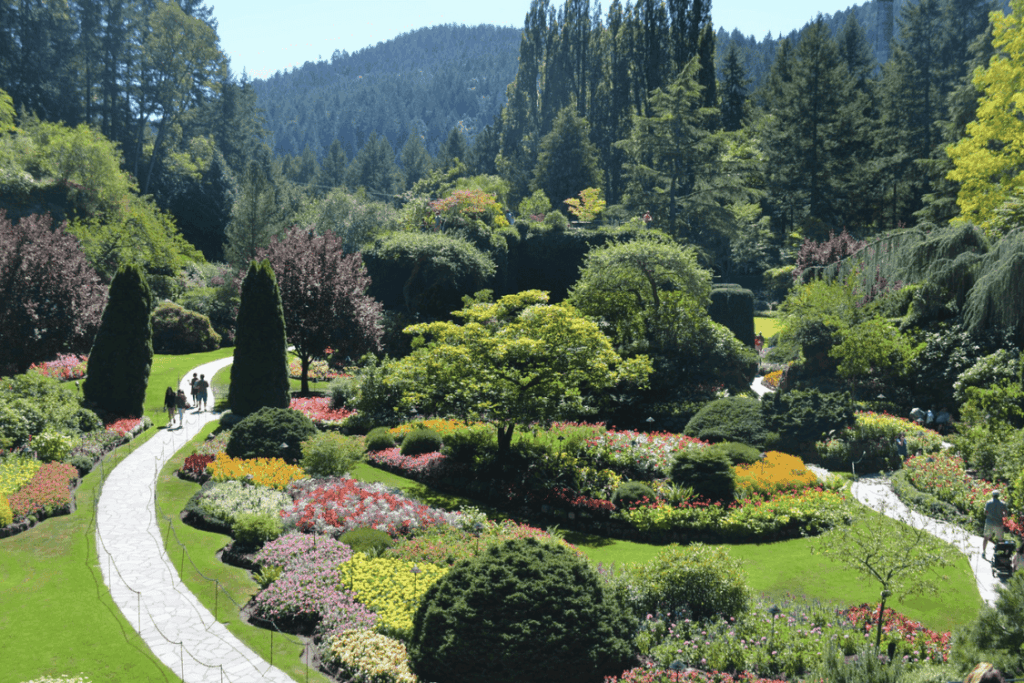
🌸 Butchart Gardens (Victoria, B.C.)
Originally a limestone quarry in the early 1900s, Butchart Gardens was transformed into one of the most beautiful botanical gardens in North America.
Spring is when it truly shines.
Tulips, hyacinths, and seasonal blooms fill the Sunken Garden, Japanese Garden, and Italian Garden, each with its own atmosphere and layout. The transitions between these spaces feel almost cinematic — like moving through different worlds in one walk.
It’s an easy day trip from Vancouver via ferry, and one of the most reliable places in Canada to experience full spring bloom.
🏰 Old Quebec (Quebec City, Quebec)
A UNESCO World Heritage site, Old Québec is one of the oldest and best-preserved historic districts in North America, dating back to the 17th century.
In spring, the city feels like it’s slowly coming back to life.
Snow begins to melt, cafés reopen, and the cobblestone streets take on a softer, quieter atmosphere compared to the busy summer months. The city walls, sloped streets, and historic buildings become even more noticeable in the gentle spring light.
If you’re visiting Canada in March or April, this is one of the best places to experience history, architecture, and atmosphere without the crowds.
What to Wear & Pack (Spring)
Spring in Canada is all about layering and flexibility.
Outerwear: Light down jacket or windproof coat (especially for mornings and evenings)
Layers: Long sleeves + light knitwear
Footwear: Waterproof sneakers (rain and puddles are common)
Accessories: A light scarf. Even on a sunny day, the breeze off the Atlantic or Pacific can be biting.
☀️ Summer in Canada (June – August)
The Vibe: Long days, vibrant energy, and the most iconic version of Canada. In 2026, the energy is even higher as Canada co-hosts the FIFA World Cup, bringing a festive, global atmosphere to major hubs.
Canada Weather in Summer
Summer is when Canada fully opens up — this is the season most people imagine when planning their trip. Note that 2026 is forecasted to be one of the warmest summers on record, so stay hydrated!
- Vancouver: ~68–75°F (20–24°C)
- Toronto: ~75–85°F (24–29°C)
- The Rockies (Banff/Jasper): 65–72°F (18–22°C). Warm days, but temperatures can still drop to 40°F (4°C) at night.
June is the “sweet spot”— comfortable weather, fewer crowds, and nature gradually becoming accessible.
By July and August, everything is in full swing: lakes thaw, hiking trails are open, and cities come alive.
Expect long daylight hours (up to 16 hours in some regions), making it easy to fit a lot into your day without feeling rushed.
👉 This is the best time to visit Canada for first-time travelers, especially if you want that classic lakes-and-mountains experience.
Canada Best Places to Visit in Summer
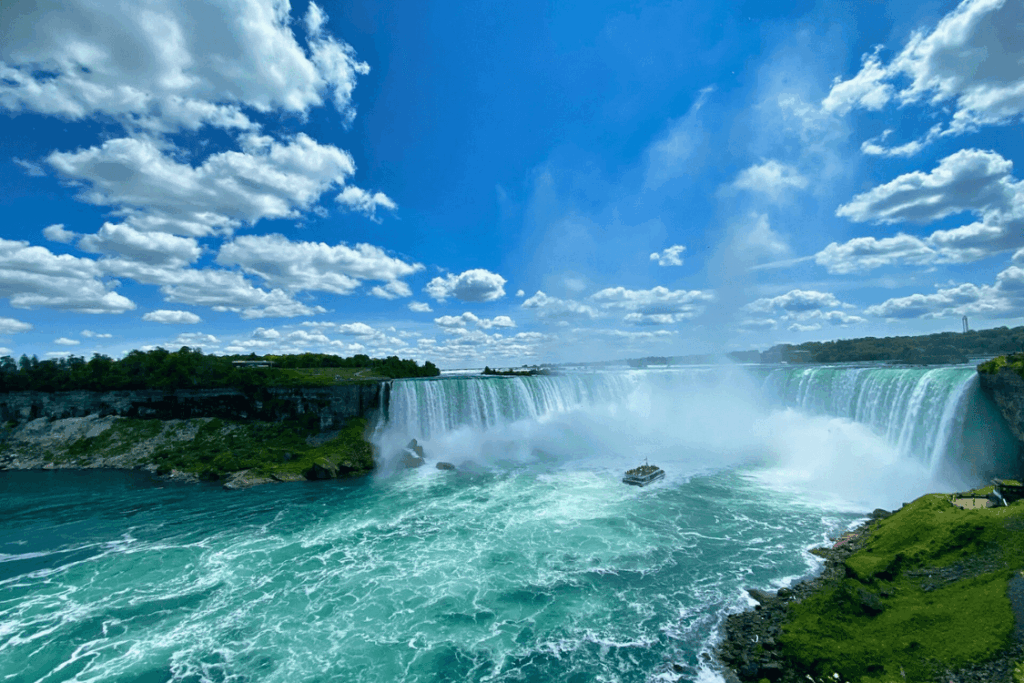
🌊 Niagara Falls (Ontario)
Niagara Falls isn’t just a photo op—it’s a sensory experience.
Formed over 12,000 years ago after the last Ice Age, the falls are a powerful reminder of how water shapes the landscape. From the Canadian side, the curved Horseshoe Falls gives you the most dramatic view, with massive volumes of water crashing down into the basin below.
In summer, you can take the famous boat cruise (Voyage to the Falls) straight into the mist. Even with a poncho, you’ll get soaked — and that’s part of the experience. The roar, the spray, and the sheer scale make it unforgettable.
If you’re visiting in July, book the “Falls Illumination” night tours for spectacular fireworks.
🏔️ Banff National Park (Alberta)
Established in 1885 as Canada’s first national park, the region is defined by U-shaped valleys, alpine lakes, and towering peaks. In summer, places like Lake Louise and Moraine Lake reveal their signature turquoise color, created by glacial rock flour suspended in the water.
What makes Banff special is how accessible everything is. Within a short drive, you can move from forest trails to open lakeshores to high mountain viewpoints — all within the same day.
This is the season for slow hikes, scenic drives, and simply taking in the scale of the landscape.
Pro tip: Shuttle reservations are mandatory for the most popular lakes.
🏞️ Jasper National Park (Alberta)
If Banff is iconic, Jasper feels more raw and expansive.
The park covers a larger area, with fewer crowds and wider valleys. At Maligne Lake, the famous Spirit Island sits quietly among glacier-fed waters, creating one of the most photographed scenes in Canada.
Summer is the best time to explore Jasper’s open landscapes — whether it’s hiking, canoeing, or simply driving through its vast wilderness.
🌄 Sea to Sky Highway (Vancouver to Whistler, B.C.)
This isn’t just a drive — it’s a continuous landscape.
Running along Howe Sound, the Sea to Sky Highway connects ocean views with steep granite cliffs and forested mountains. Along the way, stops like Shannon Falls and the Sea to Sky Gondola give you different perspectives of the terrain.
In summer, visibility is at its best, making it one of the most rewarding road trips in Canada.
🌆 Toronto Islands (Toronto, Ontario)
Just a short ferry ride from downtown Toronto, the Toronto Islands feel like a different world.
Originally formed from sandbars along Lake Ontario, the islands now offer open green spaces, beaches, and some of the best skyline views in the city. In summer, locals come here to bike, picnic, and escape the urban pace.
It’s the perfect escape from the summer heat of the city.
What to Wear & Pack (Summer)
Summer in Canada is comfortable, but it’s still smart to prepare for temperature shifts.
Outerwear: Light jacket or windbreaker (especially in the mountains)
Layers: T-shirts + light long sleeves (for sun and cooler evenings)
Shoes: Comfortable walking or hiking shoes
Extras: Sunglasses, sunscreen, reusable water bottle, bug spray
👉 Even in summer, mornings and evenings — especially in the Rockies — can feel surprisingly cool.
🍁 Fall in Canada (September – November)
The Vibe: Crisp air, golden landscapes, and easily the most photogenic season in Canada.
Canada Weather in Fall
Fall is Canada’s most balanced season— not too hot, not too cold, and incredibly comfortable for exploring.
- Vancouver: ~48–66°F (9–19°C)
- Toronto: ~34–70°F (1–21°C)
- Banff National Park: 25–55°F (-4–13°C). Expect crisp days and the possibility of “dusting” (early snow) on the peaks by October.
September often still feels like late summer, especially in the early weeks. By October, temperatures drop slightly, the air becomes crisp, and fall colors reach their peak. November starts to feel like early winter in many regions.
👉 This is widely considered the best time to visit Canada for weather + scenery combined.
Canada Best Places to Visit in Fall
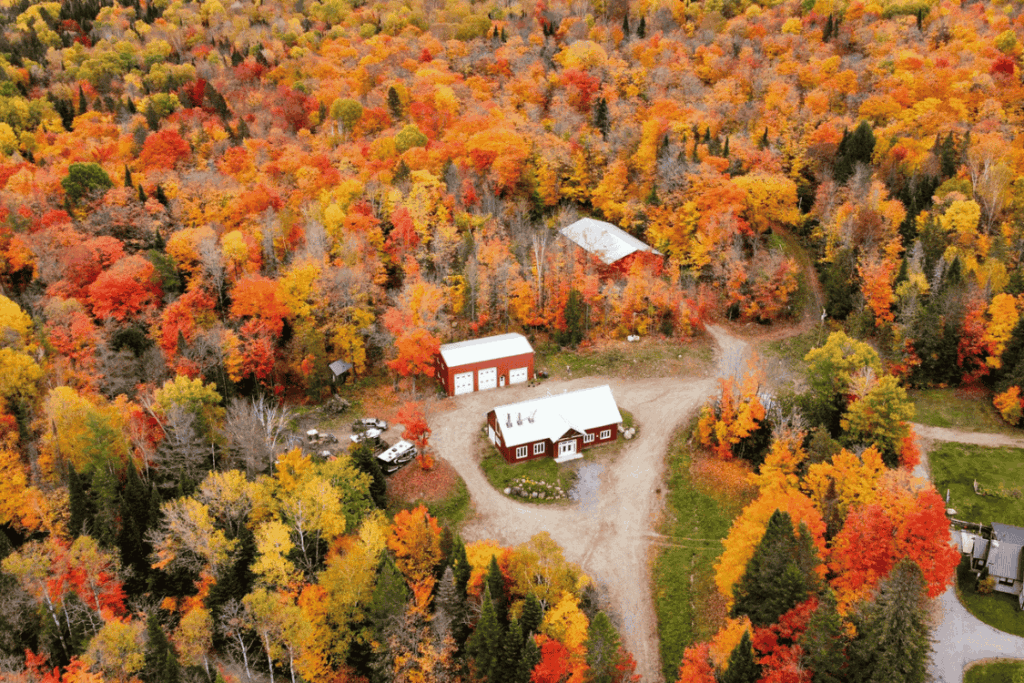
🍁 Algonquin Provincial Park (Ontario)
Algonquin is one of the most iconic fall destinations in Canada — and for good reason.
The park is dominated by mixed forests of maple, birch, and pine, creating layers of color that shift from bright yellow to deep red. What makes it special isn’t just the trees, but how the landscape interacts with water.
In early mornings, when the lakes are still, the reflections double the scenery — forests mirrored perfectly on the surface. It’s quiet, expansive, and exactly what people imagine when they think of Canadian fall.
🏰 Old Quebec (Quebec City, Quebec)
Walking through Old Québec in fall feels like stepping into a European town painted in warm tones.
Dating back to the 1600s, this UNESCO-listed district is one of the few walled cities in North America. The cobblestone streets, sloped alleys, and historic buildings become even more atmospheric under soft autumn light.
Compared to summer, the crowds are lighter, making it easier to slow down, explore, and really take in the details of the city.
🏔️ Mont-Tremblant (Quebec)
Mont-Tremblant offers a completely different perspective of fall — from above.
By taking the gondola up the mountain, you get a panoramic view of forests stretching across rolling hills, with colors layered from valley to horizon. It’s less about walking through foliage, and more about seeing the full scale of it.
Early fall is also ideal for hiking here, with cooler temperatures and clear skies.
🌊 Cabot Trail (Nova Scotia)
The Cabot Trail is where the fall meets the ocean.
This scenic drive loops through Cape Breton Highlands, where cliffs drop into the Atlantic on one side, and forested hills rise on the other. In autumn, those hills turn into waves of red, orange, and gold.
What makes this route unique is the contrast — coastal views combined with fall foliage, constantly changing as you drive.
🌲 Larch Valley (Banff, Alberta)
Fall in the Rockies looks completely different from Eastern Canada.
Instead of red maple leaves, the highlight here is golden larch trees. For a short window in mid-to-late September, entire alpine slopes turn bright yellow, creating a striking contrast against grey rock and blue sky.
It’s subtle, clean, and uniquely Western Canada — a quieter kind of beauty compared to the vibrant colors in the East.
What to Wear & Pack (Fall)
Fall is one of the most comfortable seasons, but layering is still key.
Outerwear: Light coat or trench (wind-resistant is ideal)
Layers: Long sleeves + sweaters
Footwear: Comfortable, slightly waterproof walking shoes
Accessories: A medium-weight scarf and a compact umbrella (especially in Eastern Canada)
❄️ Winter in Canada (December – February)
The Vibe: Quiet, snowy, and magical — where landscapes simplify, cities slow down, and the night sky becomes the main attraction.
Canada Weather in Winter
Winter in Canada is intense — but that’s also what makes it special.
- Vancouver: ~34–45°F (1–7°C), mild but damp
- Toronto: ~18–36°F (-8–2°C), crisp and windy
- Yellowknife: -10°F to -25°F (-23°C to -31°C). Extreme cold, but the “dry” air makes it more manageable than you’d expect with the right gear.
On the West Coast, winter feels more like a wet, coastal cold — not freezing, but damp enough to feel chilly. In Central and Eastern Canada, temperatures drop significantly, especially when wind is involved.
Up north, winter is on another level. But in exchange, you get something most places in the world can’t offer.
👉 This is the best time to visit Canada for Northern Lights, snow landscapes, and winter activities.
Canada Best Places to Visit in Winter
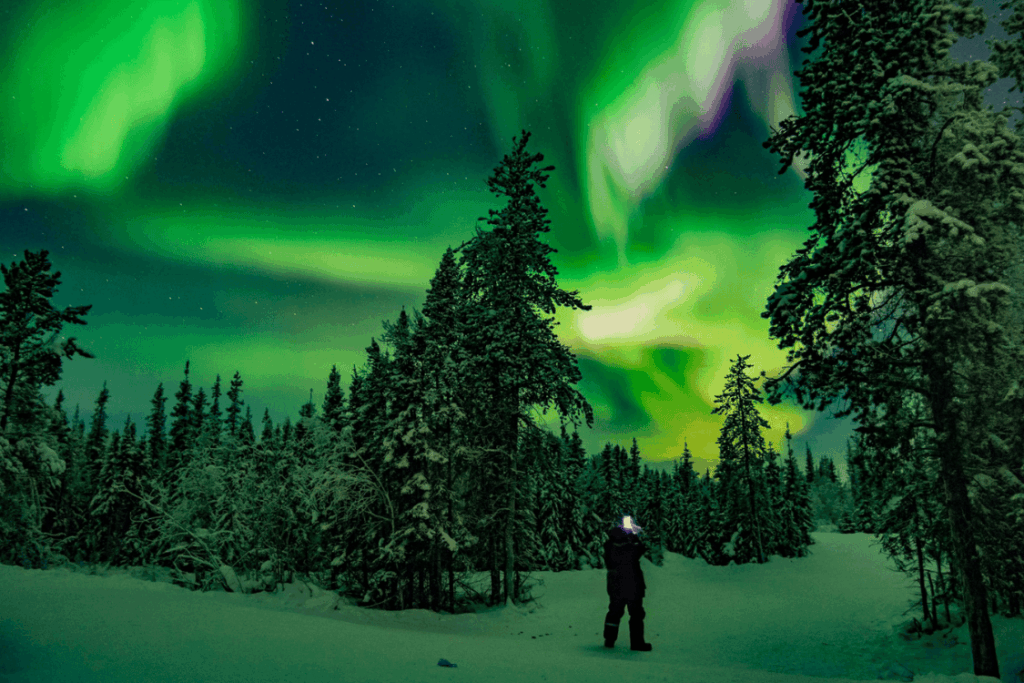
🌌 Yellowknife (Northwest Territories)
If you’re traveling to Canada for one reason — this is it.
Yellowknife sits directly under the aurora oval, making it one of the best places in the world to see the Northern Lights. Winter offers long, dark nights and relatively stable weather conditions, which significantly increases your chances of spotting them.
🎿 Whistler (British Columbia)
Whistler is one of the largest ski resorts in North America, but it’s not just about skiing.
The village itself is designed for a full winter experience — cafés, restaurants, and cozy spaces where you can unwind after a day on the slopes. Even if you don’t ski, the atmosphere alone makes it worth visiting.
For first-time winter travelers, this is one of the easiest and most enjoyable places to experience snow culture.
🏔️ Banff National Park (Alberta)
Banff in winter feels completely different from summer.
Snow covers the landscape, removing smaller details and leaving behind clean lines — mountain ridges, frozen rivers, and open valleys. The scenery becomes more minimal, but also more dramatic.
At Lake Louise, the frozen surface transforms into a natural ice rink, surrounded by towering peaks. In late January, the Ice Magic Festival brings international carvers to create a literal ice kingdom on the lakeshore.
Check out Skijoring in downtown Banff (typically mid-January)—it’s a wild sport where skiers are pulled by horses through the streets!
🏰 Old Quebec (Quebec City, Quebec)
Old Québec in winter feels like stepping into a real-life snow-covered European town.
The city’s history dates back to the 17th century, and its narrow streets, stone buildings, and fortified walls create a setting that becomes even more striking under snow.
During the holiday season, lights and decorations bring warmth to the cold surroundings. Even after the festivities, the city maintains a quiet, atmospheric charm that makes winter travel here feel slow and immersive.
What to Wear & Pack (Winter)
Winter in Canada is all about serious layering.
Outerwear: Heavy down jacket (windproof + insulated)
Layers: Thermal base layers + sweaters
Shoes: Insulated, non-slip snow boots
The Essentials: Gloves, scarf, beanie
The key isn’t just warmth — it’s protecting against wind and staying dry.
📝 What Is the Cheapest Time of Year to Visit Canada?
💡 Quick Answer:
Best value: March – April, November
Budget winter option: January – February (after holidays)
If you’re flexible with weather, these periods usually offer the lowest prices on flights and hotels across Canada.
❄️ January – February (Post-Holiday Winter Deals)
Right after the New Year holidays, travel prices drop noticeably.
While temperatures are cold, this is a great time for winter-focused trips, especially in places like Whistler for skiing or Yellowknife for Northern Lights.
👉 Best for: snow experiences + lower airfare
👉 Keep in mind: ski resorts can still be busy on weekends
🌿 March – April (Best Overall Value)
This is the sweet spot for budget travelers.
Winter is ending, but peak season hasn’t started — meaning fewer crowds, better hotel deals, and a more relaxed pace, especially in cities like Vancouver and Toronto.
👉 Best for: city trips, food, museums
👉 Avoid: Spring Break week when prices may rise
🍂 November (Lowest Prices of the Year)
After fall foliage season ends, tourism drops sharply — making November one of the cheapest months to visit Canada.
Cities like Montreal and Toronto feel quieter and more local, with some of the lowest hotel rates of the year.
👉 Best for: lowest prices + fewer tourists
👉 Trade-off: shorter days and less vibrant scenery
📝 What Are the Peak Seasons in Canada?
💡 Quick Answer:
Main peak season: June – August (summer)
Second peak: Late September – October (fall foliage)
Holiday peak: Late December – early January
Special 2026 Note: Summer 2026 will be the “highest” peak for Toronto and Vancouver due to the FIFA World Cup.
☀️ June – August (Summer Peak Season)
This is the busiest and most popular time to visit Canada.
Warm weather, long daylight hours, and fully open national parks make it ideal for first-time travelers. Destinations like Banff National Park and Vancouver are at their absolute best.
However, this also means:
- Hotels sell out quickly
- Prices are at their highest
- Popular spots can feel crowded
👉 Book 6 months in advance, especially for national parks and lake areas
🍁 Late September – October (Fall Foliage Peak)
This is Canada’s second major peak season, driven by fall colors.
Regions like Toronto, Montreal, and Algonquin Provincial Park attract visitors for their vibrant red, orange, and gold landscapes.
The weather is cooler and comfortable, making it ideal for both city walks and scenic drives.
👉 Peak foliage timing is short — plan carefully and book early
🎄 Late December – Early January (The Holiday Season)
The Christmas and New Year period creates a short but intense peak season.
Cities light up with festive markets and decorations, while ski resorts like Whistler see a surge in visitors.
This is one of the most atmospheric times to visit — but also one of the most expensive.
👉 Expect higher prices and limited availability during holiday weeks
📝 What’s the Prettiest Town in Canada?
💡 Quick Answer:
Most picturesque overall: Old Quebec
Best mountain scenery: Banff
Most European feel: Montreal
Best coastal charm: Victoria
Canada has many beautiful towns — but these stand out for their unique atmosphere and scenery.
🏰 Old Quebec (Quebec City)
If I had to pick just one, this would be it.
Old Québec is one of the most beautiful and best-preserved historic towns in North America, with cobblestone streets, stone buildings, and fortified city walls dating back to the 17th century.
Walking through the narrow streets feels almost like being in Europe — especially around Petit-Champlain and Dufferin Terrace. In winter, it turns into a snow-covered fairytale town, while in fall, warm tones make the entire city glow.
🏔️ Banff (Alberta)
Banff is where dramatic mountain scenery meets a charming alpine town.
Surrounded by the Canadian Rockies, it’s one of the most scenic places in the country, with easy access to iconic spots like Lake Louise and Moraine Lake.
What makes Banff special is how compact it is — you can step out of your hotel and immediately be surrounded by nature.
🎨 Montreal (Quebec)
Montreal blends European charm with North American energy.
Old Montréal features historic buildings, churches, and cobblestone streets, while the rest of the city offers vibrant neighborhoods, food culture, and festivals.
It’s not just pretty — it feels alive.
🌊 Victoria (British Columbia)
Victoria feels calm, elegant, and slightly British in character.
Located on Vancouver Island, it’s known for its harbor views, gardens, and slower pace of life. The Inner Harbour area, with its historic buildings and waterfront setting, is especially scenic.
🇨🇦 How to Plan Your First Trip to Canada ?
I always recommend starting with one simple idea: Don’t plan by location — plan by travel style.
From my experience, most Canada itineraries naturally fall into 4 styles. Once you pick one, everything else — where to go, how long to stay, and even the best time to visit — becomes much clearer.
🌆 1️⃣ Cities, Food & Culture
Top Hubs: Vancouver / Toronto / Montreal
If you enjoy exploring neighborhoods, trying local food, and visiting museums, this is the most straightforward way to experience Canada.
Each city has its own personality — Vancouver is laid-back and outdoorsy, Toronto feels fast-paced and modern, while Montreal brings a strong European influence with its architecture and culture.
Best for: first-time visitors, shorter trips, no car needed
🏔️ 2️⃣ National Parks, Lakes & Hiking
Top Hubs: Banff National Park / Jasper National Park
This is the version of Canada you’ve probably seen on Instagram.
Think turquoise lakes, glacier-fed valleys, and endless hiking trails. The Canadian Rockies offer some of the most dramatic scenery in North America — and surprisingly, many of the top spots are easy to access.
Best for: nature lovers, photography, road trips
🍁 3️⃣ Fall Foliage & Scenic Drives
Top Hubs: Ontario / Quebec / Atlantic Canada
If you’re drawn to seasonal beauty, fall in Canada is hard to beat.
Road trips become the highlight here — forests turn into layers of red, orange, and gold, and the cooler weather makes long drives and outdoor walks incredibly comfortable.
Best for: couples and slow-paced road trips.
❄️ 4️⃣ Northern Lights & Winter Experiences
Top Hubs: Yellowknife / Whistler / Québec City
Winter in Canada is all about embracing the cold — and getting something unforgettable in return.
From chasing the Northern Lights in Yellowknife to skiing in Whistler or exploring snow-covered towns, this is a completely different side of the country.
Best for: unique experiences, snow activities, winter travel
Final Thoughts
So — what’s the best time to visit Canada?
It really comes down to the kind of trip you want.
If you’re chasing that classic postcard experience — turquoise lakes, open hiking trails, and long summer days — June to August is hard to beat.
If you want something a little more relaxed, with cooler weather and incredible scenery, September to October offers the most balanced experience.
For city-focused trips with better prices and fewer crowds, March to April is surprisingly underrated.
And if you’re drawn to something more unique — Northern Lights, snow-covered landscapes, and winter activities — December to February gives you a completely different side of Canada.
The truth is, Canada isn’t a place you rush through.
It’s a destination where the pace naturally slows down — where a single walk, a lake view, or even the changing light throughout the day becomes part of the experience🐱.
*All information provided above is for reference only. For full details, please refer to the official websites of the respective hotels and organizations.
🌍 Explore More:
👉 Best Hotels in New York City (2026): Where to Stay in NYC for Every Budget
👉 Best Time to Visit New York City in 2026: Weather, Seasons & Travel Tips
👉 Where to Eat in New York City (2026): Top Restaurants, Iconic Dishes & Budget Bites
👉 Best Time to Visit Norway 2026: When to Go for Fjords, Northern Lights & Midnight Sun
👉 Best Time to Visit Kyushu: A Seasonal Guide for First-Timers
👉 Best Time to Visit Nagoya 2026: Weather, What to Wear & Things to Do
👉 Best Time to Visit Hong Kong 2026: Weather, Festivals & Things to Do

Hi, I’m Cat Head! Having lived in the US, Canada, and Hong Kong, I bring a unique global perspective to the world of travel. I’m a Japan travel specialist dedicated to finding the best travel deals and crafting seamless DIY itineraries.
Whether you’re looking for luxury hotel reviews on a budget or travel hacks, I share my first-hand experiences and travel tips to make your next trip unforgettable.