- 2026-09-30 Published
- 2026-10-03 Updated
- Asia,
- By Cat Head
Best Time to Visit Singapore: Weather & Months to Avoid
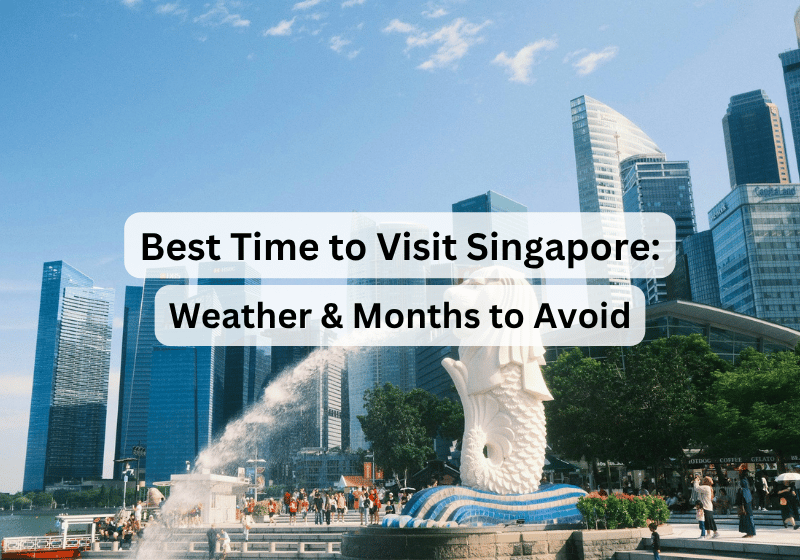
Singapore is one of those places I love recommending for a first trip to Southeast Asia. It’s compact and easy to explore, with plenty to discover: Marina Bay’s futuristic skyline, the colorful streets of Chinatown and Little India, and Sentosa’s beaches and resorts. You can spend the morning exploring a neighborhood, stop for lunch at a hawker center, and finish the day beside the bay.
But when is the best time to visit Singapore? With hot, humid weather year-round, choosing your dates means looking beyond temperature. Rainfall, festivals, and holiday crowds can all shape your trip, whether you’re planning garden walks, a day at Universal Studios Singapore, or a few days of eating and exploring.
In this guide, I’ll share my picks for the best months to visit, when rain or crowds might make you reconsider your dates, and when to look for better value—plus what to see and wear throughout the year.
Table of Contents
✈️ Planning Your First Trip to Singapore
🇸🇬 Is Singapore Easy to Explore on Your Own?
Absolutely. If you’re visiting Southeast Asia for the first time, Singapore is a great place to start.
✔️ Easy Transportation and Well-Connected Attractions
The MRT, Singapore’s subway system, gets you close to many of the city’s main attractions. Routes are clearly marked, and transfers are generally straightforward. Popular areas such as Marina Bay, Chinatown, Orchard Road, and Bugis are easy to connect within the same itinerary.
✔️ Little Language Barrier for English Speakers
English is widely used, so communicating at most attractions, restaurants, and shopping malls is straightforward.
As you explore Chinatown, hawker centers, and traditional shops, you’ll also hear Mandarin and other Chinese languages, including Cantonese and Hokkien. Alongside Malay and Tamil, they’re part of the mix that gives Singapore its multicultural character.
For American visitors, being able to navigate in English makes those first few days especially easy.
✔️ A Clean, Orderly, and Generally Safe Environment
Singapore’s well-organized streets and clean public spaces make exploring feel comfortable, while its main tourist areas are generally safe. Heading out for skyline views or returning after dinner is usually straightforward, with the same everyday precautions you’d take in any city.
🔎 How Many Days Do You Need in Singapore?
For a first trip, I’d recommend 4 to 5 days.
Singapore may be compact, but there’s plenty of variety: Marina Bay’s landmarks, cultural neighborhoods such as Chinatown, Little India, and Kampong Glam, Sentosa’s beaches and attractions, and Jewel Changi Airport.
With 4 to 5 days, you can focus on a different part of the city each day without squeezing everything into an exhausting schedule. Explore Marina Bay and stay for the evening lights, spend another day sampling local food and wandering the cultural neighborhoods, then set aside a day for Sentosa. You’ll have time to enjoy each place without constantly watching the clock.
For a More Relaxed Vacation: 5 to 6 Days
If you prefer a slower pace, 5 to 6 days gives you more breathing room.
Getting around Singapore is usually straightforward, but the humidity and hours of walking can leave you ready for a break. An extra day means you can settle into a café, enjoy a leisurely lunch, or linger beside Marina Bay after dinner.
Those little pauses make a bigger difference than you might expect.
For Wildlife Parks and More Exploring: At Least 6 Days
If you want to visit several attractions at Mandai Wildlife Reserve, such as Singapore Zoo, Night Safari, and Bird Paradise, I recommend at least 6 days for your Singapore trip.
Mandai is in northern Singapore, away from the main downtown sightseeing areas. A wildlife park can easily fill half a day or longer, so visiting several deserves some dedicated time in your itinerary.
Allowing an extra day or two makes it easier to enjoy the wildlife parks while still having time for Singapore’s neighborhoods, food, and waterfront sights.
🌸 Spring: March – May
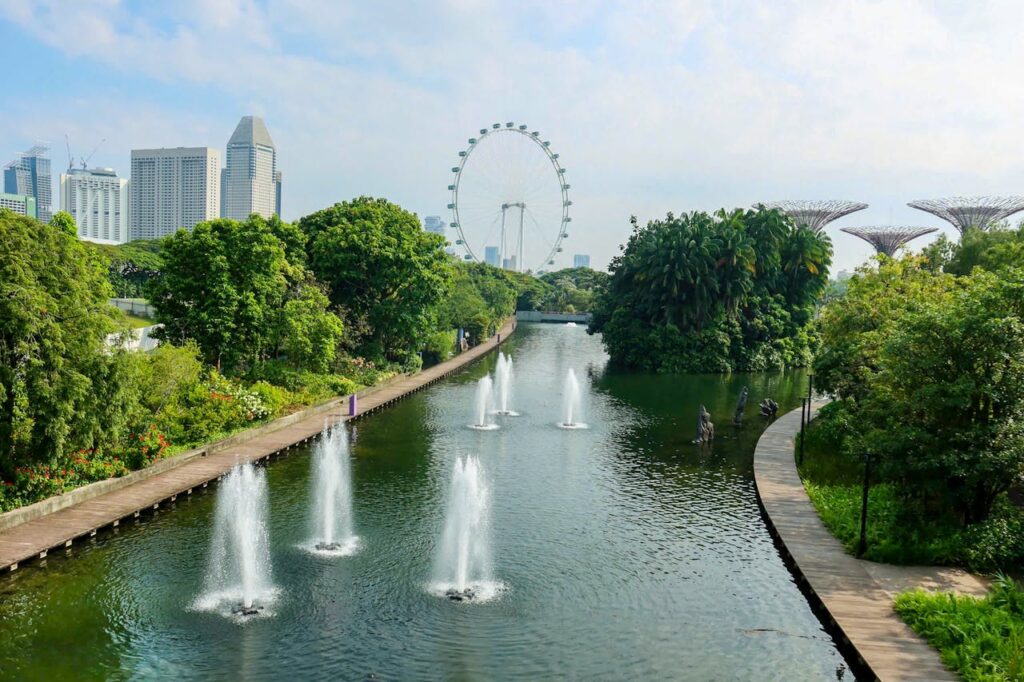
The Vibe: Sunny Moments, Garden Visits, and Skyline Photography
What’s the Weather Like?
Singapore doesn’t have a true spring, summer, fall, or winter. I’m using these familiar seasonal labels to organize the months throughout this guide.
From March through May, expect warm nights and daytime temperatures reaching around 90°F (32°C). April and May can feel particularly hot and still, with afternoon or early-evening thunderstorms.
There are lovely opportunities for photos when the sky clears, but I wouldn’t count on uninterrupted sunshine throughout these months.
My favorite way to approach the day is to mix indoor attractions with neighborhood exploring, then head toward Marina Bay after about 4:30 p.m. and stay into the evening. That way, you get the city in daylight and watch it gradually light up without spending the entire afternoon outside.
Best Places to Visit in Singapore in Spring
🌿 Gardens by the Bay | Marina Bay
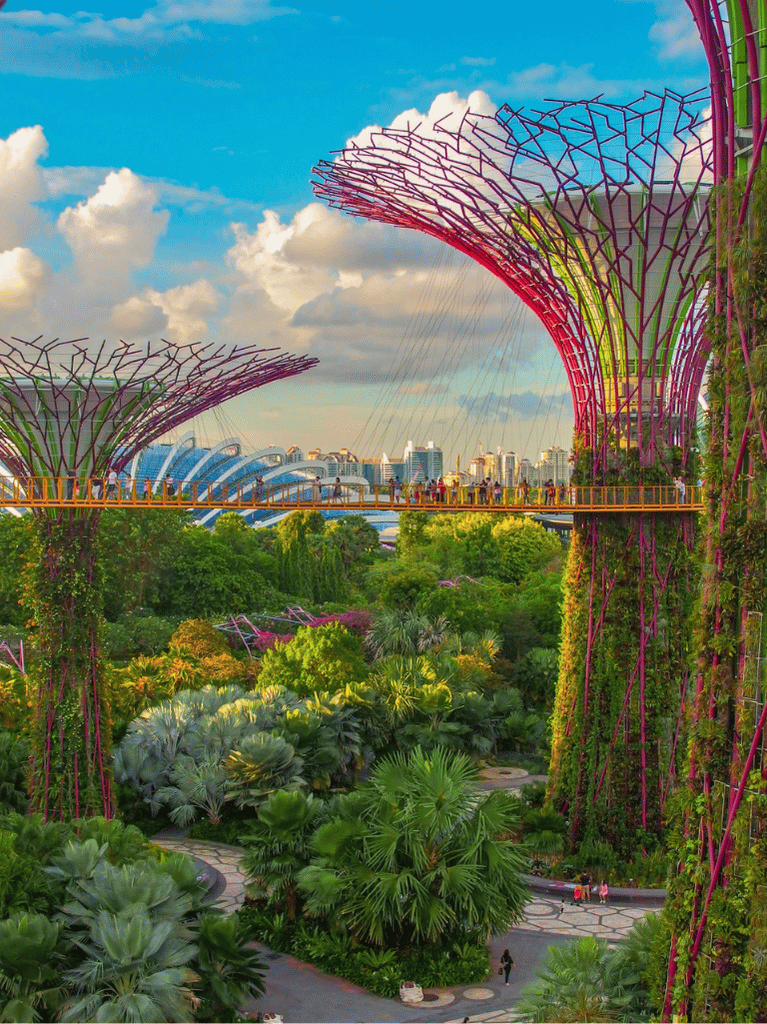
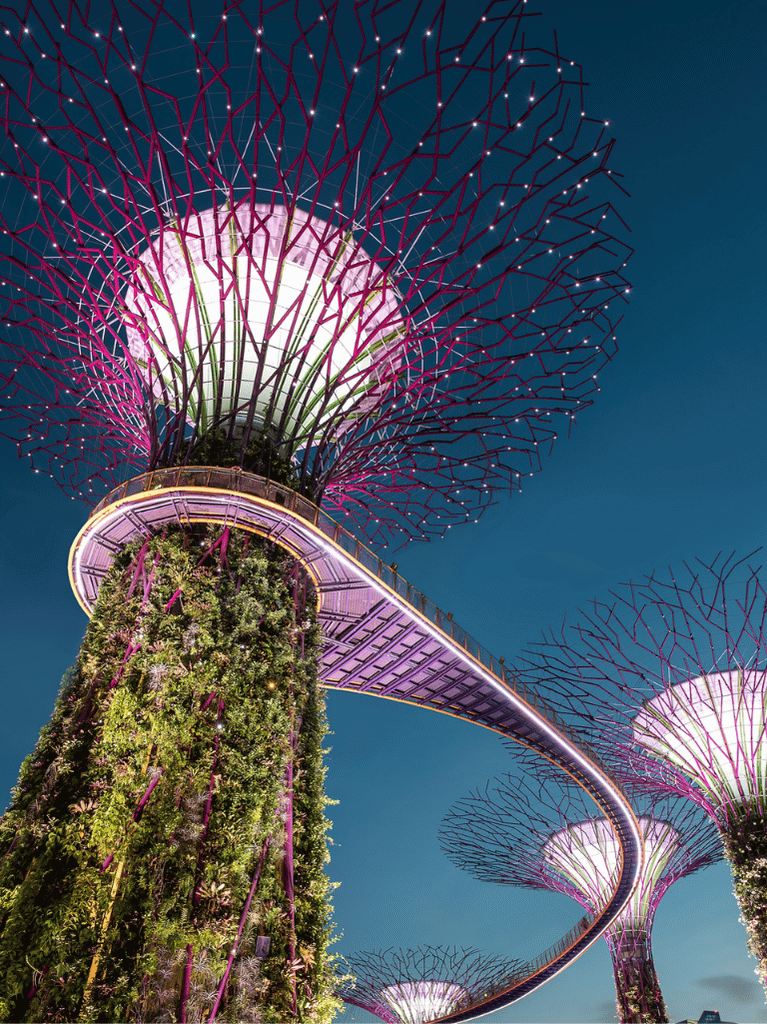
This is no ordinary park. Gardens by the Bay is one of Singapore’s most recognizable landscapes, bringing together nature, architecture, and the city skyline in one beautifully imaginative setting.
The giant Supertrees immediately catch your eye, while the two cooled conservatories offer a closer look at plants and striking garden design. During the day, you can appreciate the greenery and the structures themselves. After dark, the lights transform the outdoor gardens into something that feels wonderfully futuristic.
I recommend arriving in the late afternoon and staying into the evening. Watching the setting shift from a futuristic garden to a glowing nighttime landscape is a big part of what makes this place so memorable.
🦁 Merlion Park | Marina Bay
For a first visit to Singapore, this is one of those classic photo stops that’s hard to leave out.
The Merlion also has a story behind its appearance: the lion head represents the “Lion City,” while the fish body reflects Singapore’s origins as a fishing village.
Standing here, you can take in Marina Bay, Marina Bay Sands, and the surrounding skyscrapers all at once. It’s the Singapore view so many travelers picture before they arrive—and seeing it in person still feels special.
🎨 National Gallery Singapore | Civic District
Set within the former Supreme Court and City Hall, National Gallery Singapore is as much an architectural attraction as an art museum. The two historic buildings now house an important collection of Singaporean and Southeast Asian art.
I like to think of it as my little retreat for a midday break and a change of pace. On a bright, hot afternoon, stepping inside to cool down and explore the galleries gives the day a different rhythm.
It also brings a little more cultural depth to a trip that could otherwise become all skyline photos, shopping, and food.
🌆 Marina Bay | Marina Bay
Marina Bay makes a lovely walking route from late afternoon into the evening.
Start at Merlion Park and follow the waterfront at an easy pace. As the sky darkens, the skyscrapers begin reflecting in the water, and the view becomes more atmospheric with every stop.
Continue toward the Event Plaza outside Marina Bay Sands, where you can catch Spectra, the free light-and-water show, if your timing lines up with the schedule.
If you have more time, consider adding a ride on the Singapore Flyer for a view from above. Otherwise, the waterfront walk itself is already a wonderful way to spend the evening.
🌿 Singapore Botanic Gardens | Tanglin
Even during the warmer months, an early-morning walk through Singapore Botanic Gardens is a lovely option for anyone who enjoys nature.
Singapore’s first UNESCO World Heritage Site has spacious grounds, lush tropical greenery, and areas of rainforest that offer a completely different atmosphere from the downtown skyline.
Within the gardens, the National Orchid Garden is the place I wouldn’t skip. Orchids hold a special place in Singapore—the national flower is an orchid hybrid—and the displays bring together an incredible variety of colors and forms.
Even if you don’t usually spend much time looking at plants, the garden design is easy to appreciate.
I’d visit the National Orchid Garden shortly after it opens at 8:30 a.m. The wider Botanic Gardens opens earlier, so you can also start with a morning walk before heading inside.
What to Wear in Spring
For spring in Singapore, think sun protection, breathable fabrics, and a light layer for strong air-conditioning.
- Outer layer: A thin jacket or lightweight sun-protective shirt.
- Tops: Short sleeves and moisture-wicking fabrics.
- Bottoms: Shorts, loose pants, or a breathable long skirt.
- Shoes: Comfortable walking shoes with good traction.
- Accessories: Sunglasses, a hat, sunscreen, and a compact umbrella.
Overall approach: Protect yourself from the sun outside, keep a layer handy indoors, and always be ready for rain.
☀️ Summer: June – August
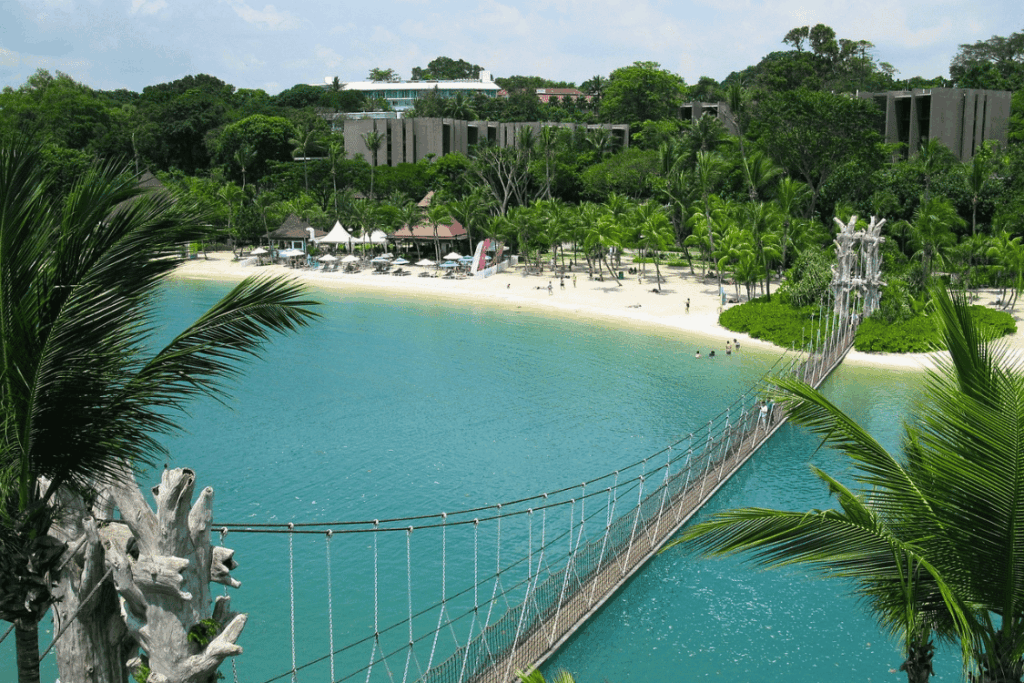
The Vibe: Lively Evenings and Island Vacation
What’s the Weather Like?
Average daytime highs in June–August are around 88–89°F (31–32°C). Brief showers and thunderstorms are common, and rain can also arrive in morning squalls.
My advice is to adjust the pace: slow down during the middle of the day, become more active in the late afternoon, and make the most of the evenings.
Spend the hottest hours browsing a shopping mall or exploring an indoor attraction, then head out again for dinner, waterfront views, or island time. The city gives you plenty of ways to balance sightseeing with a more relaxed vacation mood.
Best Places to Visit in Singapore in Summer
🏝️ Sentosa Island | Sentosa
Sentosa is a complete resort destination where you could easily spend two days and a night.
Getting there from the city is straightforward, with options including the Sentosa Express from VivoCity and the cable car. Once you’re on the island, the pace feels different: beaches, walking paths, and sea breezes create a more relaxed atmosphere than downtown.
There are plenty of ways to spend the day. For something easygoing, head to Siloso Beach or Palawan Beach, walk along the sand, and find a waterfront restaurant for a cold drink.
If you want something more energetic, Skyline Luge is a fun addition. Riding downhill gives you a little burst of excitement, and it’s an approachable activity even if you’re not usually chasing thrills.
🎢 Resorts World Sentosa | Sentosa
Resorts World Sentosa is one of the island’s main entertainment hubs, bringing together attractions, restaurants, shopping, and hotels in the same area. It’s easy to build a full day around it.
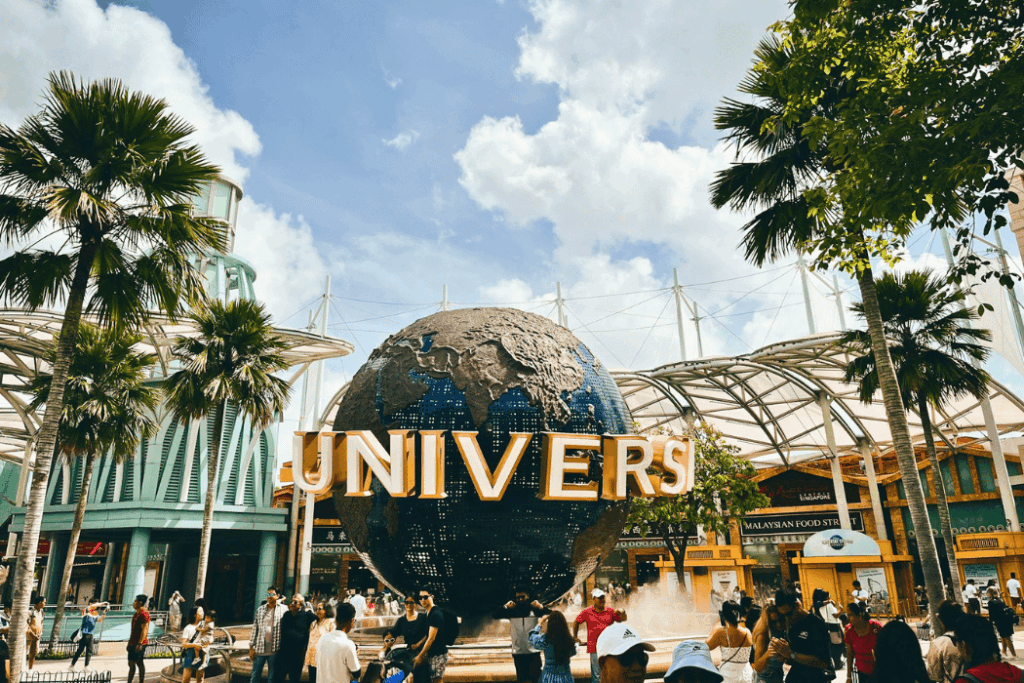
Its most famous attraction is Universal Studios Singapore. The park is relatively compact, but I’d still give it a full day if you want to enjoy the main rides without constantly checking the time.
For the best time to visit Universal Studios Singapore, I recommend choosing a weekday outside Singapore’s school breaks and public holidays to give yourself a better chance of shorter lines. Before booking, check the 👉Singapore school holiday calendar and 👉the official Universal Studios Singapore website for opening hours and temporary ride closures.
I also recommend Singapore Oceanarium as a separate indoor outing around midday. Standing in front of a large viewing window and watching marine life move through the water is a lovely way to slow down and take a break from the heat.
🌌 Night Safari | Mandai
What makes Night Safari special is that the experience is designed around seeing animals after dark. As the world’s first nocturnal wildlife park, it uses low lighting to create an atmosphere that feels very different from a conventional daytime zoo.
There are two main ways to explore: the Safari Adventure Tram and the walking trails. The tram takes you through different habitats and gives you an introduction to the park without needing to walk the entire way.
For a closer look, I recommend exploring trails such as the Leopard Trail or the Pangolin Trail (formerly the Fishing Cat Trail), where you can take your time watching the animals.
That’s where some of the excitement comes from: peering into the dim light, noticing movement, and waiting to see what appears.
🌃 Marina Bay Sands SkyPark Observation Deck | Marina Bay
If you want a wide-open view of Singapore from above, head to the SkyPark Observation Deck at Marina Bay Sands.
From up here, you can take in the bay, Gardens by the Bay, and the towers of the downtown skyline. The city looks different when you can see how all those places fit together.
I recommend arriving in the late afternoon and staying into the evening. On a clear day, you can watch the sunset, enjoy the soft colors of blue hour, and see the city skyline light up after dark.
If time allows, have a meal or take a break somewhere within Marina Bay Sands afterward. It makes the evening feel less like a quick photo stop and more like an opportunity to sit back and enjoy the setting.
What to Wear in Summer
The goal is to stay light, comfortable, and as cool as possible.
- Outer layer: A very thin jacket or cardigan for air-conditioned spaces.
- Tops: T-shirts, tanks, and quick-drying fabrics.
- Bottoms: Shorts, lightweight pants, or an airy long skirt.
- Shoes: Breathable walking shoes with good traction.
- Accessories: A small towel or wipes, sunscreen, sunglasses, and a compact umbrella.
Overall approach: Keep your bag light, choose breathable clothing, and expect both sweat and sudden showers.
🍂 Fall: September–November
The Vibes: A Season of Festivals and City Celebrations
What’s the Weather Like?
Daytime highs remain around 88–89°F (31–32°C). October and November bring more unsettled conditions, with November generally wetter than September.
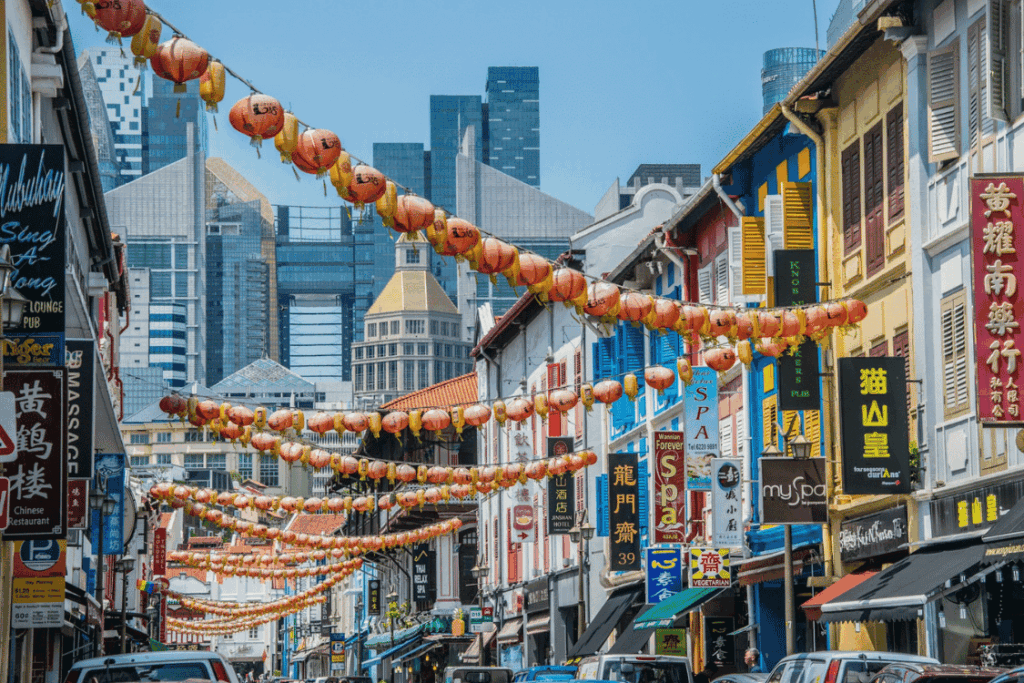
What I love about this time of year is the festive atmosphere. Depending on when you visit, you might see Chinatown glowing with Mid-Autumn lanterns or experience the buzz around Marina Bay during the Singapore Grand Prix.
Best Places to Visit in Singapore in Fall
🏁 Singapore Grand Prix Season | Marina Bay
Usually held in September or October, the Singapore Grand Prix is one of the city’s most distinctive annual events.
During race week, Marina Bay becomes the setting for nighttime racing and large-scale entertainment. The atmosphere feels completely different from an ordinary sightseeing weekend.
What makes it so memorable is the city-center circuit. After dark, the skyline, bright lights, and sound of the cars come together in a setting that feels unmistakably Singaporean. Even if you don’t follow Formula 1 closely, the excitement is easy to understand.
Restaurants, bars, and venues around the area can become especially lively during the event. Without a race ticket, you can still enjoy the wider city atmosphere, but don’t assume you’ll have access to the circuit, performances, or your usual waterfront walking route.
🏮 Chinatown | Chinatown
Chinatown is one of Singapore’s most rewarding neighborhoods for wandering. Its appeal goes beyond Chinese heritage: traditional streets, hawker food, temples, and contemporary cafés all fit naturally into the same area.
You might find a modern coffee shop beside an old shophouse, a long-running food stall downstairs, and a little gift or dessert shop just around the corner. Exploring feels a bit like following a trail of small discoveries.
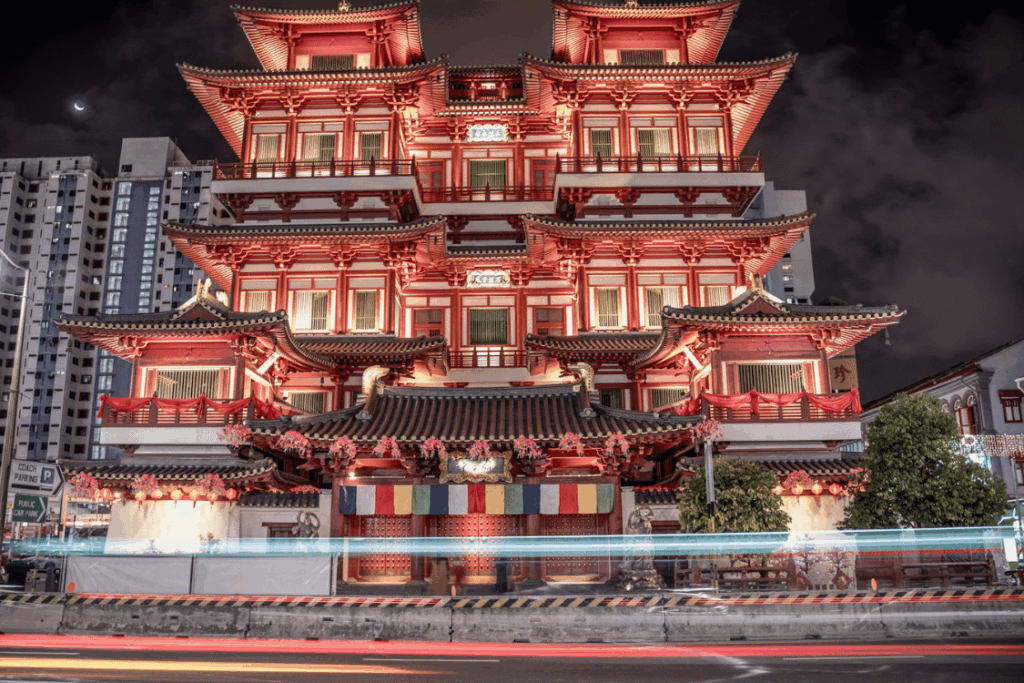
Start with the Buddha Tooth Relic Temple & Museum, whose red exterior and Tang dynasty-inspired design make it stand out immediately. Inside, the richly decorated spaces have a more solemn atmosphere. From there, wander through the surrounding streets and take in the shops, stalls, and traditional architecture.
The pace is completely different from the sleek surroundings of Marina Bay.
Food is a big part of exploring Chinatown, and I’d make time for a meal at a hawker center. Maxwell Food Centre is a classic stop for Hainanese chicken rice and other local favorites at affordable prices. Chinatown Complex Food Centre is another good option if you want to try a few different dishes.
If you visit around the Mid-Autumn Festival, which falls in September or October, seasonal lantern displays can make the streets especially atmospheric after dark.
🌕 Gardens by the Bay | Marina Bay
Around the Mid-Autumn Festival, Gardens by the Bay often adds lantern displays, installations, and seasonal decorations to its gardens. Set against the Supertrees, they give the evening an extra touch of magic.
The best approach is to arrive in the late afternoon. Explore a conservatory or part of the gardens first, then stay as daylight fades and the displays begin to glow.
The change in atmosphere is part of the experience. What looked colorful and playful earlier can feel almost dreamlike once the background turns dark.
You can continue toward the Marina Bay waterfront and Marina Bay Sands afterward, enjoying the city lights along the way.
🌊 Marina Bay | Marina Bay
In fall, Marina Bay can take on an extra layer of energy when festivals or city events are underway. Depending on your dates, you may come across temporary installations or special programs that give familiar surroundings a different feel.
On evenings without event-related closures, it’s a wonderful place for a slow walk.
From Merlion Park toward Marina Bay Sands or Gardens by the Bay, the route brings together water, skyscrapers, and city lights.
I like the idea of picking up a drink, finding a comfortable spot beside the water, and watching the lights gradually come on. Sometimes that’s all the evening needs.
What to Wear in Fall
Summer clothing still works, but pay more attention to rain protection.
Outer layer: A lightweight windbreaker for indoor air-conditioning or light rain.
Tops: Short sleeves and breathable fabrics.
Bottoms: Lightweight, quick-drying clothing.
Shoes: Good traction is essential; choose water-resistant or quick-drying footwear.
Accessories: An umbrella is a must.
Overall approach: Dress much as you would in summer, with a little more preparation for wet weather.
❄️ Winter: December – February
The Vibe: Christmas Lights in a Tropical City
What’s the Weather Like?
December–February is still warm, with average daytime highs around 87–89°F (30–32°C). December and January tend to be wet, with occasional prolonged rainy spells. By February, rainfall usually eases—it’s typically Singapore’s driest month of the year.
I especially like the festive side of Singapore at this time of year. Christmas lights appear toward the end of the year, followed by New Year’s celebrations and then Lunar New Year in January or February.
The city moves from one celebration to the next, and those glowing streets and seasonal decorations give the trip a real sense of occasion.
Best Places to Visit in Singapore in Winter
🎄 Orchard Road | Orchard
Orchard Road is Singapore’s famous shopping avenue and one of the city’s liveliest retail districts.
Department stores, luxury boutiques, restaurants, and large malls line the area. From ION Orchard and Ngee Ann City to Paragon, there’s enough browsing to keep you occupied for hours.
Even if shopping isn’t a priority, it’s worth coming to experience this side of Singapore.
Toward the end of the year, Orchard Road lights up with Christmas decorations, turning an evening stroll into a festive experience.
For anyone used to a cold American Christmas, the contrast is part of the fun. Here, you can admire the holiday lights in short sleeves, with warm evening air instead of a winter chill.
🎆 Marina Bay Singapore Countdown | Marina Bay
If you’re in Singapore around New Year’s Eve, Marina Bay is one of the main places to experience the celebrations.
The countdown has featured fireworks, entertainment, and crowds gathering around the waterfront, bringing the city’s festive mood to a high point. The exact program changes each year, so check the official event information before planning your evening.
Many people arrive early to find a viewing spot and settle in for the countdown. You don’t necessarily need to be right at the front to enjoy the atmosphere, but waterfront access is managed, and some areas may close when they reach capacity.
I’d give this evening a little more planning than a normal Marina Bay walk, especially when it comes to getting there and heading back afterward.
✈️ Jewel Changi Airport | Changi Airport Area
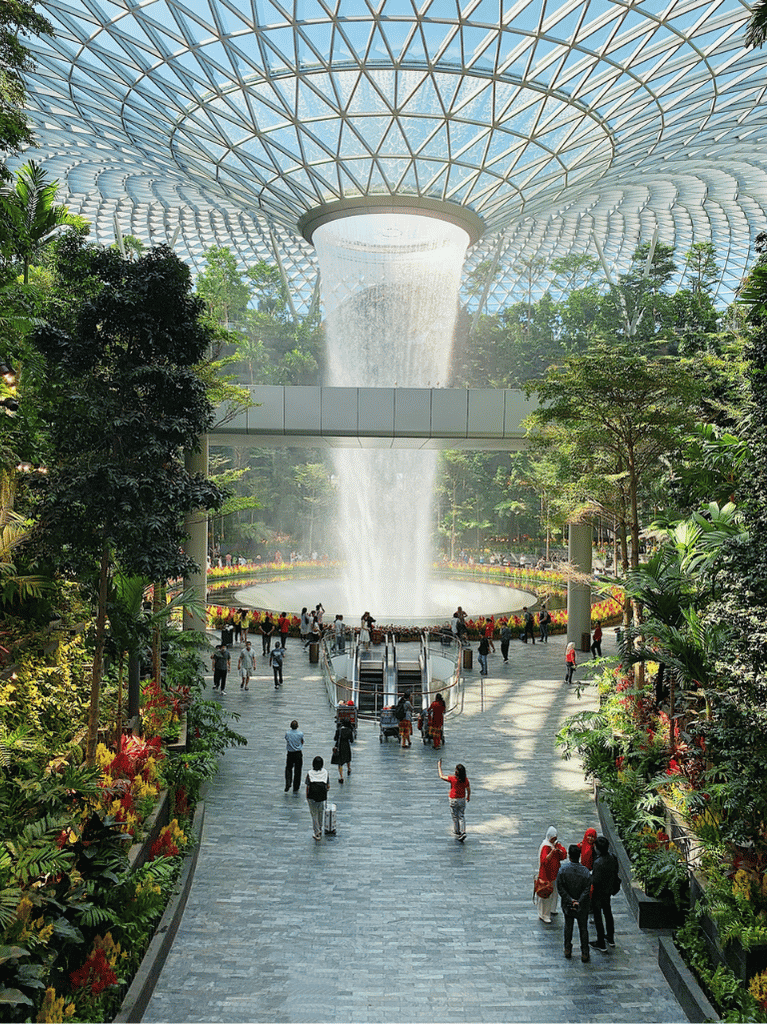
Jewel Changi Airport brings together a vast indoor garden setting and a modern shopping complex. At its center is the spectacular Rain Vortex, a waterfall that drops approximately 131 feet (40 meters) through the building.
After dark, scheduled light-and-music shows add another layer to the experience.
This is an especially useful winter outing because rain outside has little effect on your time inside. It’s easy to arrive thinking you’ll just take a quick look and end up spending several hours here.
The best way to enjoy Jewel is simply to take your time. Move between the waterfall viewpoints, garden paths, shops, and restaurants, stopping whenever you feel like a break.
It fits nicely on arrival day, departure day, or as a rainy-day alternative. Just allow enough time around your flight—Jewel is outside the transit area.
🏮 Chinatown | Chinatown
In the weeks leading up to Lunar New Year, Chinatown shifts into another festive mood.
Lanterns, zodiac-themed displays, and seasonal decorations bring color to the streets, while holiday shopping adds to the energy. The exact timing depends on when Lunar New Year falls that year.
After an evening walk and a few photos, head to Maxwell Food Centre or Chinatown Complex Food Centre for a meal. Some stalls may close over Lunar New Year, so check opening hours if you have a particular one in mind.
A warm bowl of soup or a few hawker dishes makes a lovely ending to the evening. Compared with Orchard Road’s more contemporary Christmas atmosphere, Chinatown offers the distinctive excitement of an Asian Lunar New Year celebration.
What to Wear in Winter
The formula is summer clothing, rain protection, and a layer for strong air-conditioning.
- Outer layer: A thin jacket or lightweight shirt.
- Tops: Short sleeves and breathable fabrics.
- Bottoms: Lightweight pants or shorts.
- Shoes: Comfortable footwear with good traction and some protection from rain.
- Accessories: A compact umbrella is essential.
🔥 When Is Peak Season in Singapore?
Singapore is a year-round destination, but some travel periods deserve extra attention when you’re comparing hotel prices and planning around crowds.
The main ones to watch are summer vacation periods, the Singapore Grand Prix in September or October, Christmas and New Year, and Lunar New Year.
These are busy windows rather than a single, uninterrupted peak season.
☀️ June–August: Summer Vacation Travel
Summer vacations in several countries bring family travelers to Singapore, with places such as Sentosa, Universal Studios Singapore, and Marina Bay attracting plenty of attention.
Singapore’s own main midyear school break is usually around June, rather than throughout the entire June–August period. It’s worth checking the local calendar when planning theme park days.
Despite the heat, Singapore remains an appealing family destination because it’s easy to combine outdoor activities with indoor attractions and shopping.
🏁 September–October: Singapore Grand Prix Season
During Grand Prix week, Singapore takes on the atmosphere of a major international event destination.
The biggest changes are around Marina Bay, where the night race draws visitors, entertainment, and a lively restaurant and bar scene.
If you’re excited about the race, this can be a fantastic reason to visit. If you’re mainly interested in ordinary sightseeing, compare dates outside the event period before booking.
If you’d prefer to avoid the race crowds, plan your visit outside Grand Prix week—you can still consider other dates in September or October.
🎄 December–February: Christmas, New Year, and Lunar New Year
December is one of Singapore’s most festive months. Orchard Road glows with Christmas decorations, while Marina Bay prepares for New Year’s celebrations.
Holiday travel can put pressure on hotel availability and rates around the most popular dates, so I’d compare options early if you’re planning to visit over Christmas or New Year.
Then comes Lunar New Year in January or February, bringing another round of decorations and celebrations, especially in Chinatown.
Crowds and hotel prices tend to peak around the holidays themselves, so you may find quieter days and better rates between celebrations.
📌 What Is the Cheapest Month to Visit Singapore?
Singapore welcomes vacationers, business travelers, and stopover visitors year-round, so it doesn’t have a clear-cut low season. There’s no single month that’s always the cheapest, but traveling between major holidays and events may help you find better deals.
I’d start by comparing late February through April, after Lunar New Year, and late October to early November, after the Singapore Grand Prix. Prices still vary by date, so a little flexibility can help you make the most of your budget.
Late February–April: After Lunar New Year
Once the Lunar New Year celebrations are over, you may find better hotel rates before the summer vacation crowds arrive. This is also an appealing time to explore Singapore’s gardens, cultural neighborhoods, and waterfront.
School breaks, Easter, and other events can still push prices up on certain dates. I’d compare the total cost of flights and hotels across a few different weeks before booking.
Late October–Early November: After the Grand Prix
After the Grand Prix, it’s worth checking hotel rates again. The weeks between the race and the Christmas travel rush may offer better value, particularly if your dates are flexible.
The main trade-off is the wetter weather, so I’d mix outdoor sightseeing with museums, shopping, and other indoor stops. Check when Deepavali (Diwali) and the year-end school vacations fall, too, as they can affect prices and crowds.
🌤️ What Are the Best and Worst Months to Visit Singapore?
February and March are my top picks for visiting Singapore, especially if you’re planning plenty of time outdoors.
February is typically the driest month, and both months tend to enjoy more sunshine—ideal for a morning at the Botanic Gardens, an afternoon exploring the cultural neighborhoods, and an evening beside Marina Bay.
November through January are generally less ideal for outdoor sightseeing, with more rain that can interrupt beach visits and waterfront walks. December and January can also bring longer rainy spells, although the Christmas lights and New Year celebrations give you plenty of reasons to come anyway. If heat bothers you more than rain, April and May can be challenging, particularly when you’re walking for hours.
💡For a first trip, I recommend starting with February or March and checking whether your dates overlap with Lunar New Year or school vacations. April is still an option, but I’d plan outdoor exploring earlier in the day and save the hottest hours for a leisurely lunch, a museum, or a café break.
Final Thoughts
When people first picture Singapore, they often imagine the Merlion, Marina Bay Sands, or a city that’s exceptionally clean and modern.
But what draws me in is how easily Singapore lets you settle into a travel rhythm.
You might spend the morning walking through a garden and stop at a hawker center for lunch. By late afternoon, you’re making your way toward Marina Bay, watching the city lights gradually come on. Sometimes, simply taking a break beside the water, in a café, or inside a shopping mall becomes part of what makes the day enjoyable.
Singapore brings together a futuristic skyline, tropical surroundings, Chinese heritage, a wider multicultural identity, and an island resort atmosphere without making the transitions feel awkward.
You can browse a modern mall in the morning, explore Chinatown in the afternoon, and finish with an evening beside Marina Bay. Give yourself enough time to enjoy those changes of pace, and the trip starts to come together naturally.
*All information provided above is for reference only. For full details, please refer to the official websites of the respective hotels and organizations.
🌍 Explore More:
👉 Where to Stay in Singapore (2026): Top Areas & Best Hotels
👉 Best Time to Visit Hong Kong 2026: Weather, Festivals & Things to Do
👉 Hopewell Hotel Hong Kong Review: Is This New Wan Chai Hotel Worth It?
👉 Where to Stay in Hong Kong (2026): Best Areas & Hotels for First-Time Visitors
👉 Best Time to Visit Fukuoka 2026: The Ultimate Guide
👉 Best Time to Visit Nagoya 2026: Weather, What to Wear & Things to Do
👉 Hilton Nagoya Hotel Review: Spacious Rooms, Western Comfort & Breakfast Buffet
✈️ Airport Lounge Reviews:
👉 Cathay Pacific The Bridge Lounge Review (Hong Kong Airport): Food, Bar & Access
👉 Cathay Pacific The Deck Lounge Review at Hong Kong Airport: Is It Worth It?
👉 Qantas Lounge Hong Kong Review: Food, Seating & Overall Experience

Hi, I’m Cat Head! Having lived in the US, Canada, and Hong Kong, I bring a unique global perspective to the world of travel. I’m a Japan travel specialist dedicated to finding the best travel deals and crafting seamless DIY itineraries.
Whether you’re looking for luxury hotel reviews on a budget or travel hacks, I share my first-hand experiences and travel tips to make your next trip unforgettable.