Best Time to Visit Kumamoto, Japan: Monthly Weather, Seasons & Travel Tips
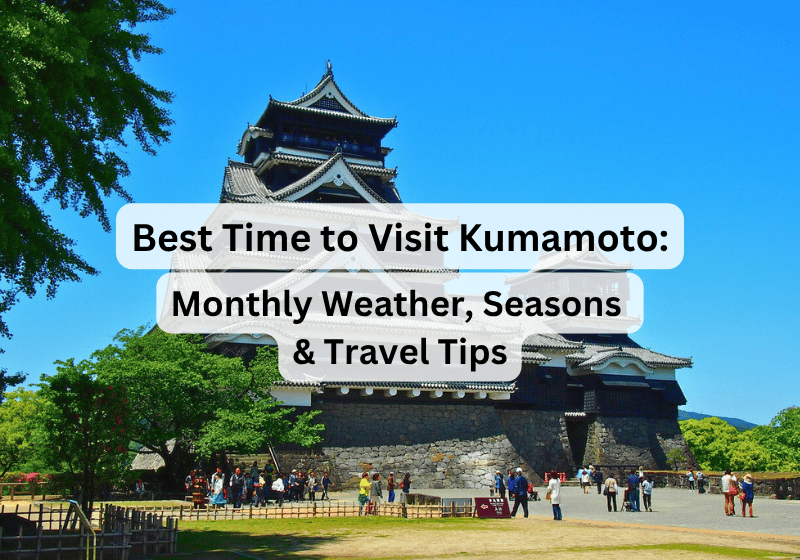
Every time I visit Kumamoto, I am instantly drawn back to its laid-back pace and otherworldly natural landscapes. Perfectly positioned right in the heart of Kyushu, Kumamoto is famous for its towering volcanic peaks, the iconic mascot Kumamon, and a deeply rooted onsen (hot spring) culture.
The volcanic scenery here is absolutely breathtaking, and the local food scene is just as unforgettable. Regional specialties like basashi (horse meat sashimi), rich Kumamoto ramen, and Akaushi (red beef) rice bowls belong at the very top of your must-eat list.
Beyond its rugged, natural beauty, Kumamoto is a city steeped in samurai history. At its heart stands Kumamoto Castle, originally built in the 17th century by the legendary warrior Kato Kiyomasa. It served as the most critical castle town (jokamachi) in Kyushu, sparking a vibrant era of samurai culture and bustling trade.
Venturing deeper into the prefecture reveals centuries of spiritual heritage. In the Aso region, a unique volcanic worship tradition has endured for millennia, anchored by Aso Shrine—one of the oldest Shinto shrines in Japan.
So, is Kumamoto, Japan worth visiting?
For me, the answer is yes — absolutely. Visiting Kumamoto is not just about checking out Kumamoto attractions. It feels like walking into a Kyushu story shaped by warriors, faith, volcanoes, local people, and nature.
Table of Contents
🌏 Kumamoto Travel Tips for First-Timers (Getting Around & Itinerary Planning)
🚃 Getting Around Kumamoto
Navigating the city center is incredibly straightforward, relying primarily on the Kumamoto City Tram, local buses, and JR Kumamoto Station (including the Shinkansen bullet train).
The City Tram: Trams run frequently. If you catch a ride to either Karashimacho or Torichosuji stations, you will be within easy walking distance of most major attractions.
Downtown Shopping: Kumamoto’s main shopping and dining districts are concentrated around the Kamitori, Shimotori, and Shinshigai covered arcades, making the area highly walkable and pedestrian-friendly.
Regional Travel: To explore regional highlights like Mt. Aso or Kurokawa Onsen, you can rely on a combination of JR trains and local highway buses.
Should you rent a car? While Kumamoto is fully accessible without a vehicle, booking a rental car for a driving road trip is by far the easiest and most flexible way to dive deep into the mountains of Mt. Aso and the hidden valleys of Kurokawa Onsen.
✈️ Getting to Aso Kumamoto Airport (KMJ)
Aso Kumamoto Airport is one of the main gateways to Kumamoto.
Travelers from North America usually connect through major Japanese hubs such as Tokyo or Osaka before taking a domestic flight to Kumamoto, which typically takes about 1.5 hours.
However, if your vacation focuses entirely on the Kyushu region, flying directly into Fukuoka Airport (FUK) is often the most efficient strategy.
There are no flights between Fukuoka and Kumamoto because they are so close; instead, you just hop on the Kyushu Shinkansen (bullet train) at Hakata Station. The train zips you straight to Kumamoto in roughly 40 minutes, making a combined Fukuoka + Kumamoto road trip or rail itinerary incredibly easy to execute.
🗓️ How Many Days in Kumamoto Is Enough?
Kumamoto City Centre, Kumamoto Castle, and Suizenji Jojuen Garden: 1 day
Add Mount Aso: 2 days
Add Kurokawa Onsen or nearby hidden scenic spots: 1–2 more days
😼 Cathead’s recommendation: 4 days is ideal. I would plan it like this: Kumamoto City → Mount Aso → Kurokawa Onsen for one relaxing ryokan night with dinner and breakfast (half-board dining).
🎡 What Are the Best Kumamoto Things to Do?
From active volcanoes, rolling green grasslands, and historic castles to steaming hot springs, hidden nature trails, and zoos—Kumamoto truly has it all.
The travel pace here is incredibly relaxed, making it a fantastic destination for families, couples, or anyone looking for a laid-back vacation.
🚄 Combining Fukuoka + Kumamoto in One Trip?
This is one of the most popular regional travel routes!
The Shinkansen bullet train connects Fukuoka (Hakata Station) to Kumamoto in just about 40 minutes. It makes a seamless addition to a broader 5-to-7-day Northern or All-Kyushu itinerary covering Fukuoka, Oita, or Kagoshima. If you plan to take this route, purchasing a Kyushu JR Pass will save you a significant amount of money on train fares.
🍘 What is Kumamoto famous for?
The answer is actually more layered than most first-time travelers expect.
Kumamoto is famous for its dramatic natural scenery, especially Mount Aso, as well as historic landmarks like Kumamoto Castle.
It is also closely associated with Kumamon, the prefecture’s beloved mascot, and with relaxing hot springs such as Kurokawa Onsen.
On the food side, Kumamoto is known for basashi, Kumamoto ramen, karashi renkon, and local beef dishes such as akaushi.
🚗 Is Driving in Kumamoto Easy? (Renting a Car vs. Public Transit)
If you are planning a Kyushu itinerary that includes Kumamoto, Mount Aso, and scenic grassland routes, I highly recommend renting a car and driving.
While the sights within Kumamoto’s city center are tightly clustered and easily accessible by public transit, Kyushu’s most breathtaking natural landscapes are hidden in the countryside and around the Mt. Aso crater.
Famous scenic spots like Kusasenri-ga-hama prairie, Komeduka (the mini volcanic cone), and the panoramic views at Daikanbo Peak have limited bus and train schedules. Renting a car saves you hours of transit time and grants you the absolute freedom to pull over whenever you want to snap photos of the jaw-dropping volcanic scenery, drastically increasing your trip’s flexibility.
The drive from downtown Kumamoto to the Mt. Aso area is roughly 27 miles (44 km) and takes about 1.5 hours. The roads along this route are well-maintained, clear, and exceptionally easy to navigate. Compared to the hassle of timing train schedules and transferring to infrequent local buses, driving straight up the mountain is incredibly stress-free.
Furthermore, the Aso region boasts some of the most beautiful scenic highways in Japan, such as the famous Aso Milk Road. Cruising down these paths wraps you in endless green pastures, volcanic craters, and rolling ranches, delivering a true, cinematic road-trip experience that public transit simply cannot replicate.
💡 Cathead’s Pro Tip:
✔ Kumamoto City Center: Skip the car rental here. You can easily get around using the cheap and frequent Kumamoto City Tram.
✔ Mt. Aso, Grasslands, & Takachiho Gorge: Sights are highly spread out in these mountainous areas. A rental car is by far the most comfortable and efficient option.
The Verdict: If your dream Japan vacation involves exploring Kyushu’s raw, natural beauty, renting a car is the absolute best way to do it. If your itinerary explicitly pairs Kumamoto + Mt. Aso + Takachiho Gorge, I strongly advise picking up a rental car right in Kumamoto.
🌸 Spring in Kumamoto: March – May
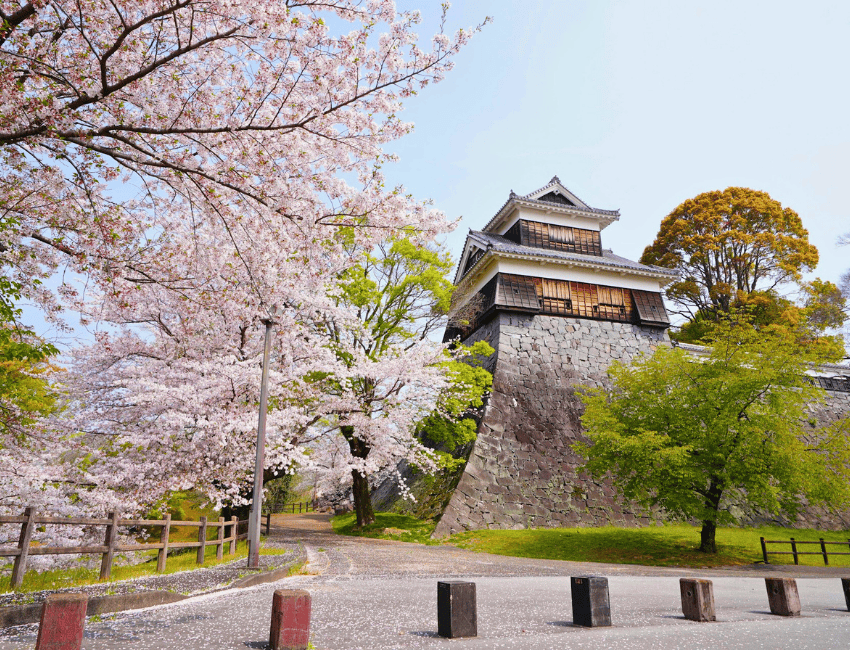
The Vibe: Fresh Weather, Vibrant Cherry Blossoms & Green Grasslands
Average temperature: ~ 50–68°F / 10–20°C
Spring is widely considered one of the absolute best times of year to visit Kumamoto. The weather is dry and comfortably warm, a succession of beautiful flower seasons take turns blooming, and the high-altitude pastures of the Aso Highlands begin transforming into a vibrant, lush green.
Keep in mind that the diurnal temperature variation (the difference between day and night temperatures) can be quite large, so mornings and evenings will still feel crisp and chilly.
Kumamoto Attractions in Spring
🌸 Kumamoto Castle (Cherry Blossom Season)
As one of Japan’s top three premier fortresses, Kumamoto Castle is a legendary destination for spring cherry blossoms (sakura), which typically reach full bloom from late March to early April. The contrast between the imposing, massive stone walls and the delicate, cascading pink petals gives the entire historic site a magical, soft glow.
Following its grand reopening in 2021, visitors can once again climb to the top of the main keep for sweeping, panoramic views of the grounds and downtown skyline. Beyond the scenery, witnessing the castle’s meticulous ongoing restoration serves as a powerful, moving testament to the region’s post-earthquake resilience.
🌿 Suizenji Jojuen Garden (Traditional Japanese Garden)
Dating back to the Edo period, this refined, traditional landscape garden is a masterpiece of mini-topography. It was brilliantly designed to replicate the famous 53 stations of the ancient Tokaido road, complete with a beautifully manicured hill shaped exactly like a miniature Mount Fuji.
In the spring, fresh green foliage frames the crystal-clear reflection ponds, traditional teahouses, and elegant vermilion bridges, making it one of the most highly recommended walking and photography spots in the city center.
🌋 Kusasenri-ga-hama Prairie (Mt. Aso)
Spring is when this sprawling volcanic plateau finally sheds its winter coat and shifts to a rich, velvety green. Standing here offers a surreal, 360-degree view where rolling emerald fields seamlessly meet the dramatic, steaming background of the active Mt. Aso crater. Spring brings excellent visibility and crisp, refreshing air, making it the perfect time for visiting.
⚠️ Pro-Tip for Visiting Mt. Aso: Because Mt. Aso is an active volcano, access to the crater rim can occasionally be restricted if toxic volcanic gas emissions spike. Always check the official live volcano warnings and status announcements before driving up the mountain.
What to Wear in Kumamoto in Spring
Pack light long-sleeve shirts, comfortable sneakers for walking, and a versatile, light jacket for the city.
If you plan to head up into the higher altitudes of the Mt. Aso volcano area, a windproof jacket or a warm outer layer is an absolute must, as the mountain winds remain quite cold.
☀️ Summer in Kumamoto: June – August
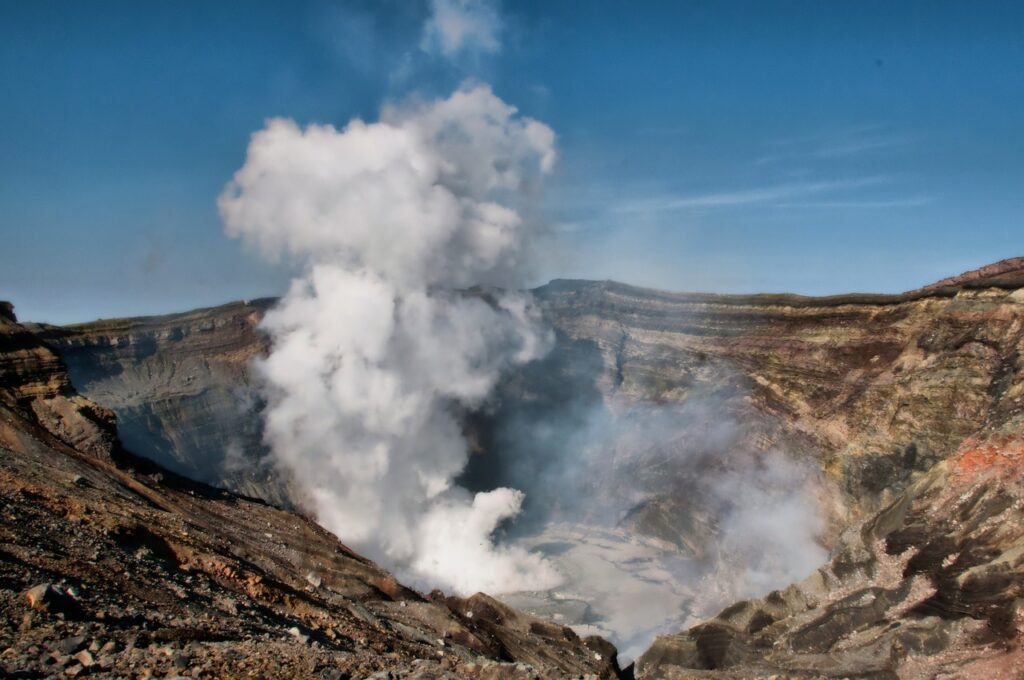
The Vibe: Lush Greens, Summer Festivals & Afternoon Showers
Average temperature: ~ 73–86°F / 23–30°C
Summer in Kumamoto is hot and humid, frequently bringing sudden afternoon thunderstorms, but it’s also when the region’s green foliage is at its most spectacular. The region’s rainy season (tsuyu) spans from mid-June to early July, bringing higher rainfall.
By late July and August, peak summer arrives with high temperatures and plenty of sunshine. This is when the rolling landscapes of the Aso Highlands are at their most vibrant, offering wide-open, endless views alongside a variety of coastal and river activities.
Kumamoto Attractions in Summer
🏞️ Daikanbo Peak (The Ultimate Mt. Aso Viewpoint)
Daikanbo Peak offers the most breathtaking, unobstructed panoramic view of the Aso Five Peaks (the five major volcanic mountains of Aso).
During the summer, the rich, vibrant green carpets the valley, making the dramatic ridges and caldera walls stand out in sharp relief. Looking down at the massive volcanic basin, rolling farm towns, and jagged mountain ranges reveals one of the most jaw-dropping natural wonders in all of Kyushu. Summer mornings and late afternoons offer incredibly soft, golden light that makes it a paradise for landscape photography.
🎉 Hinokuni Matsuri / Kumamoto’s Fire Country Festival (August)
Usually held in early August, the Hinokuni Matsuri (Fire Country Festival) is Kumamoto’s major summer event. The city center comes alive with energy,featuring traditional street performances, colorful parades, lively night markets, and delicious street food stalls.
The undisputed highlight is the massive “Otemoyan Grand Dance,” where thousands of locals and travelers fill the streets to dance to regional folk music in an unforgettable display of festival culture.
💧 Shirakawa Spring
Part of the famous Southern Aso spring water network, Shirakawa Suigen is officially designated as one of the “Top 100 Waters of Japan.” Pumping out over 60,000 tons of crystal-clear mineral water every single day, it is the perfect spot to escape the summer heat.
Visitors can take a peaceful stroll along the shaded pathways and taste the naturally sweet, chilled mountain spring water straight from the source. The water maintains a refreshing temperature year-round, making it a favorite summer cooling spot for travelers.
What to Wear in Kumamoto in Summer
Pack light, breathable summer clothing (like t-shirts and shorts) and comfortable walking sandals or shoes. It is a good idea to bring a light cardigan or jacket, as bus transit and shopping malls tend to crank up the air conditioning. Lastly, don’t forget your sunblock, sunglasses, and a reusable water bottle to stay hydrated!
🍁 Autumn in Kumamoto: September – November
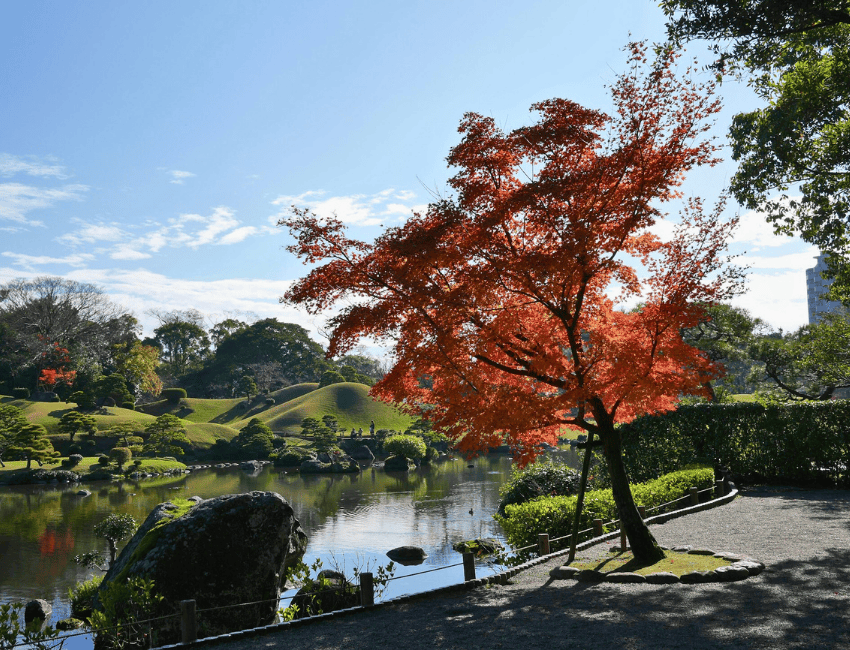
The Vibe: Stunning Fall Foliage, Clear Skies & Perfect Weather
Average temperature: ~ 59–77°F / 15–25°C
In my opinion, fall is the best time to visit Kumamoto.
As the summer humidity drops, the skies clear up to reveal the most spectacular, crisp views of Mt. Aso. The autumn colors (koyo) arrive in waves, starting around late October in the high-altitude areas of the Aso mountains and moving down to the city center by mid-to-late November.
Best Kumamoto Attractions in Autumn
🍂 Aso Shrine (One of Japan’s Oldest Shinto Shrines)
With a history spanning over 2,000 years, Aso Shrine has long been a spiritual pillar of the region. The grand approach (sando) to the shrine exudes a peaceful, majestic atmosphere. While it suffered severe damage during the 2016 Kumamoto earthquake, meticulous restoration efforts have brought this historic treasure back to life, with its magnificent Haiden (worship hall) and iconic 楼門 (Romon gate) fully rebuilt. In the fall, the vibrant contrast of golden ginkgo leaves and fiery red maples framing the ancient structures makes this the ultimate spot to experience the spiritual heart of Aso.
🚞 Minamiaso Railway
The scenic Minamiaso Railway was partially suspended due to the 2016 earthquake but made a triumphant full-line reopening. The train route winds through dramatic volcanic valleys, plunging gorges, and dense forests, offering passengers breathtaking front-row seats to Kyushu’s brilliant fall foliage right from the carriage windows.
The undisputed highlight of the journey is crossing the Daiichi Shirakawa Bridge, an iconic railway bridge that offers a beautiful aerial view of the autumn canopy below. It has quickly become one of the most sought-after travel experiences in the region.
🍁 Tatsudayama Nature Park
Nestled right within Kumamoto’s city center, this sprawling forested park is a favorite local hidden gem for leaf-peeping.
The walking trails are gentle and flat, weaving through rich, dense woodlands that erupt into shades of amber and crimson. Because it is so easily accessible and manageable, it is the perfect spot for a relaxing autumn stroll, especially for families traveling with children or seniors.
What to Wear in Kumamoto in Autumn
Pack comfortable long-sleeve shirts and a light jacket for daily sightseeing. However, if you plan to visit the hot spring towns or the high-altitude Aso Highlands in the evening, the temperature drops rapidly—be sure to pack a warmer coat or a thick jacket to stay cozy.
❄️ Winter in Kumamoto: December – February
The Vibe: Hot Springs, Clear Views & Morning Sea of Clouds
Average temperature: ~ 37–50°F / 3–10°C
Winter in Kumamoto is crisp and chilly, but it rarely experiences the severe, heavy snowfalls found in northern regions like Hokkaido. The climate is dry with large temperature swings between day and night. Because the cold winter air drastically improves visibility, this season offers the absolute best conditions for admiring the dramatic volcanic topography and witnessing Kumamoto’s famous winter sea of clouds (unkai), particularly across the Aso region.
Kumamoto Attractions in Winter
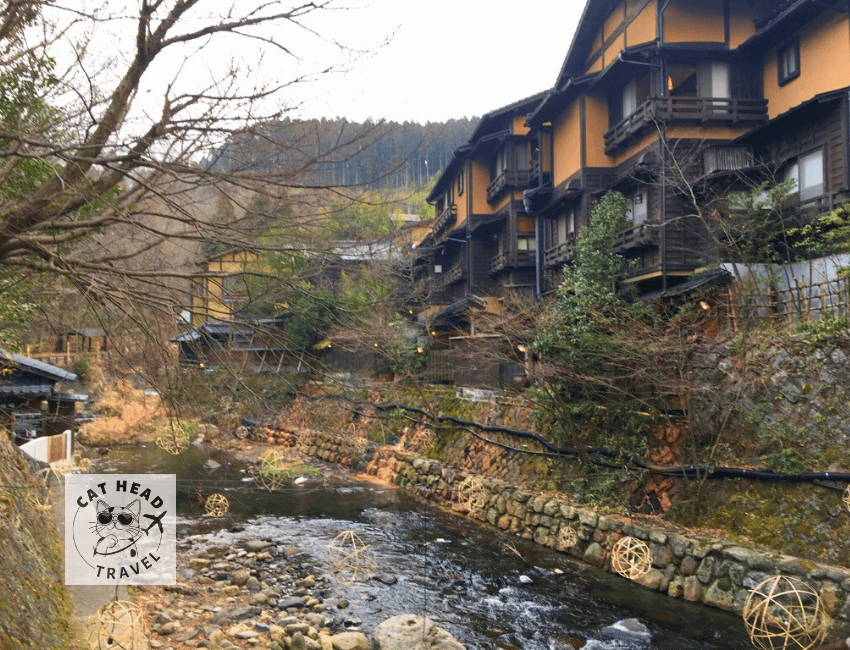
♨️ Kurokawa Onsen
Kurokawa Onsen is one of Kyushu’s most beloved hot spring towns, and winter is its peak season.
It is famous for its Outdoor Bath Hopping (rotenburo meguri) experience, which utilizes a unique wooden Nyuto Tegata (hot spring pass) allowing you to sample baths across different inns. Many of the outdoor pools are nestled right against frozen riverbeds or forested valleys, creating a magical, steaming winter aesthetic. At night, the village lights up with romantic bamboo lanterns, making an overnight stay an absolute must for any winter travel itinerary.
💡 Booking Tip: Because Kurokawa’s traditional Japanese inns (ryokans) are intimate and boutique, rooms sell out incredibly fast during the winter months—especially on weekends and holidays. I highly recommend booking your stay at least 2 months in advance.
☁️ The Aso Sea of Clouds (Winter Exclusive)
Chilly winter mornings create the perfect atmospheric conditions for a breathtaking sea of clouds (unkai). The best vantage points to witness this phenomenon are around Daikanbo Peak and the Kusasenri plateau.
Watching a thick, rolling blanket of white mist completely submerge the massive volcanic basin—leaving only the jagged mountain peaks floating like isolated islands—is a bucket-list view that will truly take your breath away.
🎄 Kumamoto Christmas Market & Winter Illuminations
The city center transforms into a winter wonderland every year. Gorgeous Winter Illuminations light up the streets from mid-November through early February, with the most dazzling displays concentrated around the Kamitori and Shimotori shopping arcades.
Additionally, the festive Kumamoto Christmas Market runs from mid-November through mid-December.
For 2025, Christmas Market Kumamoto was held at multiple venues including Kumamoto Station, Hanabata Square, and Hikarinomori Park. Event locations and dates may change each year, so always check the latest official information before planning around it.
What to Wear in Kumamoto in Winter
Pack a high-quality down jacket, a windproof coat, a warm scarf, and gloves. While the city center is manageable, the wind chills up in the high-altitude Aso mountains and the outdoor thermal valleys drops significantly—proper winter layers are essential to stay comfortable during outdoor sightseeing.
📈 Avoiding the Crowds: Peak Travel Seasons in Kumamoto
🌸 Late March – Early April (Cherry Blossom Season)
This is a highly popular window for international and domestic tourists alike. Kumamoto Castle and Suizenji Jojuen Garden serve as premier cherry blossom viewing spots. Expect a sharp increase in foot traffic, higher airfares, and a surge in hotel demand across the city center.
🎏 Late April – Early May (Japan’s Golden Week)
Golden Week is Japan’s largest annual national holiday sequence, causing a massive spike in domestic travel. Kumamoto is no exception. Areas like Mt. Aso, Kusasenri prairie, Kurokawa Onsen, and Kumamoto Castle are flooded with domestic holidaymakers.
High-altitude mountain roads (especially around the Mt. Aso crater rim) suffer severe traffic congestion, and popular restaurants require long wait times. If you must travel during this window, book your hotels and car rentals at least 3 months in advance.
🎆 July – August (Summer Vacation & Festivals)
Anchored by the famous Hinokuni Matsuri (Fire Country Festival), summer fireworks displays, and regional school breaks, the city center comes alive with vibrant festival energy. While the atmosphere is incredibly fun and celebratory, keep in mind that the weather is hot and humid.
🍁 October – November (Autumn Foliage & Comfy Weather)
Many seasoned travelers consider this the true sweet spot for visiting Kyushu. With optimal visibility, crisp air, and perfect outdoor temperatures, this window is peak season for landscape photography around Mt. Aso and autumn leaf-peeping trips to Kurokawa Onsen.
♨️ December – February (Winter Hot Spring Season)
While the city center slows down, winter marks the absolute pinnacle season for the prefecture’s hot spring resorts. Traditional ryokans in Kurokawa Onsen and the greater Aso area become exceptionally difficult to book, reaching a fever pitch during the busy Christmas and New Year holiday weeks.
🪷 When Is the Cheapest Time to Visit Kumamoto? (The Best Value Months)
The cheapest times of year to visit Kumamoto are mid-January through February (right after the busy New Year holiday lull) and the rainy season in June (tsuyu).
Massive Accommodation & Transit Savings: During these off-peak months, hotel rates and domestic flight prices typically drop by 20% to 40% compared to peak seasons like Cherry Blossom week or Golden Week.
Fewer Crowds: Popular sights like Kumamoto Castle and the Aso viewpoints are completely uncrowded, making it the perfect climate for a relaxed, slow-travel itinerary.
💡Winter Driving Warning for Mt. Aso: If you choose to travel during the cheap winter months of January and February, be aware that high-altitude mountain roads leading up to Mt. Aso can occasionally close due to black ice, extreme freezing temperatures, or rare heavy snow. If you are planning a winter driving road trip, it is vital to keep a close eye on local transit announcements and official road condition updates before heading up the peaks.
☀️ What Is the Best Season to Visit Kumamoto for Good Weather?
If you want the absolute perfect weather window for your trip, my top recommendation is mid-October through early November (early autumn).
Here is why this is the ultimate time to visit:
Unbeatable Visibility: Crisp, clear skies offer the absolute best conditions for viewing and photographing Mt. Aso’s dramatic volcanic landscape.
Perfect Temperatures: Hovering comfortably between 59°F and 73°F (15°C – 23°C), it is ideal for walking tours and outdoor photography.
Stunning Fall Scenery: The sweeping Aso Highlands turn a shimmering golden-brown just as the first brilliant autumn colors (koyo) begin to pop.
No Humidity or Rain: You completely miss the sticky summer humidity and successfully dodge the unpredictable spring rainy seasons.
🌸 What Is the Prettiest Month to Visit Japan?
For Japan overall, many travelers would say April for cherry blossoms or November for fall foliage.
For Kumamoto specifically, I think November is one of the prettiest months. The weather is clearer, the Aso scenery is dramatic, and fall colors add depth to both the city and mountain areas.
If your dream is cherry blossoms, visit Kumamoto from late March to early April.
If your dream is the best mix of scenery, weather, and comfort, choose late October to November.
Final Thoughts:
Kumamoto doesn’t move at the frantic pace of Japan’s major metropolises—it is a destination that invites travelers to truly slow down and unplug.
For Dramatic Nature: The sweeping volcanic views of Mount Aso are always unforgettable.
For Ultimate Relaxation: Steaming in Kurokawa Onsen is unmatched, especially during the peak winter months.
For Seasonal Colors: Spring cherry blossoms and autumn foliage are both spectacularly beautiful.
For Foodies: Local delicacies like Kumamoto ramen, basashi (horse meat sashimi), and savory akaushi beef bowls are incredibly addictive from the very first bite.
So, what is the best time to visit Kumamoto?
Spring is gentle and blooming.
Summer is lively and energetic.
Fall is crisp and absolutely perfect.
Winter is cozy and restorative.
For first-time visitors, my recommendation is October to November. But honestly, Kumamoto has a different kind of beauty in every season.
Kumamoto stands out as one of Kyushu’s most deeply restorative destinations. I hope you get to experience this incredible region for yourself one day—and perhaps, just like me, you will find yourself completely captivated by its local warmth and unique charm.
*All information provided above is for reference only. For full details, please refer to the official websites of the respective hotels and organizations.
🌍 Plan Your Japan Trip:
👉 Where to Stay in Fukuoka (2026): Best Areas & Hotels in Hakata and Tenjin
👉 Best Fukuoka Hotel Near Hakata Station? Hotel Forza Chikushi-Guchi I Review
👉 Where to Stay in Fukuoka: Hotel Oriental Express Fukuoka Nakasu Kawabata Review
👉 Yanagawa Ryokan Review: Staying at Hakuryuso (Fukuoka, Japan)
👉 Best Places to Eat in Fukuoka (2026): Top Hakata & Tenjin Restaurants
👉 Best Time to Visit Fukuoka 2026: The Ultimate Guide
👉 Best Time to Visit Kyushu: A Seasonal Guide for First-Timers
👉 What to Eat in Northern Kyushu (2026): Saga Beef, Yanagawa Eel & Hidden Local Gems
👉 Best Time to Visit Nagoya 2026: Weather, What to Wear & Things to Do
👉 Hilton Nagoya Hotel Review: Spacious Rooms, Western Comfort & Breakfast Buffet

Hi, I’m Cat Head! Having lived in the US, Canada, and Hong Kong, I bring a unique global perspective to the world of travel. I’m a Japan travel specialist dedicated to finding the best travel deals and crafting seamless DIY itineraries.
Whether you’re looking for luxury hotel reviews on a budget or travel hacks, I share my first-hand experiences and travel tips to make your next trip unforgettable.